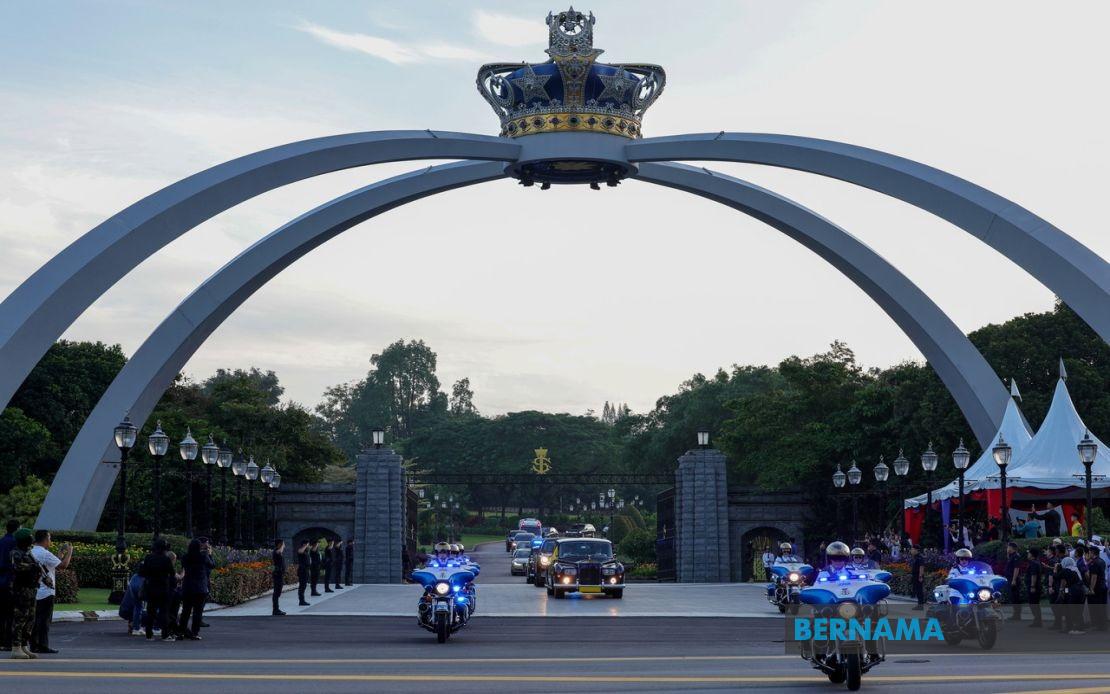
The swearing-in ceremony for Johor's State Executive Council members has been rescheduled from Friday to Saturday, authorities announced Thursday morning in Johor Bahru. The event will take place at Istana Bukit Serene, the royal residence in the state capital, with media outlets initially expecting the proceedings to unfold on the original date. Officials did not provide an explanation for the change of schedule in their brief notification to the press.
Tunku Mahkota Ismail, the Regent of Johor, was slated to preside over the ceremony on both the original and revised dates. Menteri Besar Datuk Onn Hafiz Ghazi, along with senior state officials including Johor Royal Council president Datuk Dr Rahim Ramli and State Secretary Datuk Mohammed Ridha Abd Kadir, were expected to participate in the proceedings. The postponement, though minor in terms of timing, underscores the meticulous planning required for high-level state ceremonies involving royal protocols and multiple dignitaries.
Onn Hafiz's confirmation as Menteri Besar for a second consecutive term came just over a week earlier, following the Barisan Nasional coalition's decisive victory in the 16th Johor State Election held on Saturday. The electoral triumph provided a strong mandate for the outgoing administration to continue governing the strategically important southern state. BN's commanding performance—securing 48 of the 56 seats in the Johor State Legislative Assembly—represented a solid foundation for the incoming executive council to pursue its legislative agenda.
The formation of a new State Executive Council following an election is a critical juncture in any state's governance. The swearing-in ceremony represents more than ceremonial formality; it marks the official commencement of ministerial duties and responsibilities for the appointed exco members. These individuals will oversee various state portfolios and play pivotal roles in policy implementation across sectors ranging from development and infrastructure to education and public welfare.
Johor's political stability and strong administrative performance have made it one of Malaysia's more developed states. The region serves as an economic engine for the nation, with significant contributions to manufacturing, agriculture, and tourism. A smooth transition of executive leadership, reflected through orderly ceremonial proceedings, signals continuity in governance and investor confidence in the state's direction.
The timing of the postponement—announced just hours before the scheduled ceremony—suggests that unforeseen circumstances may have necessitated the adjustment. In Malaysian political practice, such last-minute rescheduling typically involves logistical considerations, schedule conflicts among high-ranking officials, or other administrative matters. The decision to defer by merely one day rather than a longer period indicates that the underlying issue was likely resolved quickly.
BN's overwhelming majority in the Johor State Legislative Assembly provides the ruling coalition with substantial flexibility in executive appointments and legislative pursuits. With control of approximately 86 percent of state seats, the government possesses the numbers to pass legislation without requiring opposition support, enabling it to pursue its manifesto commitments with relative ease during the next state term.
The swearing-in process for state exco members involves formal oaths administered before the reigning monarch or regent, binding appointees to uphold the Federal Constitution and discharge their duties faithfully. This constitutional requirement reinforces the separation between executive authority and royal prerogative, a cornerstone of Malaysia's constitutional monarchy system. For Johor, this process carries particular significance given the sultanate's historical prominence and the Regent's role as constitutional head of state.
Onn Hafiz's reelection as Menteri Besar reflects voter confidence in his administration's track record and vision for Johor's future. His previous term would have established priorities and ongoing projects that the new council is expected to advance. The composition of the new executive council will likely balance geographic representation across Johor's constituencies with technical expertise in key policy areas.
For Malaysian political observers, the Johor election result carries broader implications beyond the state level. As one of the country's largest and most economically significant states, Johor's electoral dynamics often influence national political considerations and coalition strategies. BN's strong performance there signals resilience for the federal ruling coalition, particularly given the party's mixed fortunes in other state contests in recent years.
The successful administration of a large state such as Johor requires coordinated effort across multiple government departments and agencies. The executive council serves as the decision-making apex for state-level policy, requiring members to work cohesively despite potentially diverse backgrounds and constituencies. The Saturday swearing-in ceremony will formally establish this governing team and set the tone for collaborative leadership in the months ahead.
As Johor moves into a new governance cycle under BN's continued stewardship, attention will focus on the council's policy priorities and implementation capacity. Economic diversification, infrastructure development, and social welfare remain perennial policy challenges for any Malaysian state government. The council's effectiveness in addressing these issues will ultimately determine public satisfaction and the administration's trajectory toward the next electoral cycle.

