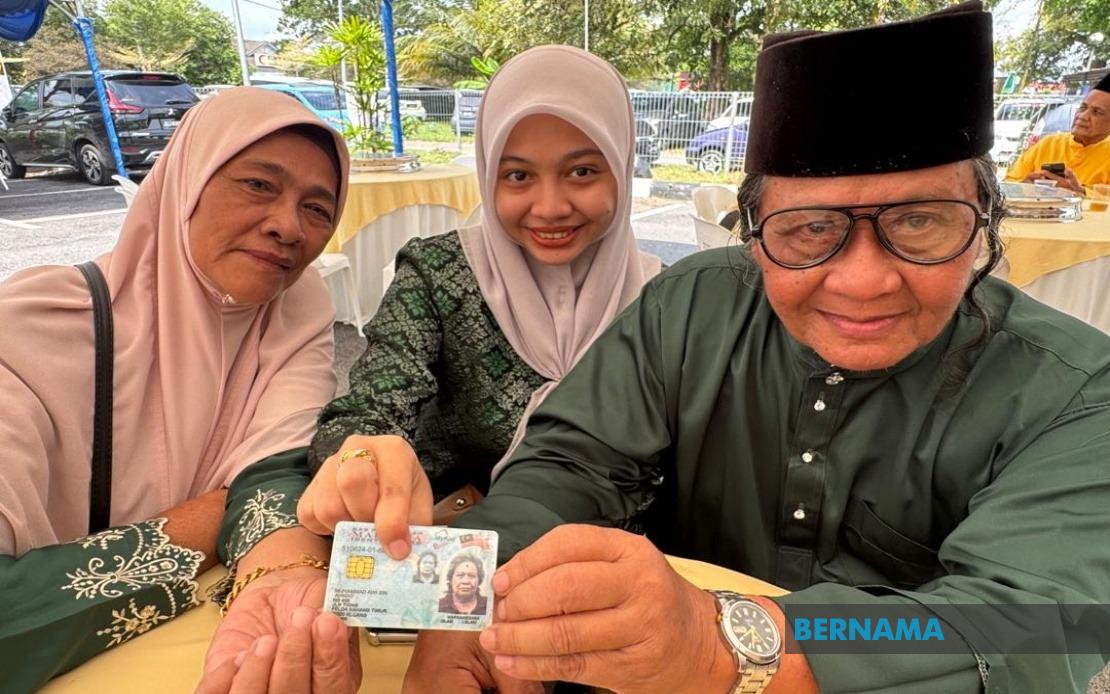
Muhammad Awi Ahmad could scarcely have imagined a more meaningful birthday present as he turned 75 in Kluang. The recognition he received on his special day was not wrapped in paper but embedded in official documentation—a land title confirming his ownership of the 4.2-hectare plantation and residence he has tended since 1986 in Felda Kahang Timur. His journey to this moment encapsulates the struggles faced by an entire generation of agricultural settlers whose contributions to Malaysia's rural development remained legally unrecognised for far too long.
The path to ownership proved far longer and more frustrating than the decades of labour on the land itself. When Muhammad Awi first sought formal recognition of his stake in 1990, his application was rejected. A second attempt in 2000 met the same fate. These rebuffs, spanning a full decade of uncertainty, forced him and countless others to operate on land they worked but did not legally own. The breakthrough finally arrived when Johor's state government, under Menteri Besar Datuk Onn Hafiz Ghazi, streamlined the approval process and granted his application within approximately one year. "All the worry and uncertainty are over now," Muhammad Awi reflected, expressing the profound relief that comes only after resolving a decades-long administrative impasse.
The broader significance of this development extends far beyond individual ceremonies. The Johor Felda Settlers Land Title Handover Ceremony, held at Dewan Dato' Onn in the Rumah Komuniti Parlimen Sembrong, distributed ownership certificates to 210 settlers across three districts—Kluang, Kota Tinggi, and Mersing. This milestone represents the culmination of efforts to resolve one of Malaysia's most persistent land rights challenges. The numerical achievement speaks volumes: 27,639 out of 27,642 Felda settlers in Johor who submitted applications have now received titles, equating to 99.9 percent coverage. This near-universal resolution suggests a systemic problem that once seemed intractable has finally yielded to sustained policy intervention.
The human impact ripples across generational lines, a reality eloquently articulated by Norliyani, the 25-year-old daughter of Muhammad Awi and representative of Felda's second generation. She crystallised a critical concern that extends beyond her father's satisfaction: the cascading consequences of unresolved land ownership for younger family members. "If the issue was not addressed, the challenges faced by the first generation of settlers would continue to affect the second, third and following generations," she explained. This intergenerational dimension proved crucial to understanding why the land title resolution was not merely administrative housekeeping but rather essential protection for family futures.
The distinction between first and subsequent generations carries profound weight in the Felda context. The pioneering settlers, many now in their seventies and eighties, could theoretically relocate or fall back on ancestral claims to village lands elsewhere. Their children and grandchildren, by contrast, possess no such alternatives. For them, the plantation represents not just livelihood but home—the only meaningful stake in Malaysia's economy they possess. When Norliyani stated plainly that "for us as the second and third generation settlers, this is our home and we've got nowhere else to go," she articulated the existential stakes embedded in what might otherwise be perceived as bureaucratic procedure.
The practical dangers of delayed title resolution manifested in Norliyani's underlying anxiety: families could lose their ancestral holdings to third parties or the state. This fear was not abstract. Throughout Southeast Asia, settlers operating on undocumented land have witnessed their claims superseded by competing interests, from corporate concessions to government reclamation schemes. The forty-year gap between Muhammad Awi's initial cultivation and eventual recognition created vulnerability during which the land remained technically vested in federal or state authorities, potentially vulnerable to reallocation. Securing the title therefore represented insurance against precisely such scenarios.
Another beneficiary, Mohd Farhan Mohamad, embodied the patience required across generations. At 43, he had pursued the land title quest since 2006, driven by his father Mohamad Masek's desire to formalise ownership of land cultivated since the 1980s. The process consumed nearly two decades of Farhan's adulthood, yet another application in 2024 brought success where repeated earlier attempts had faltered. "We did not expect it to be approved," Farhan admitted, suggesting that many settlers had largely abandoned hope despite continuing to lodge applications. This psychological dimension—the erosion of confidence in government institutions and processes—affected settlers as profoundly as the material deprivation of ownership.
The policy shift enabling this resolution reflects changing administrative priorities within Johor's state government. The acceleration of approvals under Menteri Besar Onn Hafiz Ghazi's leadership suggests that political will, once mobilised, could untangle what had seemed like a permanent knot. Previously, applications languished in bureaucratic channels for years or decades, with reasons never fully transparent to applicants. The transition to rapid processing within approximately one year demonstrated that the obstacles were largely procedural rather than substantive. The land existed, the settlers' occupation was documented, and their contributions to agricultural production were undeniable. What had been missing was priority and resources directed toward formal recognition.
This resolution carries implications extending beyond Johor's borders. Federal Land Development Authority (Felda) settler communities exist throughout Peninsular Malaysia, Sabah, and Sarawak, with many facing identical land title challenges rooted in the original scheme's structure. Johor's success in achieving near-universal title distribution within a defined state raises questions about whether other state governments possess similar capacity or political commitment. The variation in progress across states could expose disparities in access to fundamental property rights depending on geography and administrative capacity. Malaysian policymakers studying this outcome may draw lessons applicable to broader land reform initiatives.
The symbolic value of the handover ceremony itself warrants consideration. By hosting the event with the Menteri Besar in attendance and providing a public platform for beneficiaries' testimonies, the state government acknowledged the legitimacy of settler grievances and their contributions to rural Malaysia. For communities whose labour has long underpinned the nation's agricultural sector, this recognition carried emotional weight beyond the title document itself. The ceremony represented governmental acknowledgement that decades of waiting constituted an injustice requiring rectification, not merely administrative correction.
Moving forward, sustaining this momentum presents both opportunity and challenge. The near-complete resolution of Johor's title issue now positions the state as a model, yet success requires ensuring that future beneficiaries do not experience the prolonged delays that characterised earlier decades. Additionally, titled land opens new possibilities for settlers—access to credit using property as collateral, intergenerational transfer through inheritance law, and protection against arbitrary eviction or land seizure. These opportunities remain theoretical until settlers develop understanding of their newly acquired rights and the instruments available to protect them. Education programs accompanying title distribution would strengthen the practical benefits beyond the symbolic gesture of the handover.
For Muhammad Awi and thousands like him, the arrival of formal recognition arrived late but not too late. The title confirms what decades of labour had already established: their belonging to the land. As Malaysia advances in agricultural modernisation and rural development, ensuring that those who build these enterprises possess secure, documented stake in their outcomes represents both moral imperative and practical necessity. The Johor model suggests this objective remains achievable, provided political leadership commits resources and administrative energy to untangling the legacy of incomplete property rights.

