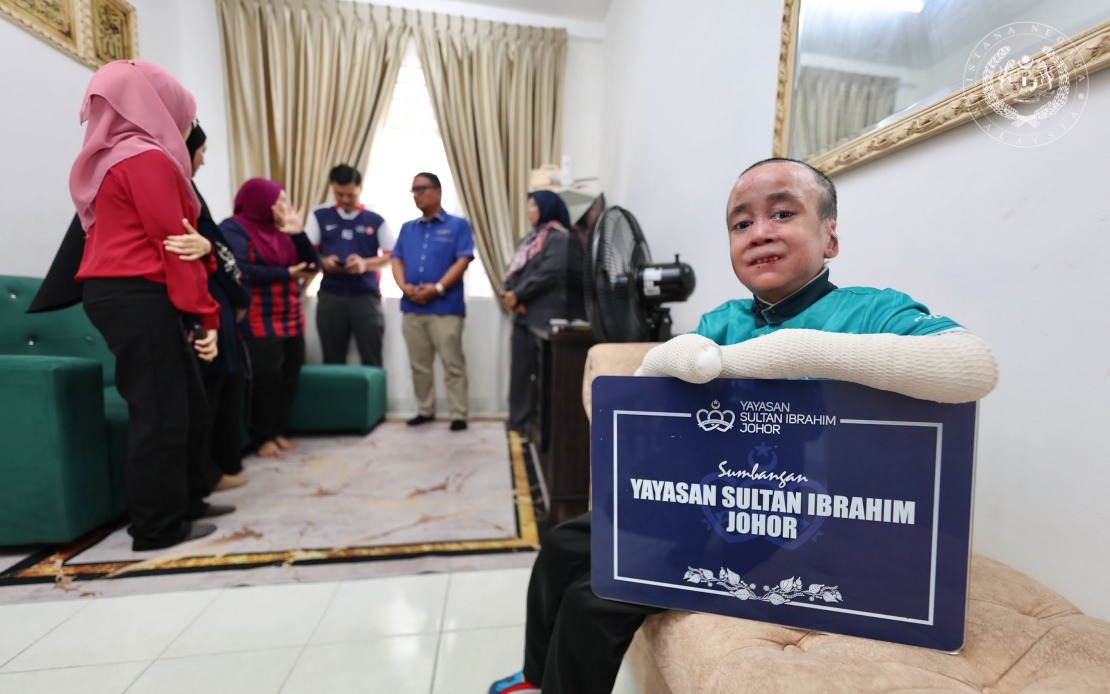
The Yayasan Sultan Ibrahim Johor (YSIJ) has stepped in to provide financial support for Muhammad Hazreel Mikhail Hizar, a 15-year-old struggling with epidermolysis bullosa, a debilitating genetic skin condition he has lived with since infancy. The foundation delivered the assistance through its Ziarah Kasih outreach programme during a home visit to the teenager's residence at the Sungai Tiram People's Housing Project in Johor Bahru on August 18.
Epidermolysis bullosa represents one of the most challenging inherited dermatological conditions, characterised by extreme skin fragility that causes blistering and severe wounds in response to minor trauma or friction. For Hazreel, managing this condition demands considerably more than standard medical intervention. His care regimen includes meticulous daily wound cleansing protocols designed to prevent bacterial infections and complications that could prove life-threatening. Beyond clinical procedures, his living environment must maintain precise temperature control through continuous air-conditioning, as exposure to heat exacerbates his symptoms and increases blister formation.
The financial burden of managing such a condition falls heavily on his family structure. Hazreel's mother, Noor Halimaton Hashim, shoulders the responsibility of raising three children as a single parent while serving as her son's primary caregiver. The intensity of his care needs makes full-time employment virtually impossible for her, creating a cascading economic hardship that extends beyond medical costs to encompass lost income and increased household expenses associated with maintaining appropriate living conditions. Her situation exemplifies the intersection of medical crisis and economic vulnerability that many families facing rare genetic disorders encounter across Southeast Asia.
According to statements released through the Royal Press Office and shared via Sultan Ibrahim Sultan Iskandar's official social media channels, Hazreel's case illustrates the broader challenges confronting families dealing with chronic hereditary conditions in Malaysia. The foundation's decision to provide targeted assistance recognises that conventional healthcare financing mechanisms often prove inadequate for conditions requiring intensive, ongoing environmental and medical management rather than episodic treatment.
Noor Halimaton expressed profound gratitude for the intervention, describing the timing as providential for her struggling household. She highlighted that the foundation's recognition of her family's plight extended beyond material support to encompass genuine compassion for their daily struggles. Her statement underscores how institutional acknowledgment and practical assistance can provide crucial psychological relief alongside financial reprieve for families navigating chronic illness without adequate resources.
The Ziarah Kasih programme represents the foundation's commitment to identifying vulnerable households within Johor and delivering personalised support tailored to individual circumstances. Rather than operating through impersonal bureaucratic channels, the initiative prioritises direct community engagement and relationship-building with beneficiaries. This approach allows foundation representatives to assess genuine needs firsthand and respond with appropriate interventions that address root causes of hardship rather than merely treating symptoms.
For Malaysian readers, Hazreel's case carries particular significance given the country's healthcare landscape. While Malaysia maintains relatively advanced medical facilities, inherited conditions like epidermolysis bullosa create financial pressures that extend beyond what standard health insurance or government assistance typically covers. Families must often absorb costs associated with specialized wound care supplies, environmental modifications, and foregone earnings from necessary caregiving responsibilities. Foundation initiatives like YSIJ's therefore occupy a critical gap in the social safety net.
The prevalence of rare genetic skin disorders remains poorly documented across Southeast Asia, partly due to limited epidemiological research and diagnostic capacity in many regions. Epidermolysis bullosa itself ranges from mild forms causing minor blistering to severe variants that significantly compromise lifespan and quality of life. The genetic inheritance patterns also create complex family dynamics, as carriers may face difficult reproductive decisions when contemplating future children.
Yayasan Sultan Ibrahim Johor's intervention signals a broader institutional awareness that royal patronage and private foundation resources must increasingly address medical needs falling outside conventional healthcare parameters. As chronic disease burden shifts increasingly toward genetic and rare conditions in developing healthcare systems, organisations operating at the intersection of medical need and financial vulnerability play expanding roles in supporting affected populations.

