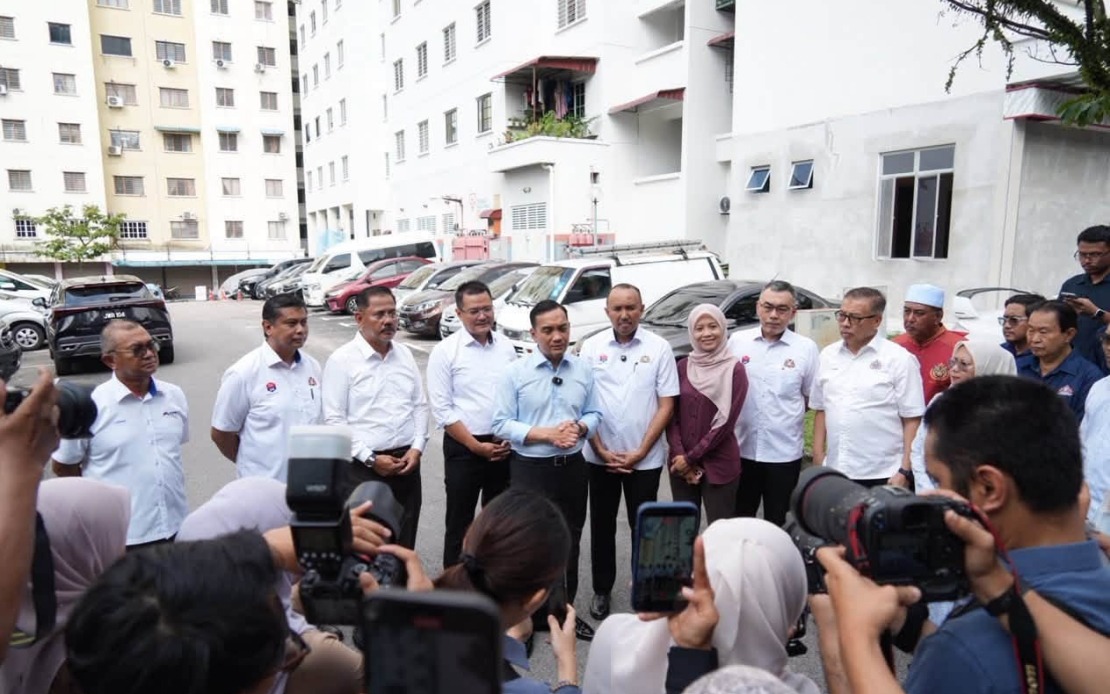
The Johor government is embarking on an ambitious RM50 million housing refurbishment programme targeting low-cost and public residential complexes throughout the state, signalling a strategic shift towards preventive maintenance and community-focused urban renewal. The initiative, unveiled by State Housing and Local Government Committee chairman Datuk Mohd Jafni Md Shukor, represents one of the more substantial investments in residential upkeep in recent years, reflecting growing recognition among state authorities that environmental conditions directly influence the wellbeing and social cohesion of urban populations.
The scope of this undertaking is substantial. The repainting scheme encompasses 170 housing blocks containing 11,693 individual residential units distributed across 26 strategic locations throughout Johor. This geographical spread ensures that the programme addresses housing stock disparities across both urban and semi-urban areas, from densely populated zones like Johor Bahru to the industrial belt of Pasir Gudang. The direct beneficiary pool stands at approximately 46,772 residents, though the multiplier effects on community infrastructure and social perception will likely extend far beyond this figure.
During a site inspection at Desa Muafakat Apartments alongside Johor Menteri Besar Datuk Onn Hafiz Ghazi, Mohd Jafni articulated a philosophy that extends beyond superficial aesthetics. He emphasised that whilst repainting might appear cosmetic at face value, its psychological and social ramifications are profound. A well-maintained residential environment cultivates psychological comfort among occupants, strengthens neighbourhood bonds, and crucially, sends a visible message that state authorities regard resident welfare as a legitimate policy priority. This symbolic dimension carries particular weight in lower-income communities where infrastructure neglect often reinforces broader feelings of marginalisation.
The implementation architecture involves a coordinated network of public agencies designed to ensure accountability and quality control. The Johor State Housing Development Corporation (PKPJ) and the Local Government Division of the Johor State Secretary's Office will oversee project management, whilst municipal councils including the Johor Bahru City Council (MBJB), Iskandar Puteri City Council (MBIP), Pasir Gudang City Council (MBPG), and Kulai Municipal Council (MPKu) will provide localised oversight and coordination with appointed contractors. This multi-tiered governance structure reflects lessons learned from previous infrastructure programmes where fragmented responsibility led to implementation delays and quality inconsistencies.
Quality assurance has emerged as a central preoccupation for state officials overseeing the initiative. Mohd Jafni explicitly warned against the common pitfall of projects that appear satisfactory upon completion but deteriorate rapidly due to substandard materials, poor craftsmanship, or inadequate maintenance protocols. All implementing agencies have received clear directives to adhere strictly to specified schedules, technical specifications, and established quality benchmarks. This emphasis on durability reflects a departure from short-term cosmetic interventions toward sustainable infrastructure stewardship.
The timing of this announcement carries significance within Malaysia's broader housing policy landscape. Rapid urbanisation and housing shortages have left many lower-income households concentrated in aging residential complexes that, whilst structurally sound, suffer from deferred maintenance and environmental degradation. Johor's initiative suggests a pragmatic recognition that expanded construction capacity alone cannot address legacy housing stock challenges. Strategic investment in upgrading existing facilities represents a more cost-effective and socially inclusive approach than wholesale redevelopment.
Beyond the repainting programme itself, the site visit revealed a broader commitment to residential infrastructure enhancement. Officials were briefed on structural issues affecting Desa Muafakat Apartments, including slope subsidence adjacent to the parking area and deterioration of internal road networks. The simultaneous inspection of the under-construction Tabika KEMAS Bangsa Johor facility indicates integrated planning that addresses not only physical infrastructure but also community facilities and early childhood services. This comprehensive approach acknowledges that housing quality encompasses far more than individual unit conditions.
The investment magnitude warrants contextualisation within state budget allocations. A RM50 million commitment to housing maintenance represents a significant budgetary decision that prioritises preventive care over emergency interventions. For Malaysian state governments operating under fiscal constraints, such allocations signal political prioritisation of lower-income welfare and infrastructure sustainability. The scale also suggests that Johor authorities are positioning themselves as proactive administrators rather than reactive respondents to housing complaints.
For residents across the targeted communities, the programme offers tangible benefits extending beyond enhanced aesthetics. Refreshed living environments can positively influence property valuations, reduce tenant turnover, and foster psychological investment in neighbourhood upkeep. The visible state presence and resource commitment also strengthen institutional legitimacy among lower-income populations, who frequently experience governance remoteness in urban contexts. These intangible benefits often prove as valuable as physical improvements in promoting social stability and community resilience.
The broader implications for Southeast Asian urban governance merit consideration. As regional cities grapple with aging housing infrastructure and budget constraints, Johor's coordinated approach to preventive maintenance offers a replicable model. Rather than postponing investment until structural failure necessitates expensive repairs, strategic allocation toward preservation extends asset lifespans and maintains community satisfaction. This methodology increasingly informs best-practice frameworks in metropolitan management across the region.
Looking forward, the success of this programme will depend substantially on implementation fidelity and post-completion maintenance protocols. Establishing robust monitoring mechanisms and clearly delineating long-term maintenance responsibilities among municipal agencies will prove essential to preventing the initiative from becoming merely a one-time intervention. Johor authorities will need to develop sustainable funding streams for ongoing upkeep, ensuring that RM50 million investment generates lasting rather than ephemeral improvements.

