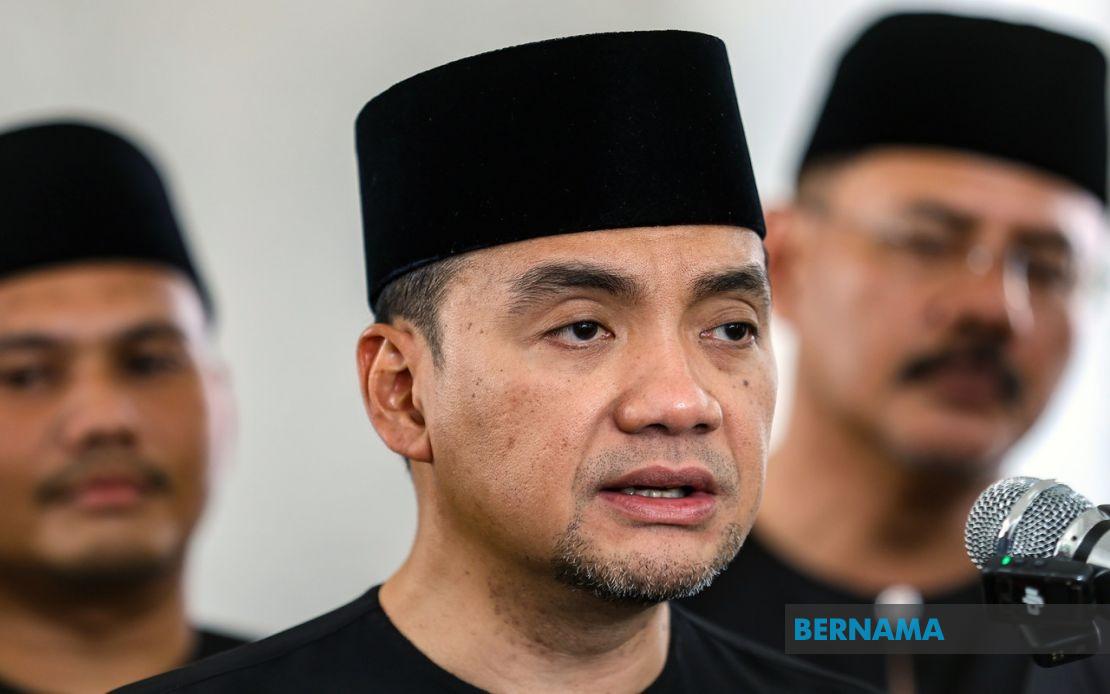
The Johor state government has rolled out a new initiative designed to invigorate mosque life and deepen religious engagement among Muslims across the state. The Semarak Maghrib and Isyak programme, announced by Menteri Besar Datuk Onn Hafiz Ghazi, represents a strategic move to position mosques as vibrant centres of worship and community activity rather than buildings used solely for prayer. The initiative builds on earlier campaigns that targeted dawn prayers, broadening the approach to encompass the evening prayer times when work and daily routines often pose barriers to attendance.
Onn Hafiz framed the programme as part of the state government's larger vision to strengthen Islamic values and foster a sense of brotherhood among the Muslim community. Speaking through social media, he emphasised that the effort reflects a commitment to ensuring mosques function as multi-purpose institutions where spiritual growth, knowledge sharing, and social bonding occur simultaneously. This positioning of mosques beyond their primary religious function aligns with a wider trend in Malaysian state governance, where religious institutions are increasingly leveraged to address social cohesion and community welfare alongside their devotional roles.
The programme represents a manifesto commitment made during the 16th Johor state election, indicating that religious engagement has become a measurable policy objective that administrations must demonstrate progress on. By publicly linking the initiative to electoral pledges, the state government frames mosque attendance and Islamic propagation as deliverables that validate the mandate given by voters. This approach reflects how Islamic affairs, traditionally handled at federal level, have become increasingly significant in state-level political competition in Malaysia.
The inaugural event took place at Masjid Jamek As-Syakirin in Bukit Saujana, establishing a template for how the programme will unfold across other mosques in Johor. Beyond scheduling evening prayers, the inaugural session incorporated religious education and Quranic recitation, suggesting that the programme aims to create a comprehensive religious experience rather than simply encouraging attendance. The inclusion of a hadith discussion led by the Johor Bahru district kadi demonstrates integration with formal Islamic scholarship and institutional knowledge structures.
The emphasis on the 40 Hadith and the particular theme of intention determining deeds carries pedagogical significance in Islamic education, as these foundational principles establish the spiritual framework within which Muslim conduct is evaluated. By anchoring the programme in classical Islamic learning, the organisers seek to connect contemporary attendance efforts with enduring theological principles, potentially deepening the spiritual dimension of participation rather than treating it as a superficial attendance metric.
For Malaysian observers, the programme reflects a broader pattern where state governments increasingly channel public resources and administrative attention toward religious programming. In Johor, this represents continuity with previous administrations while also signalling that the current government prioritises Islamic governance as a central policy domain. The focus on congregational practice specifically targets what Islamic scholars and administrators often identify as a decline in prayer attendance, particularly among younger urban populations whose lifestyles and work patterns fragment traditional prayer schedules.
The call for Muslim participation framed by Onn Hafiz as a voluntary endorsement of state religious initiatives represents a softer approach than regulatory or legislative mandates. By appealing to religious conviction and communal identity rather than imposing requirements, the government positions itself as a facilitator of religious practice rather than an enforcer, which carries different implications for public legitimacy and community buy-in. This approach also avoids potential constitutional complications around religious liberty and state authority that more coercive methods might trigger.
The Semarak Maghrib and Isyak initiative carries implications for urban planning and community infrastructure in Johor. Mosques that become centres of evening activity require appropriate facilities, parking, security, and programming infrastructure to accommodate larger congregations. The initiative therefore signals indirect investment in mosque facilities and the communities surrounding them, potentially reshaping how public spaces function in Johor neighbourhoods during evening hours.
From a Southeast Asian perspective, this represents how Malaysia's federal structure allows states to experiment with religious policy within constitutional bounds. While Islamic affairs remain primarily a state matter in Malaysia's constitutional division of powers, state governments' varying approaches to religious promotion and congregation-building reveal distinct governance philosophies and community engagement strategies. Johor's emphasis on congregational prayer programming demonstrates how religious governance operates practically at the ground level, beyond formal legislation or fatwa issuance.
The programme also reflects demographic and social anxieties about community fragmentation in increasingly urban and modernised societies. By deliberately scheduling religious activities and promoting attendance through government endorsement, state administrators signal concern about sustaining traditional religious practices amidst social change. This defensive posture toward religious practice maintenance appears across multiple Malaysian states and suggests policymakers view secularisation and lifestyle change as genuine governance challenges requiring active intervention.
Looking forward, the success of Semarak Maghrib and Isyak will likely depend on sustained participation beyond the initial enthusiasm phase. Long-term viability requires integration with broader mosque management strategies, imam capacity and programming quality, and genuine community interest rather than administrative mandate. How widely the programme spreads across Johor's diverse mosques—from well-resourced urban institutions to smaller community spaces—will indicate whether the initiative represents genuine capacity-building or primarily symbolic governance.
The initiative also raises questions about resource allocation and opportunity costs. Public resources directed toward evening prayer promotion represent choices not to invest in other community services or development priorities. Whether stakeholders view this as appropriate allocation depends partly on how religious governance legitimacy is valued relative to other state functions, a calculus that varies across Malaysian communities and constituencies.

