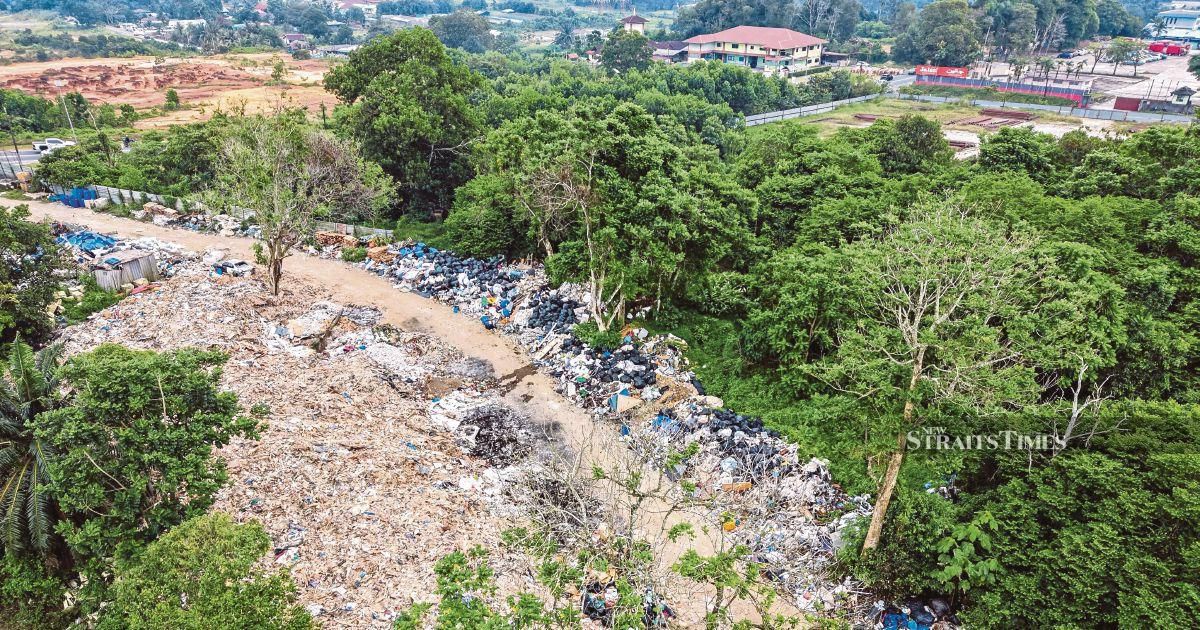
Johor's environmental enforcement authorities have moved to establish a dedicated task force comprising representatives from multiple government agencies to investigate mounting allegations that construction waste originating from Singapore has been illegally deposited at several locations throughout Pontian. The coordinated response signals growing concern among state officials over cross-border waste trafficking, a persistent environmental problem that has periodically surfaced along the Malaysia-Singapore border despite existing regulatory frameworks designed to prevent such illicit activities.
The investigation will examine whether waste materials, including debris from building demolition and renovation projects in Singapore, were transported across the Johor Strait and deposited without proper authorisation at one or more Pontian sites. Such operations typically exploit gaps between the strict waste management regulations enforced in Singapore and the more complex regulatory landscape across Malaysia's state borders, creating profitable opportunities for unscrupulous operators who charge disposal fees while evading the significantly higher costs that legitimate waste management in Singapore demands.
Solid Waste Management and Cleansing Corporation (SWCorp), the federal waste management authority, is expected to play a central coordinating role in the task force alongside Johor's environmental quality enforcement division and possibly other agencies including local council representatives and customs officials. This multi-agency structure reflects the complexity of investigating transnational waste movement, which typically requires expertise in environmental law, border control protocols, and waste classification standards that must be aligned across two different jurisdictional systems with varying enforcement mechanisms and penalties.
The establishment of this task force represents a significant escalation from routine complaint investigation. It demonstrates that authorities have accumulated sufficient evidence or credible reports to warrant a comprehensive, sustained inquiry rather than a one-off inspection. The scope likely extends beyond identifying where the waste was deposited to determining the operational chain—identifying the businesses or individuals involved in collecting waste in Singapore, arranging its transport, securing landing sites in Malaysia, and profiting from the illegal disposal.
For Malaysian readers and businesses, this investigation carries broader implications regarding the integrity of regional waste management systems. Singapore's rigorous environmental standards create strong economic incentives for waste generators there to seek cheaper disposal alternatives across the border, a problem that affects not only Johor but potentially other Malaysian states with proximity to Singapore or other developed economies. Understanding how such smuggling operations function helps communities anticipate and prevent similar illegal dumping in their areas.
The Pontian locations involved have not been specifically identified in early reports, but the fact that multiple sites were targeted suggests an operation of some scale. This pattern indicates either a single operator using several drop-off points to distribute risk and evade detection, or multiple independent parties engaging in the same illicit activity—each possibility carrying different implications for enforcement strategy and the scope of environmental damage across the region.
Historically, cross-border waste trafficking in Southeast Asia has proven difficult to prosecute comprehensively because responsibility for waste often becomes ambiguous once it crosses boundaries. Establishing clear evidence of origin, intentional transport, and knowledge of illegal dumping requires coordination between Malaysian authorities and their Singapore counterparts, creating procedural and political complexities that can slow investigations. The multi-agency task force structure adopted here should theoretically address these coordination challenges by centralising decision-making and information-sharing.
Environmental contamination from illegally dumped construction waste poses serious risks to water quality in Pontian's groundwater reserves and nearby coastal zones, alongside potential impacts on soil composition and local ecosystems. Construction waste often contains hazardous materials including asbestos, heavy metals, and chemical residues that can persist in the environment for decades, making swift investigation and remediation essential to minimising long-term public health consequences and environmental restoration costs that would ultimately fall on Malaysian taxpayers.
The task force's investigation will likely examine whether adequate warning systems or community reporting mechanisms exist to detect similar operations in future. This preventive angle is particularly important given Pontian's strategic location and the economic pressures that perpetuate such smuggling. By identifying vulnerabilities that made large-scale illegal dumping feasible, authorities can implement targeted preventive measures—whether through enhanced border coordination, improved surveillance of suspected dumping sites, or increased penalties designed to eliminate the economic incentive structure that makes such operations profitable.
Stakeholders in both Malaysia and Singapore should view this investigation as a test case for cross-border environmental enforcement cooperation. How thoroughly the task force investigates, whether prosecutions follow, and what penalties are imposed will signal to potential offenders whether dumping construction waste across the border carries meaningful consequences. A robust response could substantially deter future attempts, while a perfunctory investigation might inadvertently encourage repeat operations by revealing enforcement gaps that smugglers can exploit.
The investigation's outcome will also likely influence policy discussions regarding waste management harmonisation across the region and the adequacy of current mechanisms for tracking hazardous waste movements. For Pontian residents and businesses, the immediate concern centres on identifying contaminated sites and beginning remediation, but the longer-term challenge involves preventing Johor from becoming a convenient dumping ground for waste from wealthier jurisdictions seeking to minimise their disposal costs regardless of environmental consequences.

