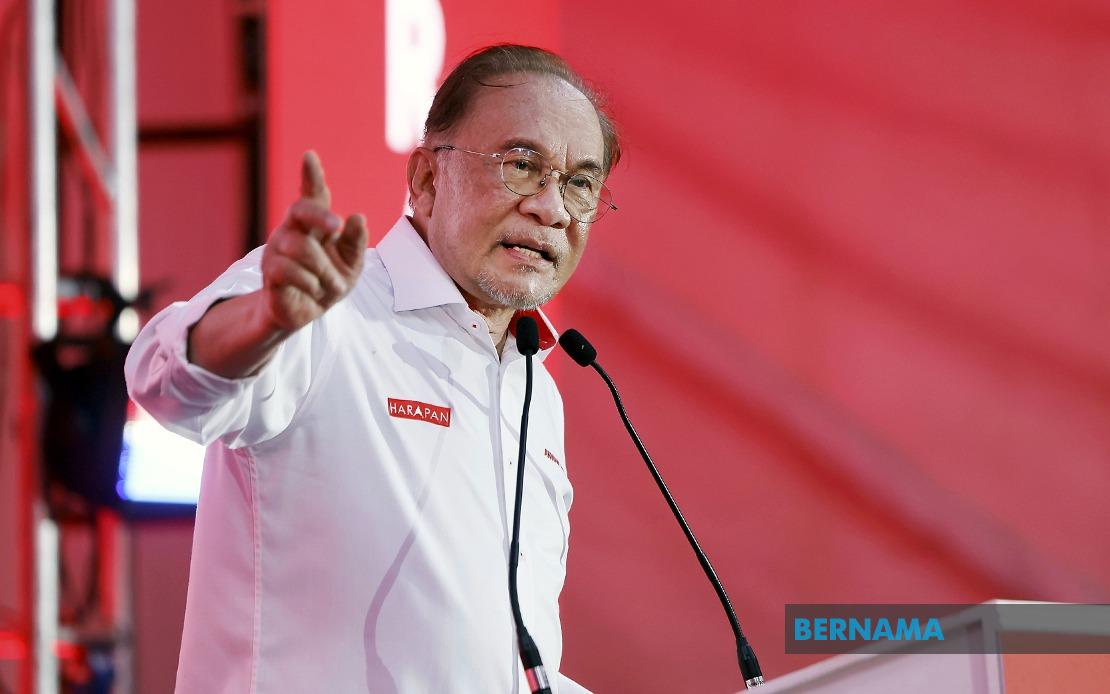
Prime Minister Datuk Seri Anwar Ibrahim has issued a clarion call to Johor voters to elect representatives who combine wisdom with decisive action and an authentic understanding of what matters most to ordinary Malaysians. Speaking as Pakatan Harapan (PH) chairman during the coalition's opening campaign push in Johor Bahru on July 4, Anwar framed the upcoming state election as an opportunity for voters to shape their state's trajectory by selecting leaders with the intellectual capacity to prioritise effectively and the moral courage to make tough calls when circumstances demand it. The appeal reflects growing recognition among opposition-aligned politicians that technical competence and public accountability must become central to electoral messaging in Malaysia's states.
Anwar's campaign message centred on PH's vision for Johor as a thriving, inclusive economy where communities of different ethnic and religious backgrounds collaborate on shared development objectives. He pledged that the coalition would amplify the concerns raised by residents, safeguard Johor's interests against short-term political manoeuvring, and implement policies designed to elevate living standards across all demographic groups. The framing attempts to position PH not merely as an alternative ruling force but as stewards of genuine public interest, a distinction that carries particular weight in Johor given the state's historical domination by the United Malays National Organisation (UMNO).
The Prime Minister's campaign commenced with an intensive schedule designed to establish direct contact with voters before polling day on July 11. During the first day of campaigning, Anwar participated in seven separate public engagements across different areas of Johor, each combining community dialogue, public speeches, and grassroots mobilisation efforts. These interactions ranged from structured town hall formats to informal socialising with local residents, reflecting a deliberate strategy to appear accessible and genuinely invested in understanding community concerns rather than simply delivering pre-scripted messaging. This ground-level engagement model has become increasingly important as Malaysian voters, particularly in urban and semi-urban areas, demonstrate greater sophistication in evaluating politicians based on their apparent sincerity and connection to neighbourhood-level problems.
PH's candidate slate represents a significant commitment to the contest, with the coalition fielding contenders in all 56 state constituencies at stake. The distribution among coalition partners reveals the internal balance carefully negotiated between the three primary components: PKR has nominated 20 candidates, Amanah 19 candidates, and DAP 17 candidates, reflecting their respective membership bases and regional influence within Johor society. This comprehensive participation signals that PH intends to campaign seriously rather than conceding ground, a posture that contrasts sharply with some previous state-level contests where the coalition fielded partial slates in competitive settings.
The broader competitive landscape involves 172 candidates contesting across all 56 seats, indicating a fragmented field that could potentially benefit a well-organised coalition if it achieves superior voter mobilisation. The presence of multiple candidates per seat reflects Malaysia's ongoing political realignment, with traditional party loyalties fracturing as voters increasingly base decisions on local grievances, economic concerns, and perceptions of individual candidate quality rather than purely on ethnic or religious community affiliation. For Johor specifically, this fragmentation could work against incumbent coalitions if opposition parties and independent candidates successfully mobilise voters dissatisfied with existing governance arrangements.
Anwar's repeated emphasis on unity across Johor's diverse population—specifically mentioning Malays, Chinese, and Indians working collaboratively—addresses an implicit challenge within Malaysia's electoral politics. Johor contains significant populations of multiple ethnic groups, and governing coalitions can only function effectively if they maintain cross-community legitimacy. The PH chairman's framing suggests that the coalition believes its strongest positioning emphasises shared economic interests and social progress rather than ethnic-based appeals, a tactical choice that assumes modern Johor voters prioritise bread-and-butter concerns over more narrow communal messaging.
The timing of the Johor election carries national implications beyond the state itself. As Malaysia's most economically developed state after Selangor and a bastion of UMNO influence for decades, Johor represents a crucial testing ground for PH's capacity to convert national government legitimacy into sustained state-level support. Electoral outcomes in Johor could reshape the trajectory of Malaysian federalism, potentially demonstrating whether PH can build durable regional power bases or whether its 2018 federal victory remains largely limited to peninsular fringe areas and urban constituencies. For opposition parties and independent candidates monitoring Malaysian politics, the Johor result will provide crucial intelligence about voter sentiment as the nation approaches the next general election cycle.
The voting mechanisms established for this election provide flexibility for different voter categories. Early voting is scheduled for July 7, accommodating public sector employees and others requiring alternative polling opportunities, while general polling occurs on July 11. This extended voting period allows campaign momentum to build without compressing the schedule excessively, potentially enabling candidates from all competing coalitions to undertake final voter contact efforts across a slightly extended timeframe. The early voting mechanism has also become increasingly important in Malaysian elections as it allows voters with inflexible work schedules or mobility constraints to participate fully, potentially broadening the electorate in ways that some observers argue favour candidates emphasising inclusive governance.
For Malaysian observers beyond Johor's borders, the state election provides significant insight into broader patterns of political dealignment and voter behaviour. The coalition's decision to contest comprehensively rather than strategically cede certain constituencies reflects confidence in its messaging capacity and organisational reach. However, the outcome will ultimately hinge on whether PH's emphasis on wise, courageous leadership and multicommunal collaboration resonates with voters whose primary concerns likely centre on employment opportunities, property prices, education quality, and infrastructure development rather than abstract principles of governance. Johor's voters, like their counterparts throughout Malaysia, will ultimately make electoral decisions based primarily on assessments of which candidates and coalitions appear most capable of addressing their immediate material interests and neighbourhood-level quality of life.
As the campaign proceeds toward July 11, the Johor election exemplifies Malaysia's evolving political landscape where established parties increasingly compete against each other and independent voices on terms increasingly defined by competence, responsiveness, and authentic community engagement rather than inherited party structures or ethnic solidarity mechanisms. Anwar's opening campaign message attempts to position PH within this framework, proposing that voters can advance their interests most effectively by electing representatives who combine intellectual capacity with ethical commitment to public welfare. Whether this positioning proves electorally persuasive will shape not only Johor's governance trajectory but also broader perceptions of political possibility throughout Malaysia's federal system.

