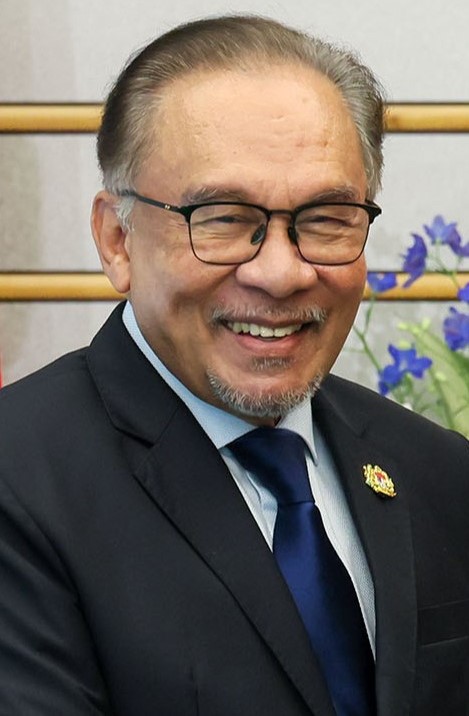
Prime Minister Datuk Seri Anwar Ibrahim used data from the Finance Ministry to make a case for the Federal government's financial commitment to Johor, revealing that the state has benefited from a net positive return on its contribution to national coffers over the past three years. Speaking at a Pakatan Harapan candidate announcement ceremony in Tangkak on June 22, Anwar presented figures showing that whilst Johor contributed approximately RM14 billion in revenue to the Federal government between 2023 and 2025, the state received RM16 billion in return through infrastructure projects, administrative spending, and targeted assistance programmes. This RM2 billion surplus represents a deliberate rebalancing of resources that Anwar said deserved public acknowledgment ahead of state elections.
The Prime Minister, who holds the concurrent portfolio of Finance Minister, emphasised that this comparison illustrated a fundamental truth about how the current MADANI Government approaches fiscal federalism. Rather than simply extracting revenue from productive states, the administration has adopted an approach that channels resources back into development initiatives that directly benefit Johor's residents and economy. Anwar framed the disclosure as essential context for voters evaluating the Federal government's track record, arguing that such facts often remain obscured in political discourse despite their relevance to assessing governance performance.
When examining operational expenditure allocations specifically, the contrast between the previous administration and the current government becomes starker. During the pre-MADANI era, Johor received between RM6 billion and RM7 billion annually for operating expenses, covering salaries, routine maintenance, and ongoing administrative functions. Under the current government, this allocation has risen to RM8.7 billion annually, representing a meaningful increase in resources available for day-to-day governance and service delivery. The trajectory matters for understanding whether this represents a one-time adjustment or sustained policy reorientation.
For the 2026 budget cycle, Johor's position within the national funding hierarchy reflects its economic significance and demographic weight. According to Anwar's presentation, Johor ranks as the third-largest recipient of combined Operating Expenditure and Development Expenditure allocations, trailing only the larger East Malaysian states of Sabah and Sarawak. This ranking acknowledges both the substantial populations these states serve and the geographical challenges of delivering services across dispersed communities. Within Peninsular Malaysia, Johor's allocation standing reflects recognition of its role as a major economic contributor and population centre.
The development expenditure figures demonstrate particularly notable growth. Between 2022 and 2026, Johor's allocation for development projects doubled from RM2.3 billion to RM4.8 billion, suggesting acceleration in infrastructure investment and capital projects. This category encompasses physical infrastructure such as roads, hospitals, schools, and utilities—investments that shape long-term economic competitiveness and quality of life. For a state that generates significant federal revenue through port activities, petrochemicals, and manufacturing, such development spending represents reinvestment of economic returns into productive capacity and public amenities.
Beyond conventional budget allocations, Anwar highlighted Johor's substantial receipts under two major social welfare programmes: Sumbangan Tunai Rahmah (STR) and Sumbangan Asas Rahmah (SARA). Johor ranks second nationally in receiving assistance through these schemes, trailing only Selangor, which has a larger population. The prominence of these cash assistance programmes in the government's fiscal architecture reflects a deliberate choice to prioritise direct support for lower-income households, and Johor's high allocation indicates recognition that substantial population segments within the state face economic vulnerability. For Malaysian readers evaluating the government's social policy stance, this ranking provides tangible evidence of resource distribution priorities.
The timing of Anwar's disclosure merits consideration within the broader political context. Announcing detailed federal spending figures at a state election campaign event signals an intentional strategy to ground campaign messaging in fiscal data rather than rhetoric alone. This approach reflects an implicit acknowledgment that voters increasingly demand evidence-based justifications for their political choices, particularly regarding state-level governance where development outcomes remain directly observable. By anchoring his argument in Finance Ministry records—institutions with established credibility for numerical accuracy—Anwar sought to elevate the discourse above partisan claim and counter-claim.
For Southeast Asian observers tracking Malaysian political developments, the substance of Anwar's fiscal federalism approach carries broader significance. The decision to structure federal-state relations around measurable resource flows and documented outcomes represents a departure from more opaque allocation methods that characterised earlier periods. This transparency reflects international best practices in fiscal management and suggests domestic political pressure for accountable governance across levels of government. Whether such accountability extends beyond high-profile state elections into routine governance remains an open question.
The comparative growth in Johor's allocations between the previous and current administrations invites questions about the underlying policy logic. The increases could reflect either genuine priority shifts toward the state, or cyclical variations in budget capacity and competing demands from other regions. Observers should note that the comparison encompasses a period when the current government was establishing itself institutionally and economically, meaning trajectory rather than absolute figures may prove more revealing over longer timeframes. Understanding whether the RM8.7 billion operating expenditure level represents a new baseline or a temporary peak will depend on forthcoming budget cycles.
The broader implications for Malaysian federalism involve how federal-state resource relationships are conceptualised and communicated. By framing the discussion around net transfers and demonstrating that revenue-generating states receive substantial returns, Anwar's presentation acknowledges legitimate state expectations to benefit from their economic contributions. This stands in contrast to a zero-sum framing where state revenue extraction is presented as unidirectional loss. For states weighing fiscal autonomy against access to federal resources, such messaging attempts to demonstrate the value proposition of remaining within the current federal structure and funding arrangements.
As Johor voters consider their electoral choices, the fiscal data presented by the Prime Minister provides one dimension for evaluation among many others—governance quality, service delivery effectiveness, and local leadership capability ultimately matter more than budget allocations alone. Nevertheless, the willingness to present detailed spending figures on the campaign trail suggests confidence in how those numbers compare against alternative narratives, and reflects an understanding that material conditions and concrete investments shape voter assessments of government performance more powerfully than abstract political positioning.