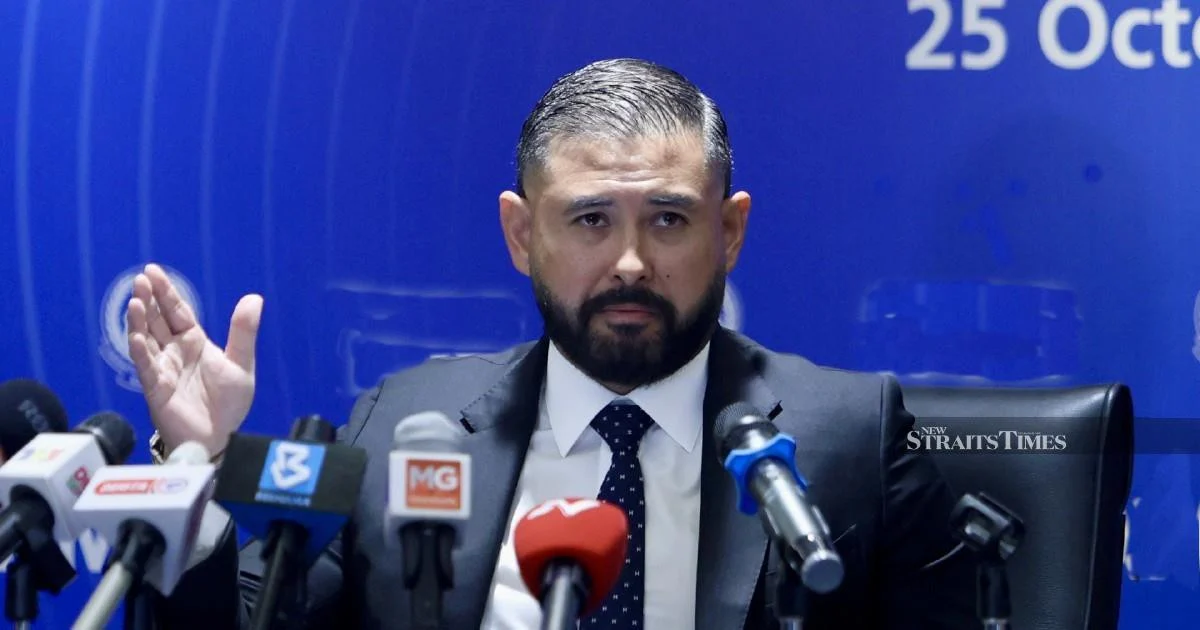
Johor Regent Tunku Ismail Sultan Ibrahim has directly challenged the prime minister's recent remarks about the state's fiscal health, rejecting the portrayal of Johor as a prosperous state hampered by substantial internal revenue losses. Instead, the regent has redirected the blame toward the federal government, arguing that structural issues at the national level are preventing the state from realising the full benefit of its economic output. The exchange highlights deepening tensions between Johor's leadership and Kuala Lumpur over how state finances are managed and distributed.
The regent's intervention comes in the wake of Prime Minister Anwar Ibrahim's comments characterising Johor's financial challenges as primarily stemming from leakages—inefficiencies, corruption, or mismanagement within state institutions that drain resources. This framing implied that Johor's own administrative and governance structures were fundamentally responsible for revenue shortfalls. However, Tunku Ismail Sultan Ibrahim has reframed the narrative entirely, suggesting that blame for the state's financial constraints lies not with internal dysfunction but with how the federal system allocates and returns revenues collected from Johor's economic activities.
The distinction drawn by the regent is significant for understanding Malaysia's fiscal federalism. While the prime minister's diagnosis pointed to leakages as an internal governance problem requiring better state-level administration, the regent's counter-argument attacks the federal revenue-sharing mechanism itself. This suggests that substantial portions of economic value generated within Johor are being retained by the federal government rather than returned to the state for development and public services. Such a critique touches on a long-standing grievance in Malaysian federalism: whether resource-rich or economically productive states receive equitable compensation for revenues collected within their borders.
Johor's economic significance makes this dispute more than a technical accounting matter. As one of Malaysia's largest and most economically dynamic states, Johor contributes substantially to national GDP through manufacturing, petrochemicals, trade, and services. Port Klang's operations, industrial zones, and cross-border commerce with Singapore generate considerable federal and state revenues. If the regent's assertion is correct—that the federal government is not returning fair value to Johor—the implications extend beyond the sultanate's coffers to questions about whether Malaysia's wealthier states are effectively subsidising federal spending and redistribution to less developed regions.
The regent's statement also reflects a broader pattern of friction between Johor's leadership and the federal government under Anwar Ibrahim's administration. Since assuming office, the prime minister has pursued various fiscal and policy initiatives that have occasionally created tension with state governments, particularly those governed by political coalitions different from the federal ruling coalition. Johor's ruling structure, which includes influence from the Johor royal family, operates somewhat independently of the federal-level political consensus, occasionally creating divergences in priorities and perspectives on governance.
The characterisation of Johor's fiscal problems reveals contrasting diagnostic frameworks. The federal perspective, as articulated by the prime minister, emphasises institutional reform, anti-corruption measures, and tightening state administration to plug losses. This approach assumes the state's difficulties are largely self-inflicted and remediable through better governance. Conversely, the regent's position suggests systemic injustice in how revenues flow between tiers of government—a structural problem requiring federal policy changes rather than merely improved state-level execution. These are fundamentally different problems demanding fundamentally different solutions.
For ordinary Johoreans and businesses operating within the state, the distinction matters considerably. If internal leakages are the primary issue, then improved oversight and transparency mechanisms within state institutions should gradually free up resources for public investment. If federal revenue retention is the core problem, then local reforms alone cannot resolve the constraint, and the state's development capacity remains artificially limited regardless of how efficiently state agencies operate. The regent's framing suggests that even well-managed state institutions cannot deliver optimal development outcomes when the federal system systematically extracts wealth without proportional return.
The regent's intervention also carries political weight given the royal family's constitutional role in Johor governance. In Malaysia's system, state rulers command significant symbolic and institutional authority. When Tunku Ismail Sultan Ibrahim speaks on fiscal matters affecting Johor, he does so with the backing of royal institutional standing, lending his assertion considerable weight within state circles and lending credibility to claims about federal-state revenue dynamics. This is not merely a political disagreement between competing politicians but a challenge to federal fiscal policy from Johor's highest institutional authority.
Looking forward, this dispute signals potential friction points in federal-state relations as Malaysia navigates its economic recovery and fiscal consolidation efforts. If states like Johor increasingly argue that federal revenue-sharing mechanisms are inequitable, pressure may mount for renegotiation of the financial architecture governing centre-state transfers. Other economically significant states may join this conversation, potentially reshaping how Malaysia distributes the fruits of economic activity between federal and state governments. The immediate exchange between the prime minister and Johor's regent thus points toward deeper questions about fiscal federalism that Malaysian policymakers may need to address more systematically in coming years.
Meanwhile, this public disagreement underscores how governance questions in Malaysia often transcend routine administrative matters to touch constitutional relationships, regional equity, and the distribution of power and resources. The debate over whether Johor's fiscal constraints reflect internal leakages or federal overreach is consequently not merely technical but speaks to fundamental issues of state autonomy and fair economic treatment within Malaysia's federal structure.