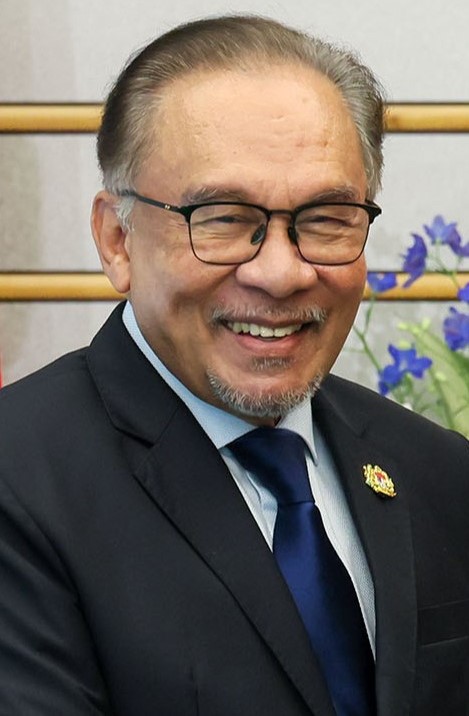
Johor has received RM14.6 billion in development allocations under Prime Minister Datuk Seri Anwar Ibrahim's administration, Pakatan Harapan asserted on Tuesday, dismissing persistent claims that the southern state has been sidelined by the Federal Government. The coalition's statement comes amid ongoing political discourse about resource distribution across Malaysia's states, with opposition figures frequently questioning the equity of federal spending decisions.
The allocation figure represents a substantial commitment to Johor's infrastructure and development agenda, signalling the government's continued investment in the state despite political complexities. PH's emphasis on this spending level underscores a strategic messaging effort to demonstrate equitable governance across all Malaysian states, regardless of political affiliation at state level. This approach reflects broader attempts by the current administration to present itself as development-focused and non-partisan in its allocation processes.
Johor, Malaysia's third-most populous state and a significant economic hub in Southeast Asia's industrial landscape, has traditionally been important for both national economic performance and political calculations. The state's strategic location on the Strait of Johor and its proximity to Singapore have made it crucial for intra-regional trade and investment flows. Federal support for infrastructure development in Johor therefore carries implications beyond state boundaries, affecting broader economic integration within the region.
The claims of neglect appear to stem from political narratives centred on state-federal government alignment, particularly given that Johor is governed by Barisan Nasional. Opposition parties and critics have periodically suggested that non-PH states receive proportionally smaller allocations, a charge the coalition has consistently rejected. This latest pronouncement represents the government's effort to provide concrete figures countering such allegations, using budgetary data as evidence of even-handed distribution policies.
PH's defence of its allocation record reflects the delicate political balance in Malaysian federalism, where state-level control by opposition coalitions complicates resource-sharing narratives. The RM14.6 billion figure appears designed to demonstrate that the Anwar administration can separate developmental governance from electoral politics, a critical claim for building public confidence in the administration's objectivity. Such claims gain particular weight given Malaysia's history of perceived favouritism in federal spending patterns across different political regimes.
The timing of this disclosure suggests a proactive approach to addressing potential grievances in Johor ahead of any forthcoming political activity or campaign cycles. Johor remains strategically important for any ruling coalition seeking to maintain or expand parliamentary majorities, making reassurances about developmental commitment increasingly significant. The state's voters constitute a substantial bloc in the national electorate, and perceptions of federal neglect could influence political behaviour in future contests.
Development allocations encompass diverse categories including infrastructure projects, educational facilities, healthcare improvements, and industrial zone enhancements. The breadth of spending across these sectors suggests the government's attempt to address multiple facets of state development rather than concentrating resources in specific constituencies. Such diversified investment approaches are intended to create broad-based perception of progress across different communities and regions within Johor.
The articulation of this funding commitment also carries implications for Southeast Asian observers monitoring Malaysia's internal political stability and economic management. Foreign investors and regional partners often interpret domestic resource allocation patterns as indicators of governance quality and political maturity. Transparent reporting of federal spending decisions, therefore, serves diplomatic functions beyond domestic political narratives.
Looking forward, the government's willingness to publicise these figures suggests a pattern of periodic disclosure regarding allocations to various states, likely in response to specific political pressures or questions. Whether such information is uniformly available for all states or presented selectively may itself become subject to scrutiny, particularly from opposition analysis groups. The baseline of RM14.6 billion now provides a reference point against which future Johor allocations will be measured and compared.
Pakatan Harapan's framing of this allocation as evidence of equitable governance reflects contemporary Malaysian political discourse where development parity has become a key legitimacy metric. The coalition's emphasis on Johor's substantial funding despite state-level opposition governance suggests an attempt to position itself as more pragmatic and development-oriented than its predecessors. However, such claims ultimately require independent verification and comparative analysis with historical allocation patterns under previous administrations to establish credible baseline assessments.