The Johor state election is taking shape with measured early momentum as the Election Commission reported that 593 nomination forms have been distributed among prospective candidates seeking to contest the 56 assembly seats. However, the figures reveal a gap between initial interest and formal commitment, with only 133 candidates having paid the mandatory deposits required to confirm their candidacy. This disparity underscores the distinction between those exploring electoral opportunities and those ready to proceed with their campaigns ahead of polling day.
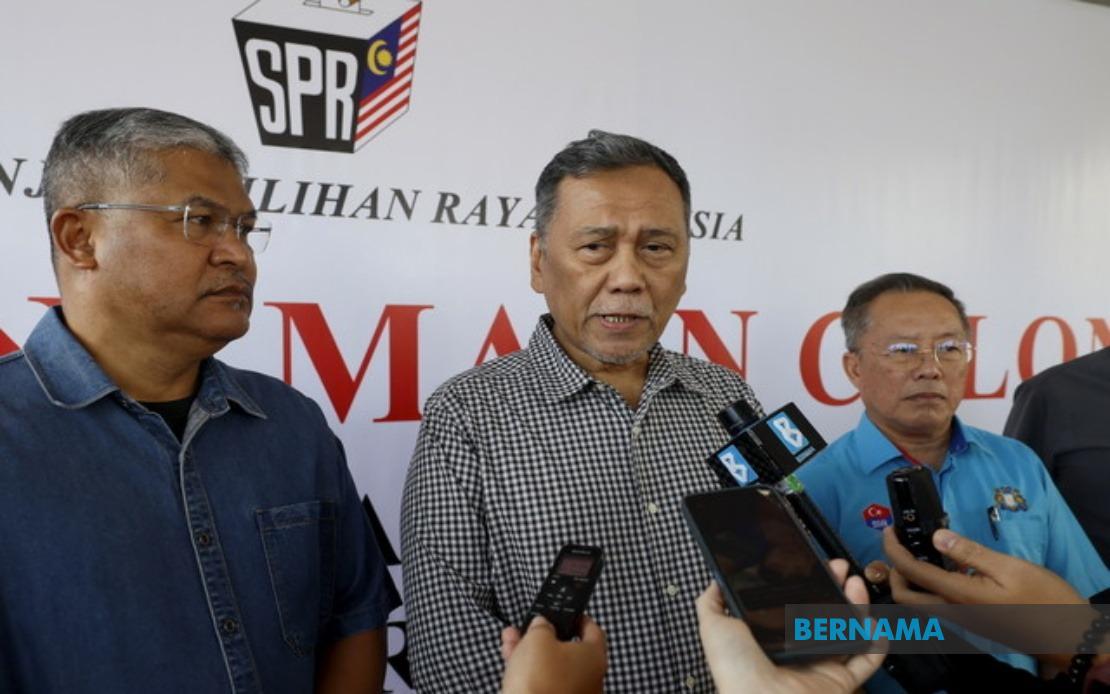
Election Commission chairman Datuk Seri Ramlan Harun made the disclosures during an inspection of nomination centre preparations in Muar, cautioning that the numbers remained fluid. With the nomination period extending until the following morning, the commission anticipated additional candidates would complete their registration formalities in the final hours before the window closed. The chairman encouraged remaining aspirants to submit their deposits promptly, framing early completion as beneficial to the overall administrative process rather than a procedural requirement.
The commission's readiness for the nomination process reflected meticulous planning across the sprawling state apparatus. All 56 nomination centres scattered throughout Johor's constituencies had undergone consecutive days of trial operations, ensuring returning officers and support staff understood their roles and systems functioned smoothly. This preparation extended beyond mechanical competence to encompass the human dimensions of electoral administration, with specific protocols developed to manage the anticipated crowds and competing interests that accompany nomination day.
Security and crowd management emerged as priority concerns given the political intensity surrounding Johor elections and the proximity of rival supporters at nomination centres. Returning officer Zainal Eran outlined arrangements whereby only three individuals per candidate—the aspirant, proposer, and a single designated supporter—would be permitted inside the nomination centre proper. This restriction aimed to prevent congestion while maintaining the procedural transparency essential to electoral legitimacy. The remaining supporter contingents would occupy cordoned field areas positioned in front of each centre, with physical barriers separating adherents of different political entities to minimise friction and prevent confrontations.
Pakatan Harapan, the opposition coalition, had committed to fielding candidates across every available seat, distributing their 56 candidates among constituent parties according to agreed formulas: PKR would contest 20 seats, Amanah 19 seats, and DAP 17 seats. This full-slate approach reflected the coalition's determination to contest every constituency despite knowing that certain areas represent deeply entrenched strongholds of their rivals. The strategy signals confidence while acknowledging demographic and electoral patterns that favour particular formations in different regions.
Barisan Nasional, the incumbent government coalition, matched this comprehensive approach by announcing candidates for all 56 constituencies. UMNO would supply the largest contingent with 36 candidates, reflecting both its numerical dominance within the coalition and its historical dominance across much of rural Johor. MCA would field 16 candidates, predominantly in constituencies with substantial Chinese populations, while MIC would contest four seats concentrated in areas with meaningful Indian community representation. This distribution within Barisan Nasional mirrors the coalition's traditional power-sharing arrangements and demographic targeting strategies.
Perikatan Nasional, the Islamist-leaning bloc competing against both Pakatan and Barisan, had adopted a more selective approach to candidate distribution. PAS, the Islamic Party, would contest 11 seats where its organisational infrastructure and ideological resonance offered competitive prospects. Bersatu, the newer Malay-dominated party, would field candidates in 16 constituencies. The Malaysian Indian People's Party and Pejuang, the personal political vehicle of former prime minister Mahathir Mohamad, would contest five and one seat respectively, reflecting their marginal status within the coalition.
The electoral landscape featured additional smaller contenders seeking representation or making debuts on the state level. Malaysian United Democratic Alliance would contest four seats, while Parti Sosialis Malaysia, maintaining its perennial electoral presence, would contest a single constituency. Most notably, Parti Bersama Malaysia announced plans to contest 15 seats in what would constitute its inaugural electoral appearance at the state level, potentially injecting unpredictability into several constituencies where its support base remains unmeasured.
The electoral timeline compressed the nomination process into a confined schedule. Having dissolved the Johor State Legislative Assembly on June 1, the Election Commission designated the following day as nomination day, allowing only a narrow window for candidates to formally register their intentions. Early voting was scheduled for July 7, just one week later, compressed within Malaysia's constitutional provisions for rapid electoral cycles. Polling day itself was set for July 11, meaning the entire campaign period would span approximately two weeks—an unusually brief timeframe that advantages well-resourced and established political organisations while disadvantaging newer entrants and lesser-funded candidates.
This compressed schedule particularly impacts Parti Bersama Malaysia and other smaller formations attempting to establish campaign presence across multiple constituencies without the institutional machinery available to established parties. The tight timeline means limited opportunity for voter familiarisation with unfamiliar candidates or parties, potentially suppressing their ability to convert nascent support into actual ballots. Conversely, the rapid cycle may benefit incumbent Barisan Nasional, which maintains administrative advantages through state resources and established organisational networks.
The nomination data revealed evolving patterns within Malaysian electoral dynamics. The gap between form distributions and deposit payments suggests that while significant political interest surrounds the Johor election, actual candidate recruitment has not reached the levels sometimes observed in other state contests. This distinction may reflect realistic assessments by potential candidates regarding their electoral viability or incumbent advantages in various constituencies. The final candidate count, once nomination period concluded, would provide clearer insight into competitive intensity across different electoral divisions and coalition confidence levels in particular regions.
For Malaysian observers and regional analysts monitoring Johor's political significance—given its position as Malaysia's second-largest state by population and its traditional role as bellwether for national political trends—the unfolding nomination process foreshadows the substantive contests ahead. The choice between maintaining incumbent Barisan Nasional dominance and shifting toward Pakatan Harapan control or supporting emerging formations like Perikatan Nasional would substantially influence both state governance and national political momentum, particularly if general elections followed within the subsequent eighteen months.

