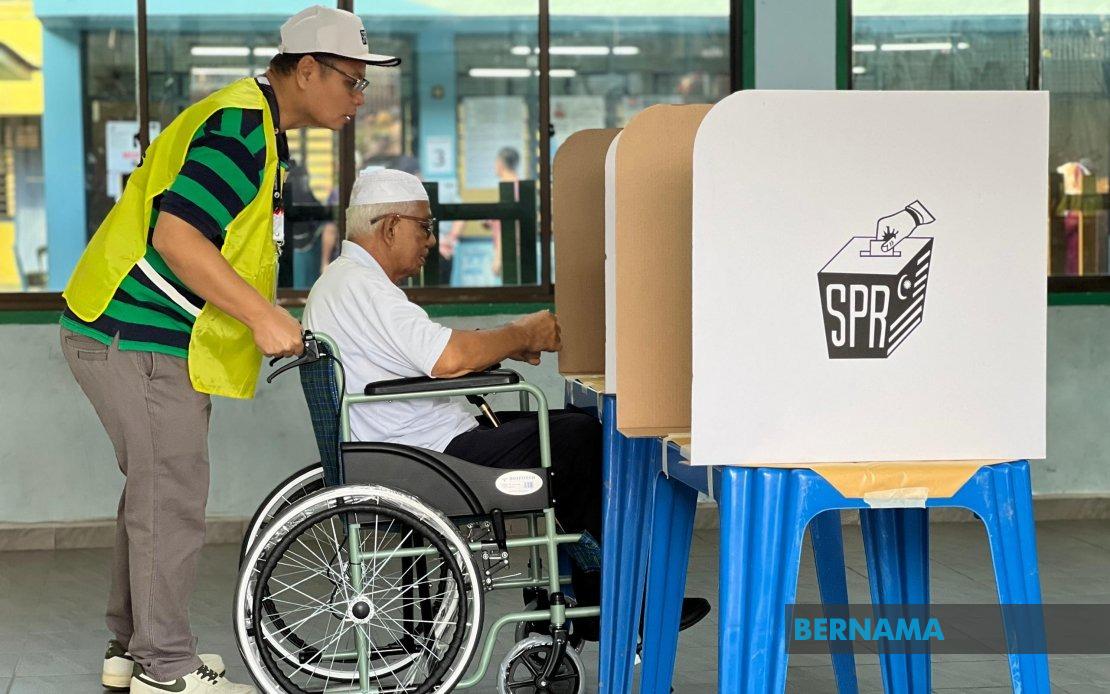
Voting in the 16th Johor state election began smoothly this morning as all 1,076 polling centres across the state opened their doors simultaneously at 8 am, setting the stage for what election officials hope will be a decisive mandate on state governance. The coordinated opening of voting stations, which collectively manage 4,889 individual polling streams, represents one of the largest electoral exercises in the state's recent political history, with approximately 2.7 million registered voters expected to participate in determining the composition of the next State Legislative Assembly.
The voting process is scheduled to run for 10 continuous hours, with polling stations generally remaining operational until 6 pm, though several facilities in constituencies with smaller voter populations will close earlier in a staggered manner beginning as early as 11 am. This tiered closing arrangement reflects the Election Commission's effort to balance efficiency with accessibility, ensuring that voters in less densely populated areas are not disadvantaged by longer queues while simultaneously maintaining polling operations where demand is highest.
The election presents a multi-cornered contest across Johor's 56 State Legislative Assembly seats, with 172 candidates in total competing for representation. The competitive landscape reveals considerable fragmentation, with the breakdown showing 14 straight fights involving just two candidates each, 27 three-cornered contests with three competing candidates, and 12 four-cornered battles where four or more contenders vie for the same seat. This distribution of contest types indicates that voters in certain constituencies will face straightforward binary choices, while others will navigate more complex decisions among multiple options.
The Election Commission has publicly stated its target for voter participation, aiming for approximately 70 per cent turnout, a figure that would represent substantial engagement across the state's electorate. Officials have indicated that full results of the election may be announced as early as 10 pm, contingent on the speed of vote counting and verification processes across the numerous polling centres. This accelerated timeline for result declaration reflects improvements in electoral administration and counting procedures that have been implemented in recent election cycles.
Security arrangements have been a priority throughout the polling day, with election officials deploying adequate security personnel at all voting stations to maintain order and prevent disruption to the electoral process. Observers positioned at several polling centres noted that security measures appeared to be implemented without creating unduly restrictive conditions that might deter voters from participating. The presence of uniformed personnel was designed to provide reassurance to voters while simultaneously deterring any potential misconduct or irregularities.
Media organisations began positioning themselves at key polling locations from early morning, with journalists and camera crews arriving by 7 am to capture developments as voting commenced. This early deployment of press personnel reflects the high political stakes of the election and intense public interest in the outcome, particularly given the significance of state-level elections in determining regional governance and policy priorities. The extensive media presence ensures comprehensive reporting of voting patterns, turnout figures, and incident reports throughout the day.
Weather conditions proved generally favourable for conducting the election across most of Johor, with clear skies prevailing throughout the state. The notable exception was the Muar constituency, which experienced rainfall during the morning hours, potentially affecting voter mobility and turnout in that particular area. Election administrators have indicated that inclement weather has not disrupted voting procedures, though it may influence the pace at which some constituencies report results.
The conclusion of the 14-day campaign period at midnight the previous night marked the official end of intensive political canvassing and public persuasion activities. This cooling-off period, now completed, is designed to provide voters with time for final reflection on their choices without the pressure of ongoing campaign messaging. The transition from campaigning to voting represents the culmination of weeks of political activity, debate, and public engagement that characterises state election cycles in Malaysia.
For voters in Johor, this election carries substantial implications for the state's policy direction over the coming term, particularly regarding economic development priorities, urban planning initiatives, and the allocation of state resources. The competitive nature of multiple contests suggests that the outcome may produce a closely divided state assembly, potentially influencing the formation of the government and the legislative priorities that will emerge following vote tallying. As polling continues throughout the day, election observers and political analysts across Malaysia will closely monitor turnout figures and early voting patterns as indicators of the electorate's preferences and the likely composition of Johor's next legislative assembly.

