The nomination phase of Johor's 16th State Election came to an end on June 27 when returning officers at all 56 polling centres statewide formally closed their doors at 10am. The one-hour submission window, which opened at 9am, allowed candidates to lodge their nomination papers before the deadline expired, marking the transition from candidate registration to the official campaign trail.
The closure of nomination centres represents a critical juncture in the electoral calendar. With submissions now completed, the state election machinery shifts focus to the systematic verification and announcement of eligible candidates. Election officials must now compile the official list of contestants and determine the final composition of candidates standing for each state seat—information that will be published in the coming days to inform both the public and campaign teams of the full slate of competition.
Secure voting rolls form a substantial foundation for the upcoming contest. The Election Commission has registered a total of 2,727,926 eligible voters across Johor, comprising 2,703,175 ordinary voters alongside 12,041 military personnel and their spouses, plus 12,710 police personnel and their spouses. This electorate size underscores the significance of the state election as a major democratic exercise affecting nearly 2.8 million individuals across Malaysia's southernmost state.
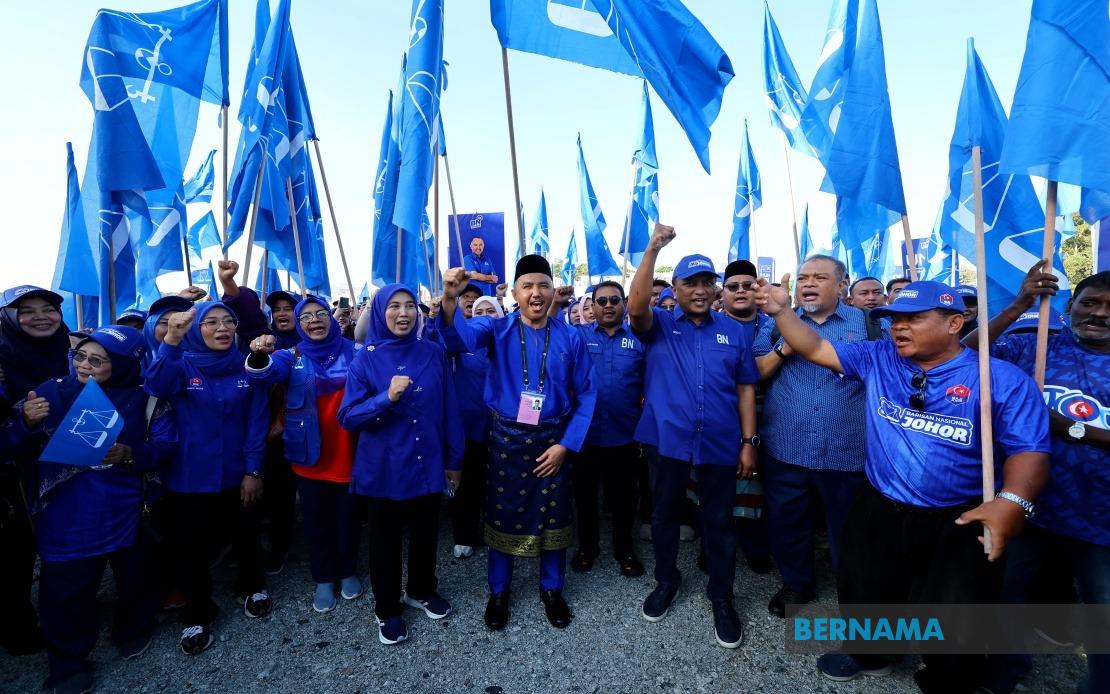
Throughout the nomination process, political party members and supporters congregated at various submission centres, creating visible demonstrations of electoral participation and grassroots engagement. These gatherings illustrated the competitive spirit animating the contest while reflecting the importance stakeholders assign to the upcoming ballot. The atmosphere at nomination venues remained orderly and incident-free, a testament to both the discipline of campaign organisations and the professional management of the election administration.
Maintaining peace and security throughout the nomination period required coordinated efforts from multiple agencies. The Royal Malaysian Police (PDRM) provided primary security coverage at all 56 centres, whilst the People's Volunteer Corps (RELA) rendered supporting assistance. This layered security approach ensured that the electoral process proceeded without disruption or provocation, protecting the integrity of candidate registration and demonstrating the commitment of authorities to orderly democratic administration.
With nominations formally closed, the election calendar now advances to the intensive campaign phase. The Election Commission has established a 14-day campaign period extending from June 27 through 11.59pm on July 10—a fortnight during which political parties will mount their canvassing efforts, candidates will articulate their policy platforms, and contenders will seek to persuade voters. This campaign window represents the core period of electoral competition, where campaign machinery, messaging strategies, and on-ground organising determine which candidates gain traction with constituents.
The Election Commission has structured the subsequent voting arrangements to accommodate the electorate's democratic participation. Early voting has been scheduled for July 7, providing voters unable to cast ballots on the main polling day with an alternative opportunity to exercise their franchise. This provision recognises that military personnel, police officers, and other citizens may have duties preventing them from voting on the standard election day, thereby ensuring broader participation across the electorate.
Polling day itself is set for July 11, marking the culmination of the electoral process and the moment when Johor's 2.7 million voters determine the composition of the state legislative assembly. The conduct and outcome of this election hold significance beyond Johor itself, as state-level contests increasingly influence Malaysia's broader political dynamics and serve as indicators of voter sentiment across different regions and demographic groups. The results may carry implications for national political calculations and inter-party positioning ahead of future electoral contests.
The transition from nomination to campaigning represents a fundamental shift in the election cycle's dynamics. Candidates have now formally registered their intent to contest; the field of competition is set. What follows is the persuasion phase, where rhetoric, grassroots organising, policy differentiation, and voter mobilisation efforts determine electoral outcomes. Johor's voters will encounter intensifying political activity, increased media coverage, and heightened stakes as all competing parties concentrate resources and effort on securing victory in their target constituencies.

