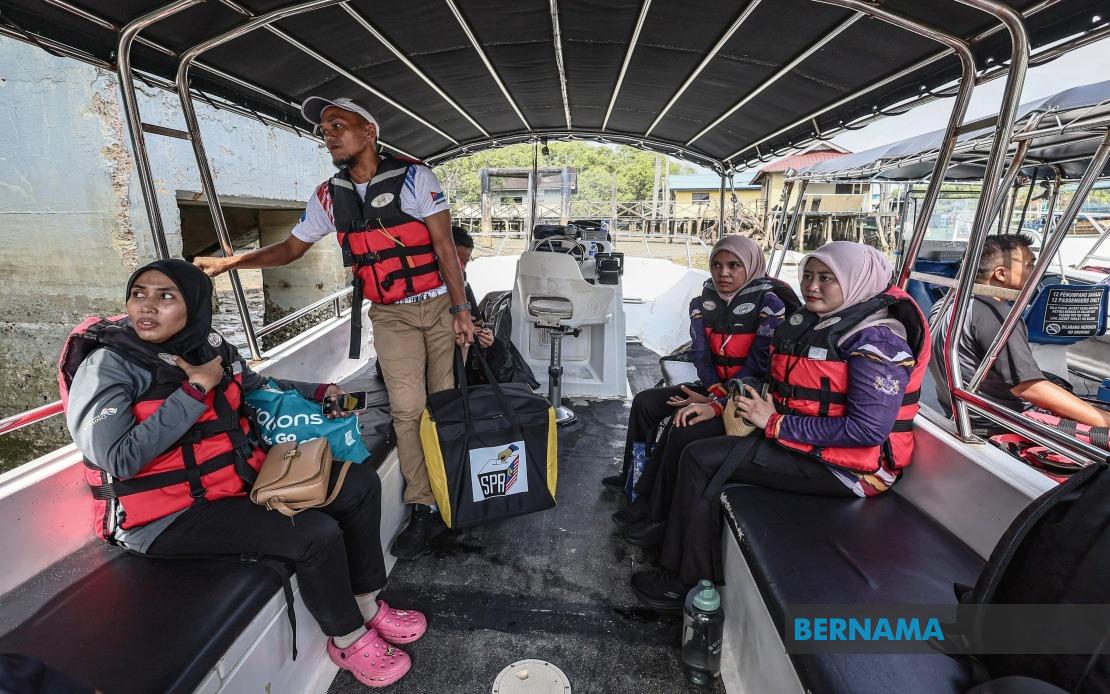
The 16th Johor State Election has served a dual purpose: while voters across the state exercised their democratic right, small business operators from the transport and hospitality sectors have capitalised on the electoral activity to generate significant additional revenue. The election has demonstrated how major civic events can create localized economic spillovers that benefit entrepreneurial Malaysians operating in niche sectors, particularly those serving the island communities and mobility-dependent populations within the state.
Mustakim Shafie, proprietor of Island Eagle Boat Services & Island Hopping, found his modest maritime transport operation suddenly inundated with demand. Operating a fleet of six speedboats from Johor Bahru, Mustakim's company initially mobilized vessels to transport Electoral Commission personnel and election-related supplies to the islands. However, as voting commenced, the focus shifted dramatically toward civilian passengers—nearly 50 island voters requiring transportation to reach their designated polling stations.
The 35-year-old operator revealed that the election day workload effectively doubled his normal business volume. His standard charter arrangements, which typically command between RM4,000 and RM4,500 for comprehensive three-day, two-night package trips, demonstrated robust market resilience. For one-way journeys accommodating up to 18 passengers, Mustakim's pricing remained competitive at approximately RM2,500 per trip, suggesting that price sensitivity among voters determined to exercise their franchise remains relatively modest.
However, the maritime transport sector's reliance on environmental factors creates inherent vulnerability. Mustakim identified unpredictable weather patterns and variable sea conditions as persistent operational challenges, particularly during election logistics operations where schedule reliability becomes paramount. The inability to control meteorological conditions means that even heightened demand cannot guarantee consistent profitability for boat operators across multiple election cycles.
Hashrul Azmin Jumaat, a veteran boat operator with over two decades of maritime experience, brought accumulated expertise to bear in managing the operational risks. The 39-year-old navigator specializes in extended-distance island routes, including the demanding two-hour journey covering 76 kilometres to Pulau Aur. Such experience proved invaluable during the election period, enabling Hasrul to prioritise passenger safety while maintaining operational efficiency. His confidence in managing challenging conditions reflected the professional standards developed through decades of navigating Johor's coastal waters.
Beyond maritime services, land-based food vendors experienced their own electoral bonanza. Ismail Mad Hasim and his wife Faradila Fairuz Mohd Affandi operated a food stall strategically positioned beside Sekolah Kebangsaan Taman Sutera, which served as a polling station. The husband-and-wife team, both seasoned food entrepreneurs, observed that customer traffic commenced as early as 8 am, concentrating among early voters seeking sustenance before or after casting their ballots. This demographic pattern reflects the behavioral rhythms of Malaysian voters during major electoral exercises.
The couple's entrepreneurial acumen extended beyond capitalizing on election-day foot traffic. They drew upon previous experience from the General Election to anticipate demand patterns and optimize their inventory. Their prior exposure to large-scale civic events had equipped them with pragmatic understanding of how electoral activity translates into consumer spending in their immediate locale. Such experiential learning demonstrates how small-scale vendors develop institutional knowledge about demand fluctuations tied to major national and state events.
Despite the substantial business opportunities that polling day presented, Ismail and Faradila demonstrated unwavering commitment to their civic obligations. Both entrepreneurs maintained their intention to vote at the same polling centre where they conducted their business, fulfilling their electoral responsibilities only after selling out their food inventory. This dual commitment—to commercial enterprise and democratic participation—characterizes the pragmatic approach many Malaysian small business owners adopt toward civic duties.
The 16th Johor State Election encompassed over 2.6 million registered voters across the state, providing the contextual scale for understanding the economic opportunities available to service providers. With polling stations distributed across residential, institutional, and geographic locations, small vendors positioned throughout Johor found themselves naturally integrated into the electoral infrastructure. The geographic dispersal of polling centres, combined with the multi-hour voting window extending until 6 pm, created extended windows for commercial activity.
These electoral economic patterns offer instructive observations for policymakers and economists monitoring informal sector resilience. Small-scale operators in transport and food services possess considerable flexibility to respond rapidly to temporary demand surges, pivoting existing capacity to capture new revenue streams. However, this flexibility depends fundamentally on maintaining adequate operational infrastructure—boat fleets and food preparation capacity remain fixed costs that require consistent revenue generation beyond electoral periods.
The experience of Johor's transport and food vendors during the 16th state election illustrates a broader phenomenon affecting Southeast Asian economies: major civic events generate ancillary economic benefits that often remain undocumented in official election reporting. Yet these microeconomic gains matter substantially to individual entrepreneurs operating within narrow profit margins. Electoral cycles thus function not merely as political exercises but as occasional economic stimulus events for communities whose livelihoods depend on service provision and consumer-facing commerce.
Looking beyond the immediate electoral context, the demonstrated ability of small operators to rapidly mobilize capacity suggests encouraging adaptability within Malaysia's informal and semi-formal business sectors. Whether such adaptive capacity can be sustained and formalized through improved access to credit, training, and business development services remains a separate policy question. The enthusiasm evident among Johor's boat operators and food vendors indicates latent entrepreneurial energy that, with appropriate institutional support, might generate more consistent economic activity across electoral cycles and beyond.

