The race for control of Johor's state government entered its decisive final phase on July 10, with all major political coalitions and candidates executing last-minute campaigns to capture voter support before the official campaigning deadline at 11:59 pm that evening. The 16th Johor State Election represents a crucial battleground in Malaysia's political landscape, with 172 candidates vying to secure 56 state legislative seats in an election that will test the strength of competing political alliances in one of the country's most significant states.
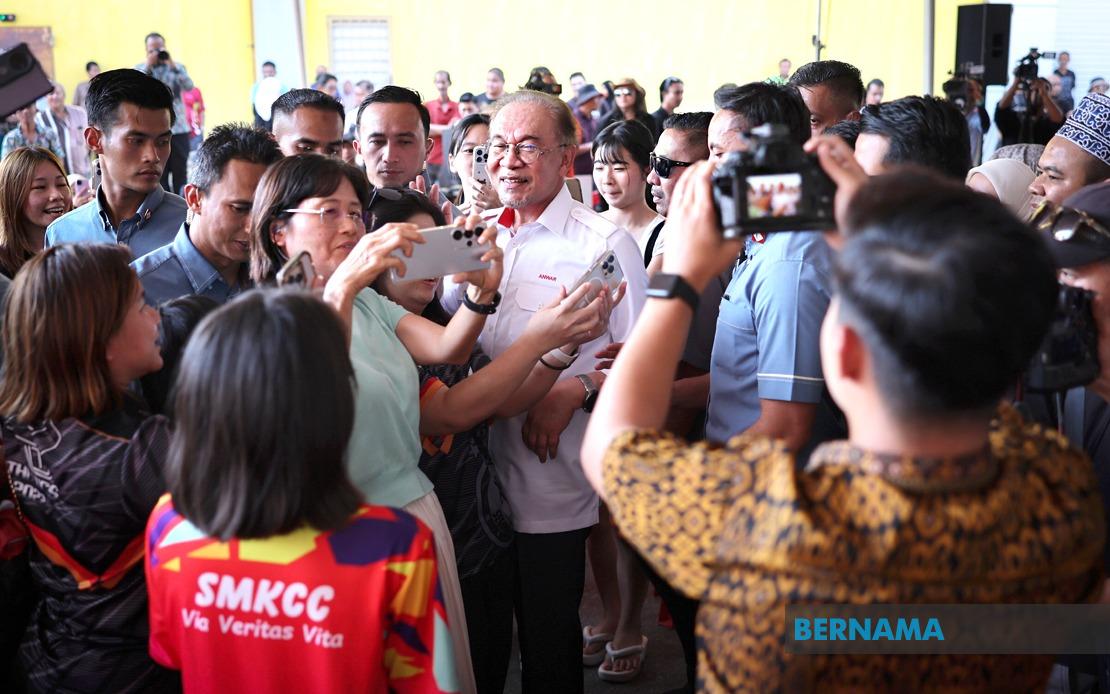
Pakatan Harapan's leadership spearheaded an intensive closing campaign, with coalition chairman Datuk Seri Anwar Ibrahim undertaking a final tour spanning five strategic constituencies to energise the opposition alliance's candidates. The Prime Minister's itinerary encompassed the Bukit Gambir, Bukit Batu, and Layang-Layang state legislative assembly areas, with the campaign reaching its crescendo through the 'Johor Ke Depan, Undi Harapan Grand Finale Programme' held in Pasir Gudang. This strategic geographic distribution reflected PH's attempt to consolidate support across diverse voter demographics, combining urban and suburban constituencies that have proven volatile in recent electoral cycles. Beyond the visible campaigning, Anwar leveraged social media platforms to appeal to the spiritual dimension of voting, posting messages praying for the coalition's campaign efforts to proceed smoothly ahead of the critical polling day.
PH's candidates adopted varying approaches to secure last-minute endorsements. Suhaizan Kaiat, the opposition coalition's nominee for the Larkin state seat, opted for grassroots retail politics by conducting informal walkabouts through a shopping mall, accompanied by Parti Amanah Negara Vice President Datuk Seri Dr Dzulkefly Ahmad. This direct engagement strategy aimed to establish personal connections with undecided voters and underscore the coalition's accessibility compared to more formal, hierarchical political traditions. Suhaizan framed the entire campaign period as a mandate to address voter concerns, positioning himself as a responsive representative who would carry forward the feedback accumulated throughout weeks of constituency engagement.
Barisan Nasional adopted a notably different closing strategy, with coalition chairman Datuk Seri Dr Ahmad Zahid Hamidi presiding over a spiritual supplication event in the Kulai district. This approach, emphasising the 'BN Grand Supplication & Doa Selamat' ceremony, reflected a traditional appeal to religious sentiment and moral authority within Malay-Muslim constituencies that constitute significant voting blocs in Johor. The Deputy Prime Minister's invocation of spiritual dimensions suggested BN's efforts to reinforce its cultural and religious legitimacy, a cornerstone of its electoral appeal for decades. Meanwhile, Johor's incumbent Menteri Besar Datuk Onn Hafiz Ghazi of BN adopted a tone of humility, publicly apologising through a Facebook video for any shortcomings in his administration, indicating recognition that incumbent performance faced voter scrutiny.
Perikatan Nasional's representation in the election centred on party president Tan Sri Muhyiddin Yassin, who issued appeals for voters to exercise informed decision-making. Muhyiddin's messaging emphasised that the two-week campaign period provided adequate opportunity for citizens to evaluate competing parties and their governance platforms before making their electoral choices. This rhetorical strategy positioned Perikatan as a rational alternative, encouraging deliberative voting rather than emotional or habitual allegiance to established coalitions. Such framing proved particularly relevant in Johor, where incumbent BN rule faced accumulating pressures and newer political formations sought to position themselves as agents of change.
The Bersama party, though a smaller player in the electoral field, concluded its campaign through a finale ceramah featuring prominent leaders Datuk Seri Rafizi Ramli and Nik Nazmi Nik Ahmad. Rafizi's statement indicated an intention to synthesise campaign issues, dissecting competing narratives and policy positions in a final comprehensive address to Johor voters. This approach suggested that Bersama sought to position itself as an intellectually serious alternative capable of rigorous policy debate, potentially appealing to urban, educated voters frustrated with broader coalition politics. Meanwhile, the Malaysian United Democratic Alliance (MUDA) orchestrated its 'Puteri Wangsa Grand Finale Lecture' as the party's closing event, with party president Amira Aisya Abd Aziz emphasising voter empowerment and the ultimate control citizens exercise through the ballot.
Weather considerations assumed practical significance for election logistics, with the Malaysian Meteorological Department forecasting clear morning conditions but potential afternoon rainfall or thunderstorms across most Johor areas. Such weather patterns typically influence voter turnout and campaign accessibility, particularly affecting elderly voters and those in rural constituencies where transportation infrastructure proves weather-sensitive. Campaign organisers across all coalitions would require contingency planning to manage potential rain-related disruptions to voting processes and candidate movements.
The 16th Johor State Election encapsulates broader tensions within Malaysian politics. Johor represents a historic BN stronghold, yet opposition coalitions increasingly contest this traditional territory, reflecting shifting voter preferences particularly among younger demographics and urban constituencies. The election outcome carries implications extending beyond Johor's borders, potentially influencing federal-level political calculations and inter-coalition dynamics within both PH and Perikatan formations. A dominant BN victory would reinforce ruling coalition stability, while substantial opposition gains would signal persistent voter appetite for political alternatives and possible government restructuring.
For Malaysian and Southeast Asian observers, the Johor election demonstrates the endurance of electoral competition within Malaysia's democratic framework despite periodic political turbulence. The diverse campaign strategies employed by competing coalitions—from spiritual appeals to grassroots engagement to policy-focused messaging—illustrate how parties attempt to build electoral coalitions across culturally, economically, and ideologically diverse constituencies. The participation of 172 candidates pursuing 56 seats reflects both the health of competitive democracy and the fragmentation of political forces that characterises contemporary Malaysian politics, wherein no single coalition commands overwhelming dominance and electoral outcomes remain genuinely uncertain until voters cast their ballots.

