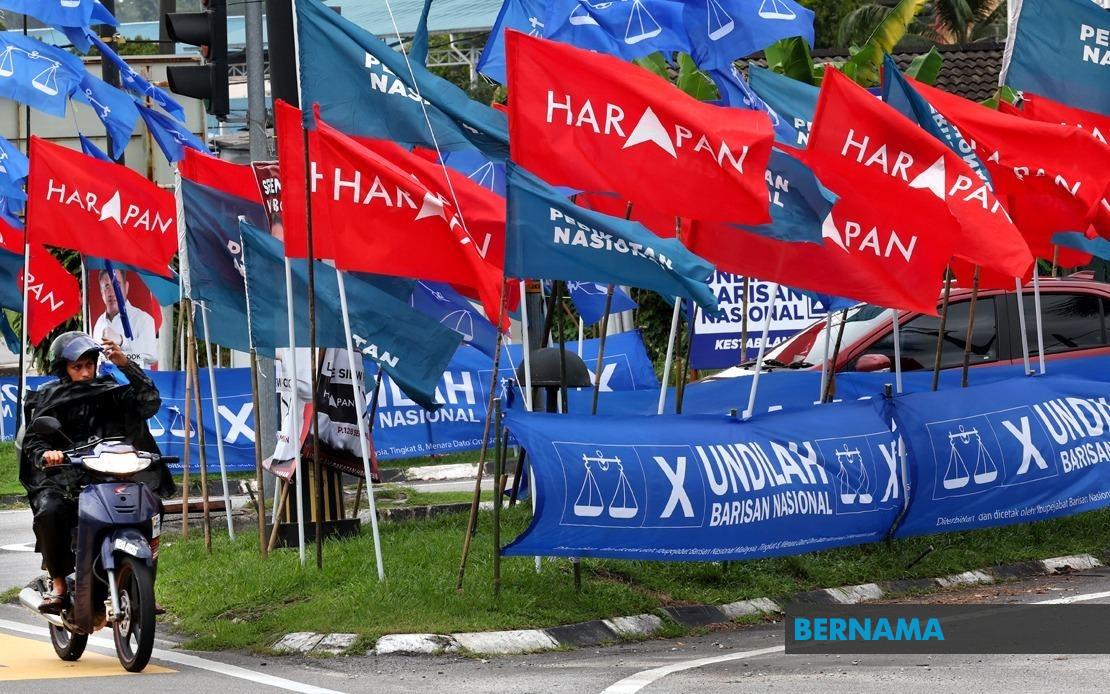
The campaign for the 16th Johor state election has reached its fever pitch, with less than 48 hours remaining before the official end of campaigning at midnight on July 10. Across the state's 56 contested seats, candidates representing Pakatan Harapan, Barisan Nasional, Perikatan Nasional, and smaller parties are executing their final strategies to convert undecided voters and energise their base before polling day on Saturday. The intensity of activity reflects the high stakes involved, as control of Johor—Malaysia's most economically significant state outside the Klang Valley—remains fluid heading into the ballot.
Pakatan Harapan has positioned itself as the coalition offering hope and reform, leveraging the national visibility of Prime Minister Datuk Seri Anwar Ibrahim to amplify its messaging. This evening, Anwar is scheduled to appear at three key locations, with particular focus on Puteri Wangsa, a constituency that has emerged as a bellwether for the coalition's performance in the south. The decision to concentrate presidential-level attention on Puteri Wangsa signals both opportunity and vulnerability; PH clearly believes it can win the seat, yet the specific mention suggests the race remains competitive. PH candidate Maszlee Malik has explicitly called on constituents to attend the "Grand Finale Harapan Johor Selatan" rally, employing social media vernacular to generate urgency and overcome voter apathy in the final stretch.
Within PH's broader campaign apparatus, individual candidates are displaying remarkable stamina despite the physical and mental toll of sustained electioneering. Dr A. Ruban, contesting Paloh for the coalition, briefly stepped away for medical treatment but immediately resumed his ground presence, underscoring the premium placed on personal voter interaction during this critical window. His insistence on returning to the campaign trail, despite health concerns, reflects the strategic calculation that the final 48 hours can determine marginal outcomes. Similarly, Johor PKR chairperson Datuk Seri Dr Zaliha Mustafa has coordinated motorcycle convoys involving over a hundred riders to canvas the Kemelah constituency, a tactic designed to generate visible momentum and neighbourhood awareness simultaneously.
Barisan Nasional has adopted a dual approach of top-level leadership consolidation and constituency-level persistence. Coalition chairman Datuk Seri Dr Ahmad Zahid Hamidi has made a final tour of Endau and Kempas, traditionally BN strongholds, signalling that the coalition intends to defend these traditional bases while generating morale among party functionaries. Johor Menteri Besar Datuk Onn Hafiz Ghazi, himself contesting Machap for BN, has been simultaneously campaigning across his constituency and appealing directly via social media for Saturday's mandate. The strategic positioning of the Menteri Besar in Machap underscores the constituency's importance to overall BN performance; if the current state leader loses his own seat, it would constitute a significant symbolic defeat regardless of overall election results. In Larkin, BN candidate Mohd Hairi Mad Shah has adopted a more retail politics approach through his "Ziarah Kasih" programme, emphasising one-on-one interactions and articulating the coalition's development agenda to residents.
Perikatan Nasional, representing the third major force in Johor politics, is mounting a challenge that has gradually gained traction throughout the campaign. The coalition's strategy emphasises its Islamic credentials and alternative vision of governance, with tonight's mega rally in Endau featuring both PN chairman Datuk Seri Ir Dr Ahmad Samsuri Mokhtar and PAS president Tan Sri Abdul Hadi Awang in support of Endau candidate Hasnul Hakimi Hussien. This appearance by the PAS leader is significant, as it demonstrates the continued cohesion within the PN alliance despite tensions that have periodically surfaced in other states. Kahang candidate Mazlan Bujang epitomises the frontline commitment among PN contenders, explicitly stating his intention to continue voter engagement for every remaining hour of campaigning. This relentless ground focus suggests PN believes its performance will be determined by mobilisation intensity rather than earned media or celebrity endorsements.
Smaller political entities are also exploiting the final campaign window to establish electoral credibility. Parti Bersama Malaysia, despite limited resources relative to the three major coalitions, has deployed a mobile campaign truck to reach voters across Kota Iskandar, while its Larkin candidate has pivoted to small-group community dialogues. This approach, whilst lacking the visibility of large rallies, reflects a strategic calculation that intimate interactions may yield higher conversion rates among persuadable voters. Such smaller parties often regard state elections like Johor as opportunities to build organisational presence and demonstrate viability for future contests, making the final campaign days crucial for establishing voter recognition.
The density of candidate activity and leadership participation underscores several broader dynamics shaping Malaysian electoral competition. First, incumbent state governments retain inherent advantages through access to administrative resources and established ground networks, advantages that BN is clearly leveraging. Second, opposition coalitions compensate for resource disadvantages through higher energy expenditure and emotional appeals rooted in reform narratives, as evidenced by PH's rally-centric approach. Third, the fragmentation of the Johor political landscape across three major coalitions plus smaller parties means that voter choice remains genuinely competitive in many constituencies; no coalition commands automatic victory in the majority of the 56 seats. This fragmentation also implies that swing votes in marginal constituencies could determine the overall outcome, explaining why candidates are concentrating on personal voter contacts rather than rely on broader party messaging.
The campaign timeline itself warrants examination. Thirteen days of campaigning represents the standard statutory period, yet by day 13, most candidates have exhausted large-scale event opportunities and pivoted toward intensive grassroots work. The 48-hour final window generates particular pressure because last-minute campaign activities—whether ceramahs, convoys, or social media appeals—tap into recency bias, whereby voters' most recent campaign exposures disproportionately influence final voting decisions. All three coalitions are therefore competing to ensure their messages and candidates remain visible in voters' consciousness until polling booths close. Prime Minister Anwar's three-location campaign schedule tonight, for instance, is structured to achieve maximum geographic coverage and media attention precisely when voter attention is peaking.
For Malaysian political observers, the Johor election serves as a bellwether for broader national dynamics. Johor has historically been BN's strongest state, yet recent electoral trends and demographic shifts have gradually opened the state to genuine competition. PH's decision to concentrate national leadership resources here suggests the coalition believes Johor is winnable and that a strong performance could alter the trajectory of Malaysian politics heading toward the next federal election cycle. Conversely, BN's defensive campaign in traditional strongholds like Endau and Kempas indicates awareness that maintaining the state requires sustained effort rather than reliance on historical dominance. PN's visible campaigning reflects its ambitions to establish itself as a permanent fixture in Malaysian politics rather than a temporary protest vehicle.
The 172 candidates contesting 56 seats will ultimately make their final appeals within the next 48 hours. Whether through Prime Minister appearances, grassroots canvassing, motorcycle convoys, or community dialogues, the Johor election campaign exemplifies how modern Malaysian electoral competition operates at multiple simultaneous levels: national narrative, coalition strategy, state-level tactics, and hyperlocal voter engagement. The outcome on Saturday will reflect not merely which coalition commands the most seats, but which has most effectively synthesised these various campaign dimensions into a compelling offering for Johor's electorate.

