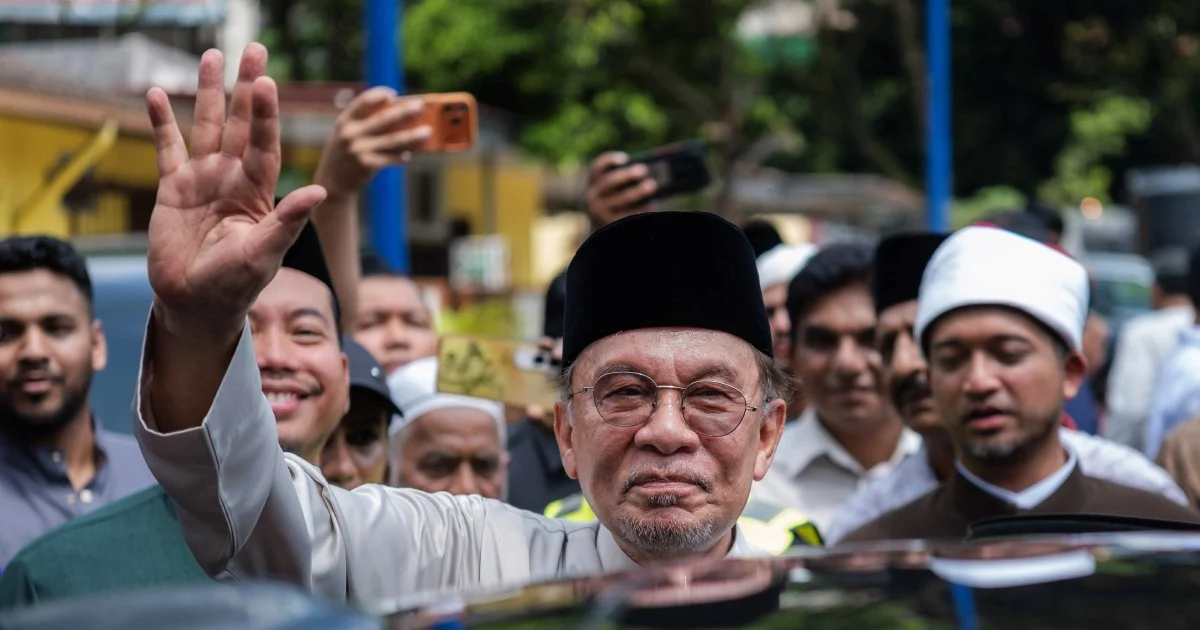
The Johor state election campaign is entering a critical phase this weekend, with Prime Minister Anwar Ibrahim, Deputy Prime Minister Zahid Hamidi and a constellation of national political figures converging on the state for an intensive schedule of public engagements and campaign activities. The arrival of these heavyweight leaders signals that both major political coalitions view the Johor contest as consequential for their respective strategic positioning ahead of the next general election, expected within the next eighteen months.
Anwar's presence at campaign events underscores the federal government's stake in the outcome. As head of the Pakatan Harapan coalition, which formed the current federal administration following the 2022 general election, the Prime Minister's personal participation in Johor's campaign demonstrates that the ruling coalition cannot afford complacency in a state where electoral fortunes have shifted significantly over recent electoral cycles. His attendance at ceramahs and public meetings is intended to galvanize support among PH-aligned voters and to project confidence that the federal government's policies resonate with Johor residents.
Zahid Hamidi's involvement reflects the Barisan Nasional coalition's determination to recapture or consolidate its electoral standing in Johor. As Deputy Prime Minister and a senior UMNO figure, Zahid carries symbolic weight within the peninsular Malay-Muslim electorate that has traditionally formed the backbone of BN support. His presence alongside local BN candidates is meant to remind voters of the coalition's historical dominance and to suggest that BN offers stable, experienced governance grounded in long-established institutional relationships.
The weekend's intensive schedule of ceramahs—public discourse forums that remain a cornerstone of Malaysian political communication—reflects the importance both coalitions assign to direct voter engagement in the crucial final phase of the campaign. Ceramahs allow political leaders to present their policy platforms, respond to audience questions, and build emotional connections with voters that television or social media campaigns cannot easily replicate. In Johor's diverse electorate, spanning urban Johor Baru, industrial Pasir Gudang, and rural districts across the state, these in-person gatherings serve as crucial mechanisms for translating national narratives into locally resonant messaging.
The Johor state election occurs within a broader context of heightened political volatility across Malaysia. The state has experienced significant shifts in voter sentiment during recent electoral contests, and the composition of its legislative assembly has become increasingly unpredictable. Neither Pakatan Harapan nor Barisan Nasional can assume traditional voter bases will remain loyal, particularly in constituencies where economic pressures—rising costs of living, employment uncertainty, and property affordability—weigh heavily on household decision-making. Political leaders recognize that campaign momentum, organizational effectiveness, and the ability to articulate credible economic solutions may prove decisive.
Beyond Anwar and Zahid, the presence of additional national figures indicates that multiple political parties within both coalitions view Johor as a testing ground for their respective organizational capacity and electoral appeal. These leaders will be assessing not only how their campaign messages resonate with voters but also the strength of ground-level machinery, the quality of candidates fielded, and the effectiveness of internal coalition coordination. A strong or weak performance in Johor may signal broader trends that could affect political calculations ahead of the general election, making local council elections and state contests increasingly viewed as harbingers of national political realignment.
The timing of this weekend's campaign events also reflects the electoral calendar dynamics unique to Johor. State election campaigns in Malaysia are notably compressed—typically spanning only two to three weeks from official nomination day to polling day—which means that major campaign events become concentrated in relatively short windows. Political leaders must therefore deploy their time strategically, focusing on constituencies deemed marginal or areas where organizational capacity is perceived as weak and where a high-profile visitor might shift local sentiment.
For Malaysian voters, particularly those in Johor, the convergence of national political leadership presents both opportunities and challenges. On one hand, ceramahs featuring top national figures may offer occasions to hold leaders accountable directly for federal government policies, to question their commitment to addressing local grievances, and to assess their seriousness about delivering on campaign promises. On the other hand, the dominance of national figures in state election campaigns can sometimes obscure local issues and the specific roles that state representatives should play in addressing community concerns, potentially shifting focus away from state-level governance priorities.
The intensity of this weekend's campaign activities also reflects deeper transformations within Malaysian political competition. The traditional dominance of any single coalition has weakened considerably, meaning that voters in marginal constituencies exercise genuine choice between competing visions for governance, and that elected representatives increasingly face pressure to deliver tangible results or risk facing voter backlash in subsequent contests. This volatility makes every state and local election consequential and demands that political leaders invest significant time and resources in persuading voters that their particular coalition offers superior governance and a more credible commitment to addressing pressing concerns.
As these campaign events unfold across Johor this weekend, observers will be watching closely not only for the messages delivered but also for the scale of crowds, the enthusiasm demonstrated by supporters, and the geographic breadth of campaign activities. These indicators offer clues about underlying voter sentiment and organizational momentum that opinion polls alone may not capture, providing early signals about the likely direction of Johor's electoral outcome and potentially broader implications for Malaysia's political trajectory in the months ahead.

