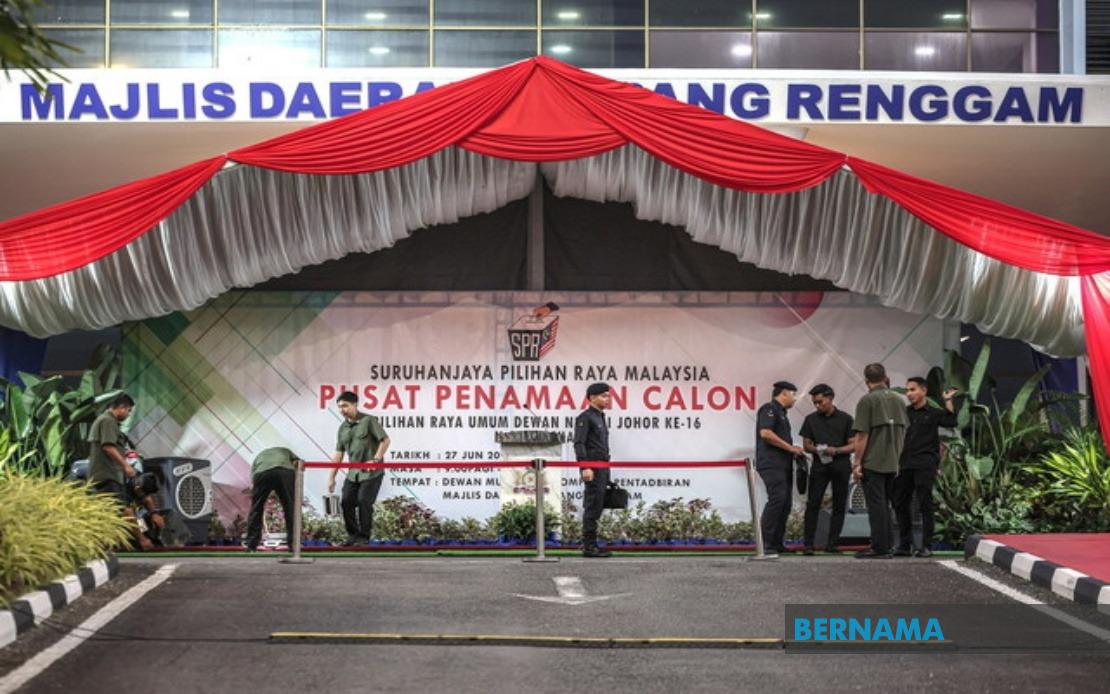
Johor Bahru witnessed the ceremonial start of its 16th state election on June 27 as all 56 nomination centres unlocked their doors simultaneously at 9am, marking the formal beginning of what promises to be a closely watched electoral contest in Malaysia's southern heartland. The opening of these centres across the state signalled the transition from pre-election preparations into the active phase of candidate registration, with political parties and their supporters mobilising in earnest to push their respective contenders forward in the race for the state assembly.
Candidates faced a tight window of opportunity to lodge their nomination papers, with the Election Commission (EC) stipulating a strict one-hour submission window closing at 10am. During this brief but critical period, nomination documents had to be presented to the returning officer at each centre, with the process allowing for submission by the candidate personally, alongside their proposer and seconder, or by any combination thereof. This streamlined approach reflected the EC's effort to maintain procedural efficiency while ensuring proper documentation of all candidatures eligible to contest the election.
The nomination process itself represented merely the opening chapter in an extended electoral schedule. Once the EC completed its verification procedures, a 14-day campaign period would commence, extending through midnight on July 10. This designated timeframe would allow candidates and parties to engage directly with voters through rallies, door-to-door canvassing, and other traditional campaign activities. The compressed campaign schedule underscores the intensity of Malaysian state elections, where political messaging must be concentrated and impactful within a relatively short operational window.
Despite the early morning opening, party supporters demonstrated considerable enthusiasm, with crowds beginning to gather from 6:30am onwards. The predawn assembly of campaign workers and volunteers reflected the grassroots mobilisation typical of Johor politics, where traditional party machinery remains influential in driving electoral participation. These early arrivals represented the foot soldiers of various political organisations, each eager to ensure their preferred candidates successfully navigated the nomination process without procedural complications.
Weather conditions threatened to complicate proceedings on nomination day. The Malaysian Meteorological Department (MetMalaysia) had issued forecasts predicting rainfall across several districts including Johor Bahru, Muar, Batu Pahat, Kota Tinggi, Pontian, Tangkak and Kulai, while other areas such as Segamat, Kluang and Mersing expected clearer skies. More concerning were afternoon thunderstorm warnings affecting most districts, including Johor Bahru, Segamat, Kluang and Kota Tinggi. These meteorological considerations, while secondary to electoral procedures, nonetheless affected the logistics of managing large crowds at nomination centres.
Security arrangements reflected the importance assigned to maintaining order during this politically charged phase. Police officers, augmented by personnel from the People's Volunteer Corps (RELA), were deployed across nomination centre areas to enforce strict traffic management and prevent any potential disturbances. The preventive security posture aimed at ensuring that the nomination process proceeded smoothly without incident, thereby preserving the integrity of the electoral framework and protecting the safety of candidates, officials and supporters alike.
The electorate for this contest comprises a substantial cross-section of Johor's population. According to EC statistics, 2,727,926 voters qualify to participate in the 16th state election, encompassing 2,703,175 ordinary citizens registered on the electoral roll, alongside 12,041 military personnel and their spouses, and 12,710 police personnel and their spouses. This voter composition reflects the strategic importance of security force personnel in Johor's electoral calculations, as their voting preferences can influence results in closely contested seats.
The EC has configured the electoral timeline to accommodate diverse voter needs through a carefully sequenced schedule. Early voting has been allocated for July 7, providing an alternative casting date for those unable to participate on the main polling day. The official election day falls on July 11, when the majority of eligible voters will determine which candidates advance their political fortunes and secure positions in the Johor State Assembly. This staggered voting arrangement has become standard practice in Malaysian state elections, enhancing accessibility and administrative efficiency.
For Malaysian political observers, the Johor state election carries implications extending beyond the southern state itself. As the second most populous state in Malaysia and traditionally a stronghold for dominant political coalitions, election outcomes in Johor frequently signal broader national political trends. The candidature decisions being formalised through nomination centre submissions would ultimately shape the competitive landscape facing voters in early July, determining which parties could mount credible challenges and which political combinations might consolidate parliamentary advantages.
The nominalisation process represents more than bureaucratic necessity—it embodies the democratic principle that political office remains accessible to candidates meeting constitutional and procedural requirements. By opening 56 centres simultaneously across diverse geographic locations, the EC sought to ensure equitable access for candidates regardless of district location. This logistical commitment to inclusive procedures underscores Malaysia's commitment to structured, rule-bound electoral competition, even as the intensity of campaign rivalry builds in the coming fortnight.

