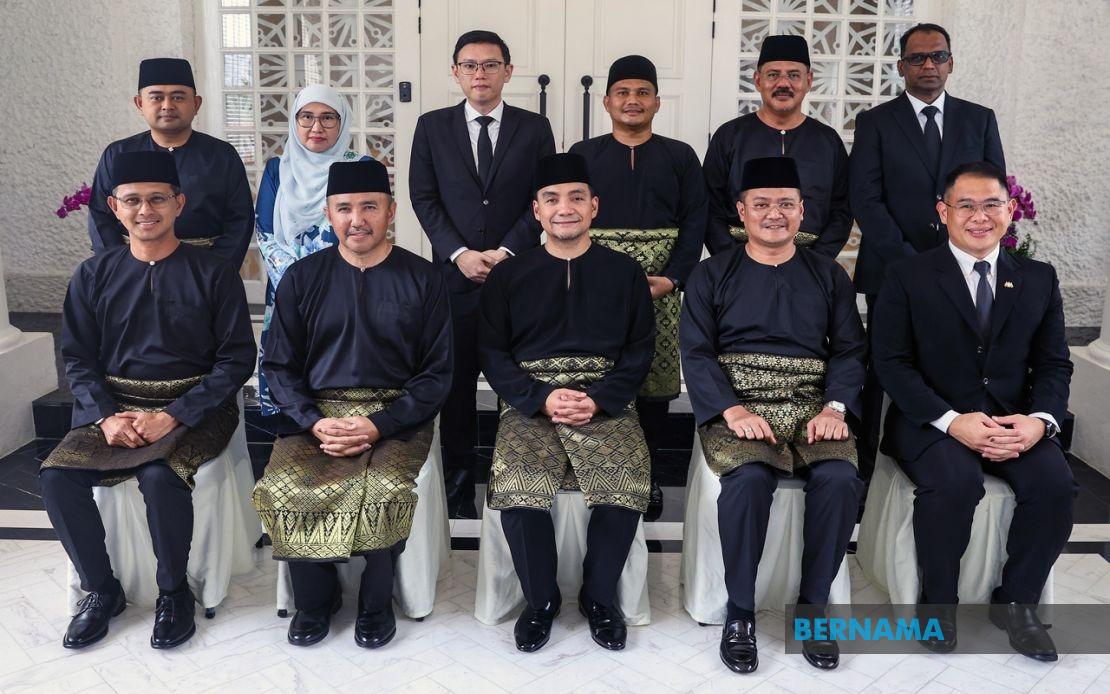
Johor's administrative structure reached completion on Wednesday as the state swore in all 10 members of its new Executive Council, marking the final chapter in establishing the government following Barisan Nasional's resounding victory in the 16th Johor State Election. The appointment and oath-taking ceremony took place at Istana Bukit Serene, with all councillors formally presented to Tunku Mahkota Ismail, the Regent of Johor, in a significant ceremonial acknowledgement of the coalition's fresh mandate.
The composition of the new cabinet represents a deliberate balance between continuity and renewal within Johor's state administration. Six experienced hands have retained their positions and responsibilities, providing institutional knowledge and policy continuity as the government embarks on its new term. Alongside these established figures, four newly appointed councillors bring fresh perspectives to the state's decision-making apparatus, signalling an attempt to inject new energy into governance while maintaining stability.
Among the newcomers, Md Israk Abdullah, representing the Kukup constituency, assumes leadership of the Agriculture, Agro-Based Industry and Rural Development Committee, a portfolio particularly significant for Johor given the state's substantial rural communities and agricultural heritage. P. Pannir Selvam, the Perling assemblyman, takes charge of the Unity, Heritage and Culture Committee, reflecting the multiethnic nature of Johor's population and the need for coordinated community development across different cultural groups. These appointments suggest deliberate efforts to ensure that governance reflects the diverse interests within the state.
Dr Muhammad Naqib Md Ghazali's appointment to chair the Education and Information Committee carries particular weight for a state with substantial youth populations and significant educational institutions. His portfolio will shape policy around schooling, higher learning, and information dissemination during a period when educational reform and digital literacy have become increasingly central to state development agendas. Hasrunizah Hassan, leading the Women, Family and Community Development Committee, completes the quartet of new appointees, addressing social welfare dimensions that extend beyond traditional economic development frameworks.
The executive council structure reflects the expanded responsibilities that modern state governments must juggle. Datuk Mohd Jafni Md Shukor continues overseeing housing and local government, critical portfolios given Johor's rapid urbanisation and the ongoing infrastructure demands of a state that functions simultaneously as an industrial hub and residential destination for families relocating from neighbouring states. Similarly, the retention of Mohd Hairi Mad Shah in the Youth, Sports, Entrepreneur and Cooperative Development Committee ensures continuity in programmes targeting younger demographics and small business development, areas where policy consistency proves beneficial.
The financial and trade dimensions of state governance remain under established supervision, with Lee Ting Han retaining the Investment, Trade, Consumer Affairs and Human Resources Committee. For Johor, these portfolios matter considerably given the state's position as Malaysia's second-largest economy and its role attracting both domestic and foreign investment. The committee structure thus reflects the state's economic aspirations and the practical concerns of businesses and workers operating within Johor's borders.
Onn Hafiz Onn's consolidation as Menteri Besar for a second consecutive term, confirmed last Sunday following his decisive victory in Machap with a majority exceeding 15,000 votes, provided the political foundation for this cabinet appointment process. As both Menteri Besar and chairman of Johor's Barisan Nasional machinery, he commands the political authority necessary to shape an executive council that balances party interests, constituency representation, and administrative competence. His retention as state leader reflected voters' approval of his first-term performance and coalition governance.
Barisan Nasional's commanding performance in the Johor election, securing 48 of 56 state seats, provides the new administration with substantial legislative support for its policy agenda. This supermajority margin insulates the government from parliamentary surprises and grants considerable room for policy manoeuvre without worrying about arithmetic vulnerability. For Malaysian observers, the election results demonstrated that the coalition retained capacity to win decisively in major states, a development with implications extending beyond Johor into national political calculations and federal-state relations.
The appointment ceremony itself, conducted with formal ceremonial protocols befitting state traditions, underscores the legitimacy and institutional weight attached to these positions. The involvement of the Regent in the presentation and oath-taking reinforces the constitutional foundations underpinning state governance and the formal separation between the executive apparatus and the institution of royalty. For Johor, such ceremonial solemnity serves important cultural and constitutional functions, grounding contemporary politics within Malaysia's constitutional monarchy framework.
From a regional Southeast Asian perspective, Johor's administrative refreshment reflects broader trends visible across the region where established parties attempt to modernise governance structures through selective renewal. The appointment strategy—retaining experienced administrators while introducing fresh voices—represents a pragmatic approach to managing political transitions while maintaining institutional continuity. This model contrasts with more radical governmental overhauls seen elsewhere, suggesting Johor's preference for evolutionary rather than revolutionary change.
The practical implications of these appointments will become evident as the cabinet navigates governance challenges ahead. Infrastructure development, education reform, economic competitiveness, and social cohesion represent standing priorities for any Johor administration. How effectively this particular cabinet composition addresses these interconnected challenges will shape public perception of Barisan Nasional's state-level governance and influence calculations about electoral preferences in future contests. The four new faces will face early tests of administrative capability and political acumen as they establish themselves within cabinet dynamics and their respective portfolios.
Moving forward, observers should monitor how portfolio holders coordinate across committees on cross-cutting issues, particularly where agricultural development intersects with environmental management, or where education initiatives connect with entrepreneurial development programs. The quality of inter-committee collaboration often determines whether cabinet structures prove effective or merely representative. For Johor, the coming months will reveal whether this particular configuration delivers on the development and governance expectations that swayed voters toward returning Barisan Nasional to power.

