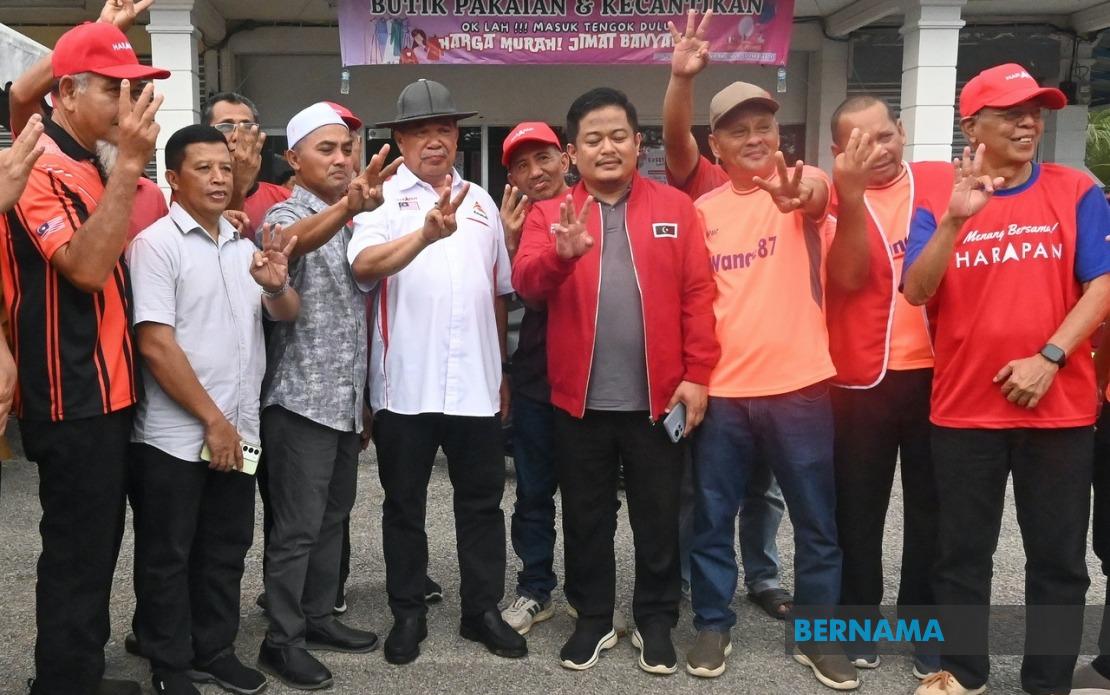
Amanah president Datuk Seri Mohamad Sabu has urged Johor voters to grant Pakatan Harapan the opportunity to govern the state, framing Saturday's election as a referendum on the coalition's ability to deliver on promises made directly to constituents. Speaking in Batu Pahat after a campaign event in Rengit, Mohamad Sabu positioned the manifesto not as generic political positioning but as a substantive response to grievances systematically gathered across the state through extensive grassroots engagement.
The Amanah leader directly countered criticism from opposition parties who have dismissed the PH manifesto as lacking originality, suggesting it amounts to repackaged ideas rather than genuine policy innovation. His defence rested not on claims of unprecedented policy proposals, but rather on the contention that the manifesto represents carefully compiled community concerns and demands. This framing shifts the debate from whether ideas are novel to whether the coalition genuinely understands voter priorities and has committed resources to addressing them through structured policy platforms.
Mohamad Sabu, who also serves as Minister of Agriculture and Food Security, argued persuasively that a manifesto's true measure lies not in its creation but in its execution. He emphasised that any political organisation can produce written commitments, but the decisive factor for voters should be whether the winning coalition has demonstrated the political will, administrative capacity, and resource allocation to translate those commitments into measurable outcomes. This pragmatic approach resonates with voters increasingly fatigued by unfulfilled campaign promises across Malaysian politics.
The minister indicated that if PH prevails in the election held on July 11, implementation would commence immediately, with tangible progress expected within days of assuming office on July 12. This compressed timeline suggests confidence in the coalition's preparedness and signals an attempt to differentiate PH from other governing coalitions perceived as moving slowly or abandoning campaign priorities once in power. The specificity of the date also creates an accountability mechanism, providing voters and media with a clear benchmark against which to measure follow-through.
Mohamad Sabu described the manifesto as emerging from an extended process of community consultation rather than backroom policy development. He characterised the coalition's campaign efforts in rural areas and traditional communities as centred on listening to resident concerns before drafting policy responses. This methodology contrasts with political organisations that develop manifestos at the state or federal level and subsequently sell them to voters during campaign periods. The distinction carries particular weight in Johor, where rural constituencies remain electorally significant and often voice distinct priorities from urban areas.
Campaign reception in rural Johor has reportedly improved markedly compared to the 2018 general election cycle, according to the Amanah leader. He noted that seven years ago, Pakatan Harapan remained relatively unknown in village communities and traditional agricultural constituencies, limiting voter familiarity and triggering scepticism about the coalition's understanding of rural challenges. The current campaign environment presents a fundamentally different landscape, with spontaneous public engagement suggesting that rural voters now perceive PH as a credible alternative with demonstrated capacity to engage with their concerns.
The improved reception in rural areas reflects cumulative effects of PH's governance record at the federal level between 2018 and 2022, despite the coalition's subsequent electoral loss. Rural voters appear increasingly confident that supporting PH in Johor represents a rational choice rather than an experimental gamble on an untested political force. This shift in voter perception, if sustained at the ballot box, could reshape Johor's political dynamics and establish a more competitive two-coalition environment in the state.
The Johor state election occurs against the backdrop of shifting Malaysian political alignments and mounting voter demands for accountable governance and concrete policy delivery. Coastal and agricultural constituencies throughout the state have voiced concerns about economic development, agricultural subsidies, rural infrastructure quality, and youth employment opportunities. PH's manifesto apparently addresses these priorities in response to consultation exercises conducted during preceding months, positioning the coalition as responsive to constituent input rather than imposing predetermined ideological frameworks.
Security force early voting commenced before the July 11 election date, enabling military and police personnel to cast ballots outside the main polling day. This administrative arrangement accommodates the logistical challenges of deploying security personnel across the state during the election period. The staggered voting process also provides data on turnout patterns and potential election dynamics before the main polling day results materialise.
The stakes in this Johor election extend beyond provincial politics, carrying implications for federal coalition dynamics and positioning within the broader Malaysian political ecosystem. A decisive PH victory would reinvigorate the coalition following its 2022 federal election defeat, potentially strengthening its hand in national negotiations and policy discussions. Conversely, a disappointing result could further marginalise PH within Malaysian politics and accelerate its fragmentation.
For Malaysian political observers and regional analysts monitoring democratic developments in Southeast Asia, the Johor election represents a significant test of whether substantive policy platforms and demonstrated administrative competence can overcome the incumbency advantages and organisational resources typically available to governing coalitions. The election also indicates whether voter preferences have shifted sufficiently from personality-driven politics toward issues-based evaluation of competing political organisations.
Mohamad Sabu's campaign messaging emphasises accountability and measurable delivery rather than rhetorical flourishes or personal political branding. This approach appears calibrated to appeal to voters fatigued by empty campaign promises and seeking practical governance improvements. The explicit timeline for implementation begins immediately upon taking office, rejecting the excuse commonly offered by newly elected governments that transformational change requires extended transition periods.

