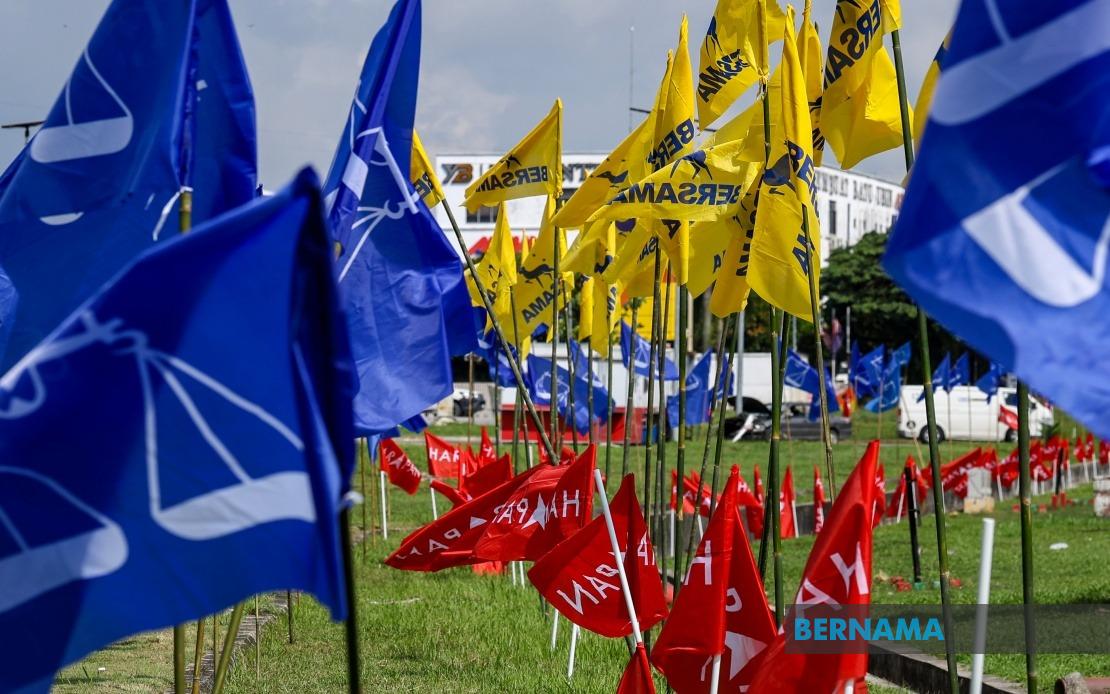
The opening phase of Johor's 16th state election, which commenced in early July, has revealed a deliberately measured campaign strategy across all competing parties. Rather than deploying the spectacle of large-scale rallies that characterised previous electoral contests, party machinery has concentrated efforts on sustained, personalized interactions with constituents. This methodological shift represents a significant departure from conventional practice and signals deeper changes in how Malaysia's regional elections are being contested in the contemporary political environment.
Political scientists observing the campaign dynamics attribute this tactical recalibration to several interconnected factors. Prof Datuk Dr Sivamurugan Pandian of Universiti Sains Malaysia emphasises that parties are deliberately adapting their operational approaches to align with prevailing conditions, deploying household visits, intimate group discussions, and localized community initiatives rather than attempting to mobilize crowds through public assemblies. This granular engagement methodology serves multiple strategic purposes simultaneously. By establishing direct interpersonal contact between candidates and voters, these approaches enable meaningful dialogue regarding community grievances and aspirations. The approach simultaneously reinforces internal party organization and ensures more efficient deployment of finite campaign resources during this foundational phase of the election cycle.
The strategic wisdom of this approach extends beyond immediate voter contact metrics. Sivamurugan explains that the initial campaign week primarily functions as a foundation-building exercise, during which parties establish their ground presence and organizational capacity. The targeted methodology actually confers distinct advantages upon individual candidates by enabling them to consolidate their standing within respective constituencies through concentrated, repeated engagement. This accumulation of localized support arguably generates more durable electoral advantages than the transient enthusiasm generated by ceremonial mass gatherings. Full deployment of party machinery remains deliberately restrained at this stage, with more intensive competition anticipated once senior leadership figures join front-line campaigning activities and digital mobilization intensifies.
Contemporary electoral campaigns across Southeast Asia increasingly reflect the influence of data analytics and sophisticated voter categorization systems. Dr Azmi Hassan, a geostrategist at the Nusantara Academy for Strategic Research, observes that modern political competition has fundamentally departed from the large-scale public assemblies that historically dominated campaigns. Campaign operatives now conduct meticulously targeted interventions, engaging voters classified within specific demographic and attitudinal categories spanning supportive constituencies through undecided and opposing segments. Social media platforms have emerged as critical infrastructure for message dissemination, permitting parties to customize communications according to audience characteristics and preferences. This technological sophistication allows campaigns to operate simultaneously across multiple engagement channels, maximizing reach whilst minimizing expenditure inefficiencies.
The substantive content animating current campaign messaging has coalesced around three primary thematic clusters. Mujibu Abd Muis, a political science lecturer at Universiti Teknologi MARA, identifies track record assertions, forward-looking policy commitments, and stability narratives as the dominant rhetorical frameworks. However, these messaging elements have not yet crystallized into sufficiently compelling master narratives capable of reshaping the overall campaign landscape. The analytical distinction matters considerably: campaign rhetoric achieves genuine political salience only when successfully translated into everyday concerns that penetrate voters' lived experience. Consequently, whichever political coalition can most effectively connect their messaging to tangible issues—encompassing household expenditure pressures, employment security, physical infrastructure development, and quality of public administration—will likely establish decisive narrative advantages as the campaign progresses.
Geographical deployment of campaign resources reveals deliberate strategic prioritization centred on northern Johor's constituencies. Mujibu notes that party machinery has concentrated activities across Muar, Tangkak, and Segamat, alongside portions of Batu Pahat and Kluang. This geographic concentration unmistakably reflects calculated resource optimization, directing campaign expenditures toward constituencies identified as genuinely competitive or electorally determinative. Northern Johor encompasses multiple seats anticipated to generate closely contested outcomes, explaining the strategic significance parties attach to senior leadership visibility in these areas. Rather than representing merely symbolic gestures, the deployment of high-ranking party officials to these locations communicates explicit recognition of their competitive centrality to ultimate electoral outcomes.
The broader competitive landscape has crystallized into a binary contest between Malaysia's two primary political coalitions. Dr Mazlan Ali of Universiti Teknologi Malaysia notes that Pakatan Harapan demonstrates strengthened influence across critical southern and western Johor regions, whilst Barisan Nasional commands considerable expected support in eastern coastal districts including Mersing and Kota Tinggi. This geographic differentiation directly shapes how each coalition structures campaign mobilization and resource allocation. The particular geographical distribution of coalition strength necessarily determines strategic campaign decisions, as parties concentrate intensive efforts within areas where electoral outcomes remain genuinely uncertain whilst accepting stronger or weaker baseline positions elsewhere. Understanding these spatial patterns of support fundamentally explains contemporary campaign organization and deployment patterns.
Voter participation rates constitute a critical variable potentially determining ultimate electoral outcomes. Political analysts across the spectrum concur that mobilizing citizens to actually cast ballots represents an indispensable campaign objective, as final results will substantially reflect variation in turnout across different demographic and geographic segments. High participation potentially amplifies the relevance of broader mobilization efforts, whilst depressed turnout may produce outcomes divergent from apparent campaign momentum. Parties consequently devote considerable effort toward encouraging electoral participation itself, recognizing that competitive advantage frequently accrues to coalitions most effective at activating their respective support bases. This emphasis on turnout mechanics reflects sophisticated understanding that elections are determined not merely by relative candidate appeal but by the fundamental question of which supporters actually participate in voting.
The 16th Johor state election encompasses 172 candidates competing across 56 state assembly constituencies, with polling scheduled for July 11 and advance voting available on July 7. This electoral framework structures the competitive dynamics unfolding across the state. The concentration of campaign activities in identifiably competitive constituencies suggests that analysts and party strategists anticipate the ultimate outcome will be determined by relatively narrow margins across a limited subset of seats. The campaign's initial phase has therefore appropriately emphasised ground-level consolidation and constituency-specific positioning, establishing foundations for the more intensive competition anticipated during subsequent campaign stages. As senior leadership becomes more visibly involved and messaging initiatives intensify, the campaign is expected to accelerate substantially from its currently measured opening pace.

