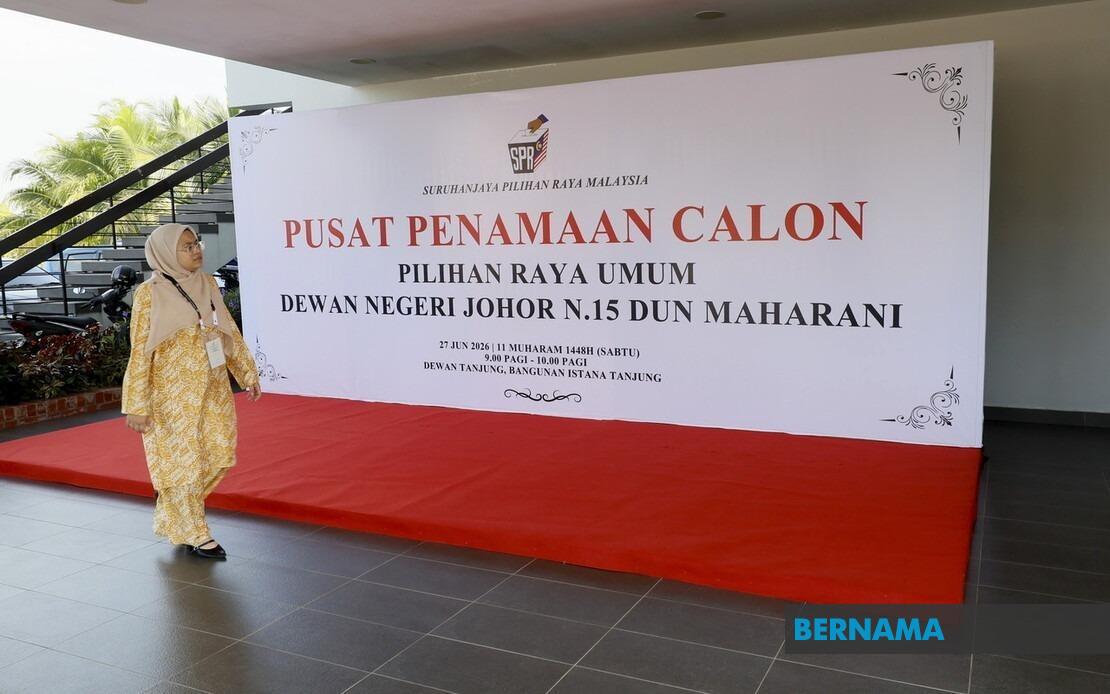
The machinery of Johor's electoral process shifted into motion today as the 16th state election entered its nomination phase, with prospective candidates converging on 56 nomination centres scattered across the southern state. The Election Commission has allocated the morning hours beginning at 9 am for this critical procedural stage, giving candidates a narrow one-hour window to lodge their nomination documents with returning officers before the 10 am deadline. This compressed timeframe, a standard feature of Malaysian electoral law, will determine which aspirants are officially cleared to contest the coming ballot.
The electoral schedule points towards a compressed but intensive campaign period. Following the formal announcement of eligible candidates, political parties and independent hopefuls will have exactly 14 days to prosecute their campaigns, concluding at 11:59 pm on July 10. The Election Commission has designated July 7 for early voting, accommodating those unable to vote on the main polling day of July 11. This compressed timeline reflects the rapid succession of events triggered when the Johor State Legislative Assembly was dissolved on June 1, setting the electoral machinery in motion across what is Malaysia's largest state by registered electorate.
The scale of voter participation this year is substantial. The Election Commission reports 2,727,926 registered voters across Johor, comprising 2,703,175 ordinary citizens alongside 12,041 military personnel and their families and 12,710 police officers and their spouses. This total electorate represents the democratic constituency that will ultimately decide control of the state assembly, where seats are distributed across 56 constituencies of varying demographics and political leanings. The diversity of this voter base—encompassing rural and urban centres, traditional strongholds and emerging residential areas—suggests a genuinely competitive electoral contest ahead.
As nomination day progressed, the extent of candidate interest became evident. By yesterday morning, 593 nomination forms had been distributed to prospective candidates, with 133 individuals having already confirmed their participation by submitting the required election deposits. These figures suggest a healthy level of contestation, with multiple candidates likely competing in numerous seats. The actual nomination process unfolding today will determine whether this level of interest translates into fully subscribed constituencies or whether some seats face unopposed candidates.
The coalition landscape reflects Malaysia's contemporary political configurations. Pakatan Harapan fields a united ticket across all 56 seats, drawing candidates from PKR (20 seats), Amanah (19 seats), and DAP (17 seats). Barisan Nasional similarly contests comprehensively, mobilising UMNO (36 seats), MCA (16 seats), and MIC (four seats). The arithmetic alone reveals that BN has concentrated its firepower on UMNO candidates, reflecting its numerical dominance within the coalition structure. Perikatan Nasional adopts a more selective approach, contesting through PAS (11 seats), Bersatu (16 seats), Malaysian Indian People's Party (five seats), and Pejuang (one seat). This distribution suggests PN is targeting strategic constituencies where its components possess established support bases.
Emerging and smaller parties are also making their presence felt. MUDA will contest four seats, while the Socialist Party of Malaysia fields a single candidate. Most notably, Parti Bersama Malaysia makes its electoral debut, contesting an anticipated 15 seats. The participation of new political vehicles signals that electoral competition in Johor transcends the traditional three-coalition framework, offering voters choices beyond the established BN-PH-PN divide. Whether these newer entrants can overcome the organisational and financial advantages of established parties remains an open question.
The political arithmetic entering this election tells a revealing story about the outgoing assembly's composition. Barisan Nasional dominated the previous configuration, controlling 40 of 56 seats, whilst Pakatan Harapan held 12, Perikatan Nasional three, and MUDA one. This distribution handed BN a commanding legislative position, though the dissolution suggests dynamics that prompted a fresh electoral mandate. The swing required for a change in government would be substantial, yet recent electoral patterns nationally have demonstrated that voter sentiment can shift dramatically across successive cycles.
The nomination centres themselves are expected to generate the characteristic bustle associated with nomination day in Malaysia. Party supporters typically congregate around these venues to demonstrate backing for their respective candidates, creating vibrant scenes of political mobilisation. However, the Election Commission has issued stern reminders that all participants must comply with the Election Offences Act 1954 and local authority regulations. Specific prohibitions include restrictions on deploying musical instruments and loudspeakers mounted on vehicles for campaign activities—regulations designed to prevent excessive noise and public disruption whilst still permitting robust political expression.
Operational readiness underpins the election's execution. The Malaysian Meteorological Department's forecast indicates rain expected in several Johor localities this morning, with afternoon thunderstorms anticipated across parts of the state. Despite these weather conditions, the nomination process proceeds as scheduled. Security and traffic management have been prioritised, with police deploying 4,832 personnel statewide to maintain order and oversee traffic arrangements. Nineteen major roads near nomination centres face planned closures and diversions, ensuring that the influx of candidates, supporters, and election officials does not disrupt routine transportation.
The significance of this election extends beyond state-level governance. Johor, as Malaysia's largest state and an economic powerhouse, holds considerable political weight within national calculations. The outcome will influence the balance of power in Malaysia's federal structure and potentially affect national coalitional dynamics. For Pakatan Harapan, reclaiming Johor would represent a major symbolic and practical breakthrough, as the state has historically been a BN bastion. For Barisan Nasional, retaining Johor remains strategically essential to demonstrating continued electoral viability at the state level. For Perikatan Nasional and emerging parties, performing credibly in Johor would establish platforms for future expansion.
The compression of nomination day into a few hours, whilst procedurally efficient, also concentrates the political drama and public attention. Nomination day in Malaysian electoral tradition functions as an unofficial campaign opening, telegraphing party strength and candidate quality to observers. The scenes at nomination centres throughout today will provide early indicators of organisational capacity, grassroots enthusiasm, and the competitive intensity different parties bring to this contest. Over the next 14 days, this initial energy will translate into door-to-door campaigning, public rallies, and the persuasion efforts that ultimately determine electoral outcomes.

