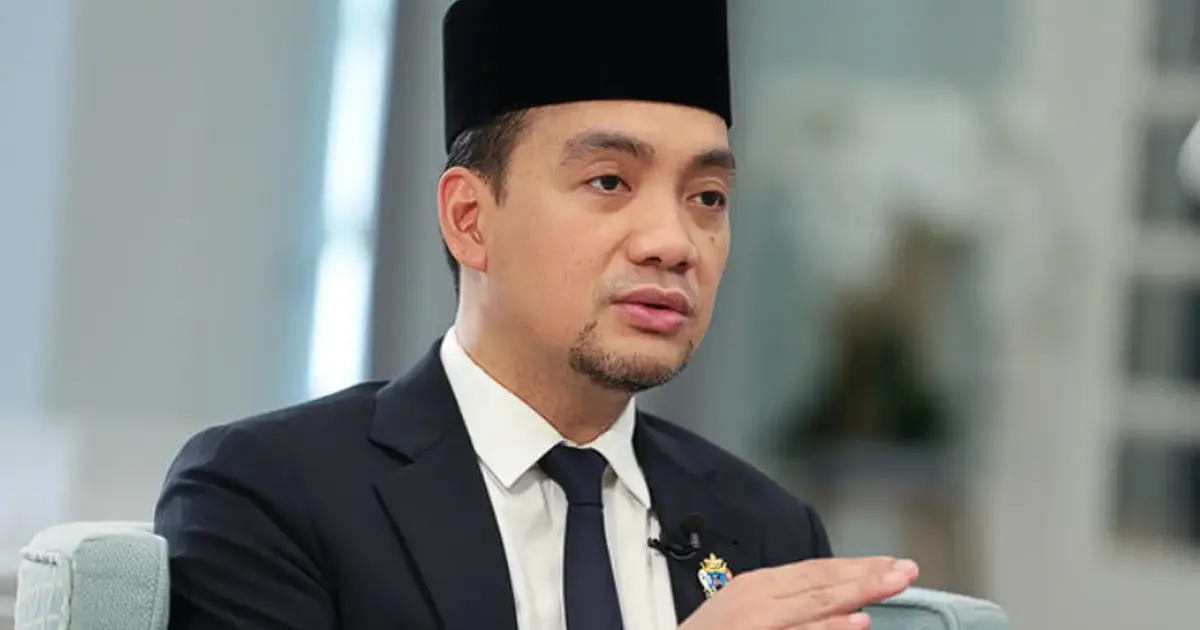
Johor's caretaker menteri besar Onn Hafiz has pushed back against criticism surrounding the Johor state assembly's dissolution, asserting that obtaining royal assent for such an action represents a standard constitutional procedure devoid of any improper political interference by the palace. His remarks address ongoing concerns about the timing and implications of the assembly's dissolution, which has become a focal point of political discussion in the state.
The constitutional framework governing Malaysian states requires that any dissolution of a state legislative assembly must receive formal approval from the reigning monarch. This requirement exists across all Malaysian territories and forms a foundational element of the constitutional monarchy system that underpins governance structures throughout the country. By emphasizing this procedural necessity, Onn Hafiz seeks to normalize what some political observers have questioned, presenting the dissolution not as an extraordinary or politically motivated action but as an ordinary exercise of established governmental protocols.
Understanding the distinction between constitutional procedure and political interference remains crucial for Malaysian readers assessing the legitimacy of state-level political decisions. When a menteri besar seeks to dissolve a state assembly, the sovereign's approval is not discretionary—it is a mandatory legal requirement. Without royal assent, no dissolution can take effect, regardless of the executive's intentions. This mandatory nature contrasts sharply with genuine political interference, which would involve the palace actively directing state leadership toward particular political outcomes or exercising autonomous decision-making authority over matters that fall within the executive's purview.
Onn Hafiz's clarification arrives amid heightened sensitivity regarding the relationship between Malaysia's constitutional monarchy and elected political leadership. Recent years have witnessed intensified public discourse about the proper boundaries of royal authority, particularly following instances where sultans have intervened in ministerial decisions or state appointments. These precedents have created an environment where Malaysians scrutinize palace involvement in politics more closely than perhaps in previous decades, making explanations from elected officials particularly important.
The timing of the Johor assembly's dissolution itself merits consideration within the broader political landscape. Malaysia's federal government and various state administrations have cycled through elections and transitions in recent years, creating fluid political conditions across multiple levels. State-level decisions about assembly dissolution must be understood within this context of national political flux, where minority governments, shifting coalitions, and questions about electoral mandates have become more commonplace than at any previous point in Malaysia's contemporary political history.
For Malaysian readers, the implications of this assertion extend beyond Johor's immediate political situation. If the principle that constitutional procedures constitute something distinct from political interference gains acceptance, it could influence how Malaysians evaluate other state-level decisions requiring royal assent. This distinction matters particularly in states where governments command narrow parliamentary majorities or where political coalitions remain fragile, conditions that sometimes prompt discussions about dissolution timing and strategy.
The relationship between Malaysia's sultans and elected executives represents one of the nation's distinctive constitutional features, blending hereditary monarchy with democratic governance. This hybrid system requires constant calibration to function effectively, necessitating mutual respect for institutional boundaries and transparent communication when constitutional procedures are invoked. Onn Hafiz's statement can be read as an attempt to reinforce these boundaries, signaling that standard administrative requirements should not be misinterpreted as evidence of palace authority overreaching into political decision-making.
Regional observers note that Southeast Asian constitutional monarchies frequently grapple with similar questions about the relationship between formal royal authority and democratic legitimacy. Thailand, which also operates under a constitutional monarchy, has experienced repeated crises stemming from disputes over these boundaries. By contrast, Malaysia's relatively stable transition of power in recent transitions suggests that the system, despite occasional tensions, retains functional legitimacy among most stakeholders. Nonetheless, continued clarity about constitutional procedures versus political interference remains essential for maintaining public confidence in institutions.
The caretaker status of Onn Hafiz's administration adds another layer to this discussion. As head of an interim government pending fresh elections, his authority to make transformative decisions naturally invites heightened scrutiny. Some observers may question whether dissolving the assembly during a caretaker period represents an appropriate exercise of executive authority, or whether such decisions should await a newly elected administration with a fresh democratic mandate. This separate question of political propriety differs from the constitutional legality that Onn Hafiz's statement addresses, yet both dimensions influence public perception of the dissolution's legitimacy.
Moving forward, Johor's electoral process will determine whether voters endorse or reject the decisions made during this caretaker period. This electoral accountability mechanism represents the ultimate check on executive actions in democratic systems, operating independently of questions about royal assent procedures. The dissolution itself is now part of the historical record; what matters next is whether subsequent elections demonstrate public acceptance of these decisions or indicate voter desire for different political direction.
Onn Hafiz's intervention into this debate serves a strategic purpose beyond simple clarification. By reframing the dissolution as routine constitutional procedure rather than controversial political action, he attempts to defuse criticism and encourage Malaysians to distinguish between legitimate institutional processes and improper political interference. Whether this framing proves persuasive likely depends less on technical constitutional arguments than on broader perceptions of fairness and political legitimacy surrounding the assembly's dissolution and the political environment in which it occurred.

