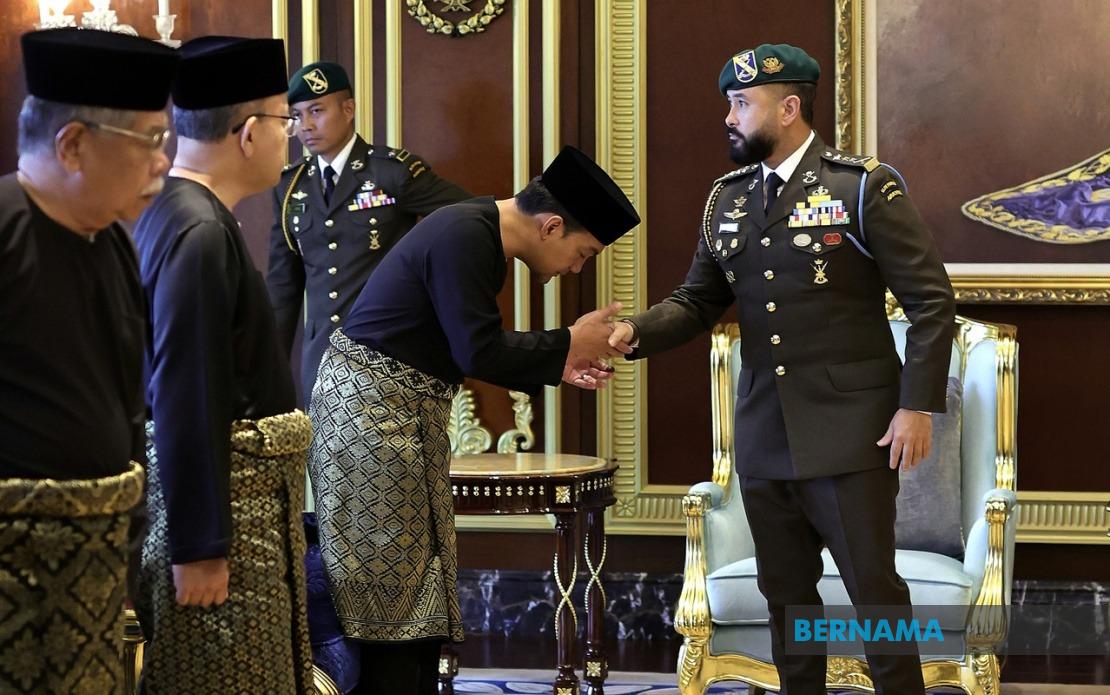
The newly constituted Johor State Executive Council will be officially inducted into office at Istana Bukit Serene in Johor Bahru on July 17, marking a formal transition in the state's administrative leadership following recent electoral success. The ceremony will proceed under the auspices of the Regent of Johor, Tunku Mahkota Ismail, underscoring the constitutional significance of the occasion and the ceremonial importance attached to the installation of state-level administrative bodies in Malaysia's federal structure.
Menteri Besar Datuk Onn Hafiz Ghazi will lead the newly formed executive council, having been separately sworn in just days earlier on July 12 following his re-election to the top position. His presence at the formal council swearing-in, alongside other senior officials including Johor Council of Royal Court president Datuk Dr Abdul Rahim Ramli and state secretary Datuk Mohammed Ridha Abd Kadir, reflects the hierarchical arrangement of ceremonial protocols in state-level governance. The palace has extended formal invitations to media representatives, with documentation to commence from 9.30 am through the main palace entrances, ensuring public transparency in the proceedings.
This executive council formation emerges directly from Barisan Nasional's substantial electoral mandate secured in the 16th Johor State Election held on July 13. The coalition captured 48 of the 56 available state assembly seats, a dominant performance that substantially consolidates its political position within one of Malaysia's most economically significant states. The magnitude of this electoral result—representing approximately 86 percent of available seats—provides the incoming administration with considerable legislative latitude to advance its policy agenda without significant parliamentary obstruction during the new term.
Barisan Nasional's decisive performance in Johor carries broader implications for Malaysian politics, particularly given the state's economic weight and historical significance within the federation. Johor contributes substantially to Malaysia's industrial output, foreign investment flows, and revenue generation, making stable governance and clear policy direction essential for regional economic performance. The commanding electoral result suggests voter confidence in the coalition's stewardship during the previous term and validates the political approach adopted by state and national leadership in the months preceding the election.
The executive council structure represents the substantive administrative machinery through which state government policies are formulated, debated, and implemented across Johor's diverse portfolio of responsibilities. Members of the council typically oversee distinct ministerial responsibilities encompassing areas such as economic development, infrastructure, education, agriculture, local government, and social services. The composition of this newly sworn council will reflect the coalition's internal political calculations, balancing representation among its constituent parties while recognizing individual ministerial competencies and experience levels.
For Malaysian observers and particularly those monitoring Johor's development trajectory, the swearing-in ceremony signals continuity in governance coupled with the opportunity for strategic renewal in policy direction. Menteri Besar Onn Hafiz Ghazi's re-election provides him with enhanced legitimacy to pursue initiatives that may have been constrained during transitional periods or earlier terms. The substantial legislative majority enjoyed by Barisan Nasional creates conditions favorable for medium-term policy planning without the complications that minority governments or narrowly divided assemblies typically encounter.
The ceremonial aspects of the swearing-in, conducted under royal patronage at the historic palace setting, reinforce the constitutional foundations upon which Malaysian state governance rests. The involvement of Tunku Mahkota Ismail reflects the pivotal constitutional role occupied by the Johor monarchy in state affairs, a relationship that extends beyond ceremonial dimensions to encompass genuine consultative and advisory functions within the framework of constitutional monarchy. This institutional arrangement, distinctive to Malaysian federalism, provides an additional layer of stability and continuity in state administration.
From a regional perspective, Johor's political stability and continued Barisan Nasional governance contribute to the broader pattern of federal-state relations and coalition cohesion that characterizes contemporary Malaysian politics. The state's performance influences calculations within national party hierarchies and shapes perceptions of coalition viability heading toward subsequent federal and state electoral cycles. Economic confidence in Johor, supported by stable political leadership enjoying substantial parliamentary majorities, facilitates investment decisions by both domestic and international business interests considering expansion or relocation within Malaysia.
The composition of the executive council, to be formally revealed through the swearing-in process, will provide market participants, civil society observers, and political analysts with concrete information regarding strategic priorities the administration intends to emphasize during the new term. Appointments to particular ministerial portfolios frequently signal an incoming government's policy emphasis, whether oriented toward urban development, industrial diversification, agricultural modernization, or social service enhancement. The council's collective experience and individual members' backgrounds offer predictive indicators regarding governance approaches likely to prevail across the state administration's various departments and agencies.

