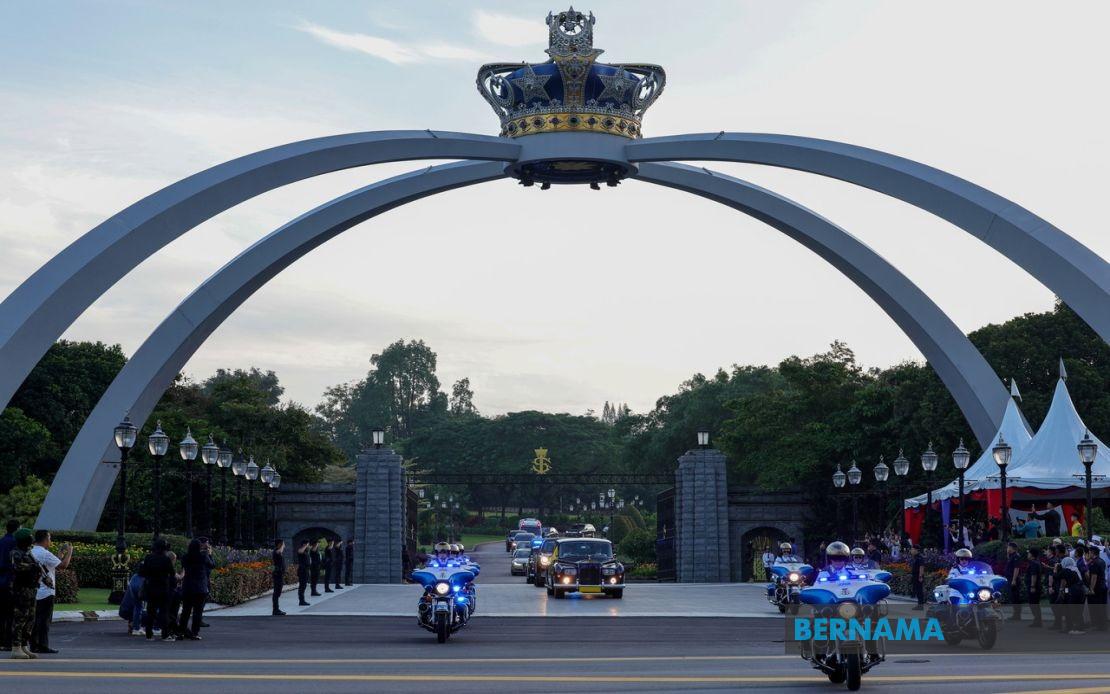
Johor is preparing to usher in its next Menteri Besar with a formal swearing-in ceremony scheduled for 3 pm today at Istana Bukit Serene, the royal palace in Johor Bahru. The palace issued invitations to members of the media via WhatsApp, confirming the afternoon event and designating the Crown Arch—Pintu Mahkota—as the designated media coverage point. However, the invitation stopped short of naming the individual poised to assume the influential state leadership position, leaving the appointment officially unconfirmed until the ceremonial moment itself.
The timing of the swearing-in represents a swift conclusion to the political transition process following yesterday's state election results. Johor's electorate delivered a resounding mandate to Barisan Nasional, which captured 48 of the 56 state assembly seats contested. This commanding majority provides the incoming Menteri Besar with substantial parliamentary backing to advance the coalition's agenda and implement policy initiatives across the state. The scale of BN's victory underscores voter confidence in the coalition's vision for Johor's development and governance over the next five years.
Antipation surrounding the appointment has drawn significant media attention throughout the morning. Journalists and photographers have positioned themselves at strategic locations since midday, including the Menteri Besar's official residence at Saujana and the gates of Istana Bukit Serene itself, seeking to capture the unfolding political developments and obtain clarification on the succession. This concentrated media presence reflects the high stakes of the appointment and its importance to Johor's political landscape and economic governance.
Earlier proceedings provide insight into the decision-making process. Sultan Ibrahim Iskandar granted an audience to Barisan Nasional chairman Datuk Seri Ahmad Zahid Hamidi this morning at Istana Pasir Pelangi, with the meeting extending nearly an hour. Johor BN chairman Datuk Onn Hafiz Ghazi also participated in these discussions, indicating that key coalition figures were directly involved in deliberations with the Sultan regarding the new administration's formation. Such consultations are standard constitutional protocol, allowing the Yang di-Pertuan Agong's representative at state level to engage with party leadership before confirming appointments.
For Malaysian political observers, this succession represents a critical juncture in Johor's governance trajectory. The state remains economically vital to the nation, with its industrial base, port infrastructure, and position as a major commercial hub making it instrumental to Malaysia's broader economic performance. The incoming Menteri Besar will inherit substantial responsibilities overseeing state development priorities, including urban planning in Johor Bahru, management of Iskandar Malaysia development corridor, and coordination with federal initiatives affecting the state's economic zones.
Barisan Nasional's dominant election showing provides the new administration with political capital and flexibility in legislative proceedings. With 48 of 56 seats, the coalition commands comfortable working majorities on state bills and budgetary matters, reducing vulnerability to parliamentary disruptions or procedural obstruction from opposition benches. This parliamentary arithmetic translates to practical governance advantages, allowing the Menteri Besar to advance legislative agendas with relative efficiency and pursue medium to long-term policy frameworks without constant negotiation or compromise with opposing factions.
The election results also reflect voter sentiment in a crucial battleground state where competition between Barisan Nasional and Pakatan Harapan has historically been closely contested. Johor's shift toward BN carries implications for broader Malaysian political dynamics, particularly as the nation approaches deliberations on federal governance and potential shifts in coalition configurations at the national level. State-level dominance often translates into enhanced influence in federal decision-making structures, giving Johor's coalition leadership greater voice in national policy discussions.
For Southeast Asian regional observers, Malaysia's stable political transitions and adherence to constitutional processes remain notable features distinguishing the nation's democratic framework. Today's ceremony exemplifies these institutional strengths, with formal procedures, palace protocols, and media transparency accompanying the succession process. Such orderly transitions, even amid competitive electoral environments, contribute to investor confidence and regional stability assessments, particularly important given Malaysia's role as a regional economic and political anchor.
The incoming Menteri Besar will assume office during a period of economic recovery and reconstruction, as Southeast Asian economies calibrate to evolving global trade conditions and technological disruption. Johor's strategic position as a gateway between Singapore and Malaysia, combined with its substantial industrial and manufacturing sectors, requires leadership attuned to regional economic dynamics and capable of fostering competitive advantages amid regional competition from neighbouring jurisdictions. The new administration's approach to infrastructure development, talent retention, and foreign investment attraction will shape the state's economic trajectory in coming years.
Today's formal swearing-in ceremony thus marks not merely an administrative transition, but a significant political moment with implications extending beyond Johor's borders. The specifics of who assumes the Menteri Besar position remain pending confirmation, yet the institutional processes preceding this afternoon's event reflect Malaysia's commitment to constitutional governance and orderly democratic practice, reinforcing the stability that undergirds regional confidence in Malaysia's political system.

