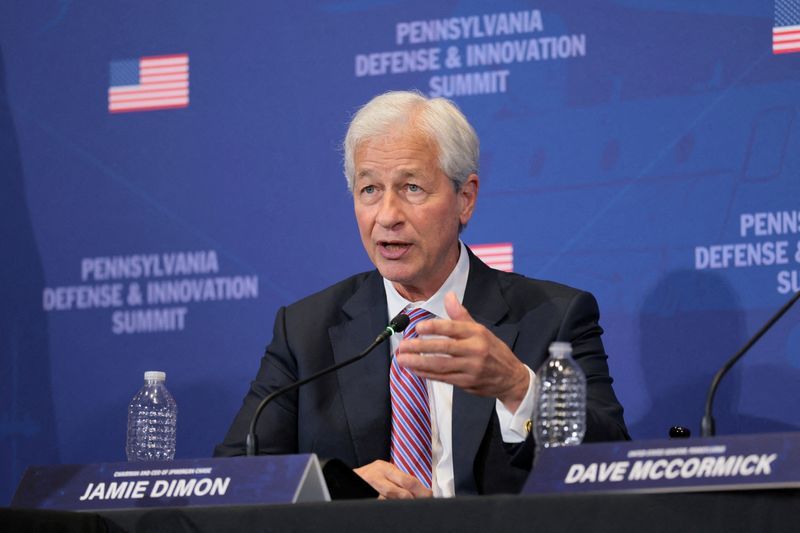
Jamie Dimon, chief executive of JPMorgan Chase, is orchestrating a broad-based industry coalition focused on containing the risks that artificial intelligence poses to critical infrastructure sectors across the United States. Beginning in July, Dimon has personally engaged leaders from major banks, regional financial institutions, and technology companies to participate in what amounts to a significant expansion of the Alliance for Critical Infrastructure, which JPMorgan helped establish alongside Mastercard, Berkshire Hathaway Energy and others. The outreach effort encompasses more than 40 organisations spanning finance, energy, water utilities, telecommunications, aviation and rail sectors—industries whose operations depend fundamentally on digital systems and are therefore particularly vulnerable to AI-related disruptions.
The underlying rationale for this coordinated response reflects growing alarm among corporate leadership and government officials about how rapidly artificial intelligence is being integrated into mission-critical systems without sufficient safeguards. As businesses worldwide accelerate their adoption of advanced AI technologies, the potential for new vulnerabilities, cyberattacks, and systemic failures has multiplied in ways that regulators and executives are only beginning to fully understand. Dimon has positioned himself at the forefront of this concern, becoming one of a select group of prominent American CEOs who have publicly articulated warnings about the dangers posed by increasingly sophisticated AI systems. His leadership role in this initiative underscores how seriously the banking industry's most influential figures view the threat landscape.
The Alliance for Critical Infrastructure was originally conceived as a mechanism for cross-sector coordination on resilience planning, information sharing, and collective responses to cyber, physical, and geopolitical threats. However, the organisation is now pivoting to prioritise artificial intelligence governance alongside its traditional infrastructure protection mandate. The refocused alliance intends to function as both an industry-wide information hub and a structured channel through which corporate leaders can engage with Trump administration officials on AI policy. According to sources involved in the effort, scheduled discussions are planned for August to formalise collaborative arrangements among participating companies.
The scope and urgency of this initiative have been sharpened by recent security incidents that exposed vulnerabilities in essential services. Cyberattacks targeting water systems in Minnesota and elsewhere have galvanised recognition that information sharing across previously siloed industries is essential to preventing cascading failures. These attacks, though not necessarily AI-driven, have illustrated how quickly threats can propagate through interconnected networks when organisations lack real-time visibility into risks affecting peer industries. The new AI-focused effort aims to establish similar mechanisms for early warning and coordinated response specifically around artificial intelligence threats, creating what amounts to an early-alert system for emerging vulnerabilities.
Dimon has previously expressed serious concerns about the societal implications of unchecked AI proliferation. In July, he invoked a stark metaphor, likening uncontrolled access to advanced AI capabilities such as Anthropic's Claude model to "giving ballistic missiles to individuals." This language reflects the depth of anxiety within financial leadership circles about the potential for powerful AI systems to be weaponised or applied destructively without adequate oversight. The distinction Dimon draws between beneficial AI deployment and dangerous proliferation is central to the alliance's mission: developing shared protocols for responsible AI integration within critical infrastructure while maintaining the competitive advantages that legitimate AI applications can provide.
The federal government has simultaneously begun its own efforts to manage AI risks through enhanced coordination mechanisms. In July, Washington launched the Gold Eagle initiative, which brings together AI developers, the operators of critical infrastructure, and federal agencies in a coordinated information-sharing arrangement. This government-led initiative focuses on identifying vulnerabilities that advanced AI systems themselves might discover and establishing rapid-response protocols to patch such weaknesses before they can be exploited. The existence of both this governmental program and Dimon's corporate-led alliance suggests that the threat landscape has reached a level of perceived severity that commands mobilisation across both public and private sectors.
The timeline for implementation is notably aggressive. The alliance aims to achieve full operational capacity by the conclusion of this calendar year, indicating that participants believe the urgency of the challenge demands rapid institutional development. This compressed schedule will require coordinating frameworks for information exchange, establishing governance structures that balance competitive confidentiality with genuine transparency about risks, and securing buy-in from dozens of organisational leaders whose institutional interests do not always align. The fact that such diverse stakeholders are willing to participate suggests broad recognition that the costs of inadequate AI governance now exceed the costs of collaborating despite competitive tensions.
For regional stakeholders in Southeast Asia and beyond, this American initiative carries significant implications. Many Malaysian and regional financial institutions, utilities operators, and technology companies maintain deep commercial connections with the participating American firms and increasingly depend on similar AI systems and digital infrastructure. The standards, best practices, and governance frameworks that emerge from this alliance are likely to establish global baselines that foreign regulators and companies will eventually adopt or reference. Additionally, as American critical infrastructure becomes better protected against AI-related risks, the relative vulnerability of less-coordinated regional systems may increase, potentially making Southeast Asian digital assets more attractive targets for malicious actors.
The initiative also reflects a subtle shift in how corporate America conceptualises its relationship to government on emerging technology policy. Rather than resisting regulation or demanding light-touch oversight, the participating companies are proactively seeking to shape policy frameworks by demonstrating their capacity for self-governance and collective action. This stance differs from historical patterns in which industries fought regulatory encroachment. Here, corporate leaders appear to be pre-empting more stringent government mandates by proposing industry-coordinated solutions. Whether this approach will prove sufficient or whether regulators will ultimately impose additional requirements remains an open question.
The Alliance for Critical Infrastructure's stated commitment to working with government agencies—and specifically the Trump administration—signals that this effort aspires to influence official AI policy at the highest levels. The involvement of JPMorgan's formidable CEO provides the alliance with credibility and access that smaller organisations could never achieve independently. Dimon's personal outreach to peer CEOs lends weight to the initiative in ways that generic industry association announcements cannot. This insider-driven approach to policy formation illustrates how concentration of economic power in large financial institutions translates into disproportionate influence over the governance frameworks that will regulate emerging technologies.
Ultimately, the initiative represents an attempt by corporate leadership to establish clarity and predictability around AI governance before the technology's risks metastasise further into economic and social systems. By creating forums for information exchange and working with officials to develop anticipatory frameworks, the participating companies hope to reduce uncertainty and avoid more disruptive regulatory interventions. Whether this collaborative approach succeeds in adequately addressing genuine safety risks or whether it primarily serves to protect incumbent corporate interests remains a question that policy observers, technologists, and regulators will scrutinise closely as the alliance's work develops toward its year-end target for full operability.

