%22%2F%3E%3C%2Fpattern%3E%3C%2Fdefs%3E%3Crect%20width%3D%22100%25%22%20height%3D%22100%25%22%20fill%3D%22url(%23ph5shalg)%22%2F%3E%3Crect%20width%3D%22100%25%22%20height%3D%22100%25%22%20fill%3D%22url(%23ph5shalp)%22%2F%3E%3Ctext%20x%3D%2250%25%22%20y%3D%2250%25%22%20text-anchor%3D%22middle%22%20dominant-baseline%3D%22central%22%20fill%3D%22rgba(255%2C255%2C255%2C0.95)%22%20font-family%3D%22Georgia%2C%20'Times%20New%20Roman'%2C%20serif%22%20font-weight%3D%22700%22%20font-size%3D%22170%22%20letter-spacing%3D%22-0.02em%22%3EJudicial%3C%2Ftext%3E%3C%2Fsvg%3E)
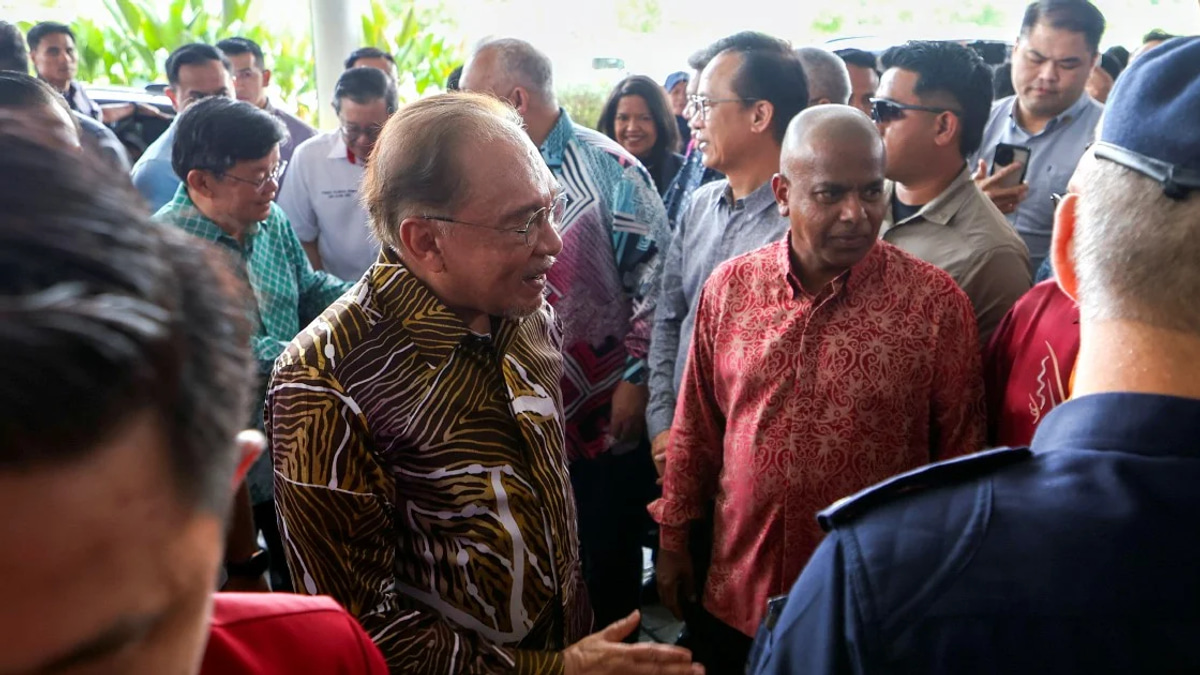
Tan Sri Nallini Pathmanathan, the newly appointed chairman of the Malaysian Media Council (MMC), has made a robust case for her unconventional path to leading a self-regulatory media body, arguing that her three decades on the bench have equipped her with the precise skills needed to safeguard institutional independence and earn the confidence of stakeholders. Speaking at a Media Dialogue Session held in Butterworth alongside Communications Minister Datuk Fahmi Fadzil, Nallini confronted lingering questions about why a former Federal Court judge rather than a seasoned news executive had been selected to helm the council, reframing the debate around what makes an institution credible in the eyes of the public and the industry alike.
The crux of Nallini's defence rests on a philosophical distinction between technical expertise and institutional integrity. She acknowledged frankly that she has never worked in journalism, never managed a newsroom, and has no experience with the pressures of meeting news deadlines—domains where practising editors and reporters remain the unquestionable experts. Rather than positioning herself as a rival authority on these matters, she redirected attention to the council's foundational purpose: functioning as a neutral arbiter capable of adjudicating disputes and upholding standards with demonstrable impartiality. Her judicial background, she contended, brings precisely the kind of experience that enables fair processes, transparent decision-making, and the ability to command respect across competing interests without owing allegiance to any particular faction.
At the heart of her argument is the principle of fairness between parties, a concept embedded in both judicial practice and the council's enabling legislation. The Malaysian Media Council Act explicitly mandates that the chairperson must operate independently of political structures, the civil service, and the legislature—a design reflecting recognition that the body requires a neutral figure trusted by all sectors. Nallini stressed that this independence cannot be merely declared through rhetoric; it must be demonstrated through a series of individual decisions that reveal which institutions and actors the council proves willing to disagree with, setting a public standard against which the council invites scrutiny.
The council faces three immediate and interconnected challenges that Nallini has identified as priorities during these formative months. First, the MMC must establish robust structures for receiving, investigating, and adjudicating complaints from the public and the industry—frameworks that embody principles of natural justice, proportionality, and reasoned decision-making. Second, the council must expand its membership base across the media landscape, ensuring representation from diverse outlets and perspectives. Third, the body must grapple with emerging threats to media integrity, particularly the proliferation of fabricated content and the evolving misuse of artificial intelligence to manipulate information, challenges that did not exist during earlier eras of media regulation and demand adaptive governance.
Crucially, Nallini has articulated a nuanced vision of the council's role that avoids the trap of conflating standards with censorship. She acknowledged that a free press must be responsible and a responsible press must be protected from undue pressure and manipulation—two principles that need not be in opposition but rather represent complementary facets of a functioning democratic media ecosystem. However, she issued an explicit warning that the council's complaints mechanisms must never become instruments for silencing critical journalism or discouraging the hard-hitting reporting that democracies depend upon. The distinction matters profoundly in the Malaysian context, where media freedom remains contested and where regulatory bodies face recurring accusations of serving political interests rather than public ones.
The tension between these commitments—upholding standards while safeguarding editorial freedom—represents perhaps the most significant test facing Nallini and the MMC in coming years. Press freedom advocates and industry observers across Southeast Asia have long been attentive to whether self-regulatory councils genuinely function as independent checks on unaccountable journalism or whether they risk becoming mechanisms for political control dressed in the language of standards and accountability. Nallini's emphasis on transparency, reasoned explanation, and the clear articulation of grounds for decisions suggests an attempt to navigate this treacherous terrain through procedural rigour rather than substantive judgement calls that might invite accusation of bias.
The dialogue session itself, held in conjunction with the National Journalists' Day (HAWANA) 2026 celebration, symbolised an effort to establish the MMC as a forum for genuine engagement between government, media institutions, and industry bodies. The presence of Communications Ministry officials, Malaysian National News Agency (Bernama) leadership, and senior management from established news organisations indicated institutional acknowledgement of the council's role. Yet this very visibility also underscores the stakes: the council's credibility depends not merely on formal independence but on whether it can operate with demonstrable autonomy in circumstances where government, commercial interests, and journalistic freedom may collide.
Nallini's framing of the council's early phase as a "constitution-writing" moment is instructive. She has signalled that the next several months will be devoted to building foundational processes and codifying principles before the council becomes heavily engaged in adjudicating high-profile complaints or enforcing standards. This sequencing may reflect prudence, allowing the council to develop procedural credibility before facing disputes where the stakes are highest and pressures most intense. Whether this approach will be perceived as deliberate institution-building or as a period of ineffectual passivity may depend partly on how quickly the council demonstrates visible progress on establishing its complaints framework and expanding membership.
The appointment of a judicial figure to lead the MMC also reflects international trends in media regulation. Several democracies have experimented with placing individuals from law and academia at the helm of self-regulatory and statutory bodies, reasoning that judicial temperament and training in evidence-based decision-making constitute valuable assets. However, such appointments remain contested, with critics arguing that judges lack intuitive understanding of how journalism operates and that their emphasis on procedural formality may sit uncomfortably with the more fluid and reactive nature of news production. Nallini's appointment will be tested against these competing perspectives as the council faces its first substantive cases.
For Malaysian readers and regional observers, the MMC's trajectory carries implications extending beyond media regulation narrowly defined. The council's ability to function as a credible, independent institution will influence confidence in other self-regulatory bodies and inform ongoing debates about the optimal relationship between government, industry, and independent oversight. Moreover, in a region where press freedom faces varying degrees of constraint, the Malaysian council's model—should it succeed in demonstrating genuine autonomy—could offer lessons or warnings to peers elsewhere in Southeast Asia developing their own approaches to media accountability.
Looking forward, Nallini's success will ultimately be measured not by her rhetoric but by the substance of the council's decisions in contested cases, its willingness to investigate complaints regardless of the power or influence of those involved, and its demonstrated commitment to protecting legitimate journalism even when that journalism challenges authority. She has set herself an exacting standard, inviting the public and the industry to hold the council accountable to the principles she has articulated. Whether the MMC can deliver on these commitments while maintaining the trust of all stakeholders—a notably difficult equilibrium—remains the defining question.
%22%2F%3E%3C%2Fpattern%3E%3C%2Fdefs%3E%3Crect%20width%3D%22100%25%22%20height%3D%22100%25%22%20fill%3D%22url(%23ph33f18g)%22%2F%3E%3Crect%20width%3D%22100%25%22%20height%3D%22100%25%22%20fill%3D%22url(%23ph33f18p)%22%2F%3E%3Ctext%20x%3D%2250%25%22%20y%3D%2250%25%22%20text-anchor%3D%22middle%22%20dominant-baseline%3D%22central%22%20fill%3D%22rgba(255%2C255%2C255%2C0.95)%22%20font-family%3D%22Georgia%2C%20'Times%20New%20Roman'%2C%20serif%22%20font-weight%3D%22700%22%20font-size%3D%22272%22%20letter-spacing%3D%22-0.02em%22%3EISTAF%3C%2Ftext%3E%3C%2Fsvg%3E)