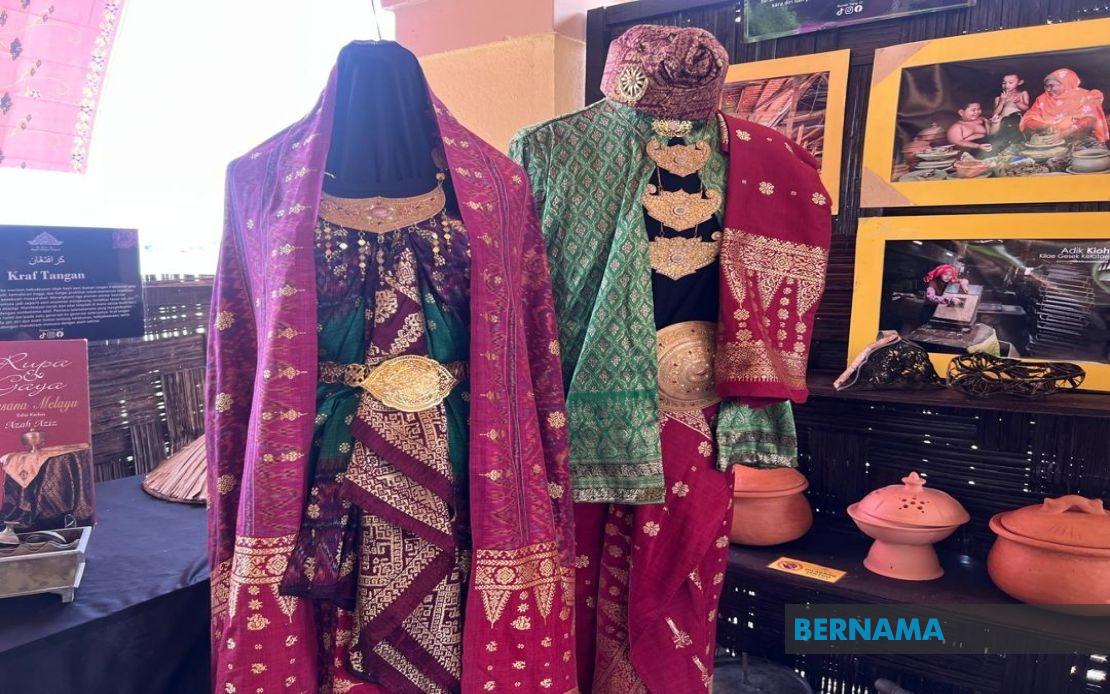
A centuries-old Malaysian textile tradition stands at the precipice of extinction. Kain Lima, an exquisitely crafted fabric that once graced royalty and signified wealth and status, now survives in dwindling numbers as the generation of master weavers aged. The art form's decline underscores a broader challenge facing Southeast Asian nations struggling to preserve traditional crafts against the pressures of modernisation and mass production.
At the Festival Kesenian Rakyat Kelantan, cultural custodians have begun sounding the alarm about the near-disappearance of this distinctive weaving tradition. Nik Mohd Murdani Nik Hassan, caretaker of Galeri Rumah Tiang 12, emphasises that Kain Lima represents far more than merely another textile—it embodies a sophisticated understanding of colour, pattern, and craftsmanship that distinguishes it fundamentally from more widely recognised forms such as songket. The fabric's technical complexity demands a level of precision and artistic vision that separates true heritage weavers from casual producers.
The distinctive character of Kain Lima emerges from its revolutionary weaving methodology. Rather than relying on gold or silver thread applications, as songket does, Kain Lima employs tied or tie-dyed threads that are then woven together to create a phenomenon unique in the textile world—a colour-reflection effect that changes subtly depending on viewing angle and light conditions. Each motif requires the careful orchestration of multiple coloured threads, positioned with mathematical exactitude before the weaving commences. This painstaking approach means that experienced collectors and textile scholars can instantly identify authentic Kain Lima through examination of its pattern structure and weaving composition alone.
The economic reality surrounding Kain Lima production reveals why contemporary artisans increasingly abandon the craft. A single completed piece commands prices ranging from three thousand to over four thousand Malaysian ringgit, a figure that reflects the labour intensity and skill required rather than providing viable income for working weavers. Historically, Kain Lima occupied the apex of Malay textile culture, adorning royalty, religious leaders, and the wealthy elite who wore them as sarongs, ceremonial shawls, and formal garments for state occasions. The fabric's rarity and prestige once ensured strong demand among those who could afford such luxury items.
The decline accelerated with the twentieth-century transformation of Malaysian society. Rapid urbanisation, the rise of factory-produced textiles, and changing fashion preferences drew younger generations away from textile-making apprenticeships. Few families maintain the knowledge required to produce authentic Kain Lima according to traditional methods. Documentation remains sparse and fragmented, with much technical knowledge residing in the minds of elderly practitioners who increasingly lack successors willing to dedicate years to mastering the craft.
Galeri Rumah Tiang 12, which Nik Mohd Murdani joined in 2020, now functions as one of Malaysia's primary repositories for Kain Lima heritage. The gallery's collection, assembled from private collectors throughout the country, serves an educational mission rather than a commercial one. By displaying original examples alongside other traditional textiles, the gallery enables Malaysians to understand the tangible differences between Kain Lima, songket, and neighbouring textile traditions—distinctions that disappear from public memory as fewer people encounter these fabrics in daily life.
The exhibition strategy reflects a broader conservation philosophy gaining traction across Southeast Asia. Rather than attempting to revive mass production of heritage textiles, cultural institutions now prioritise knowledge preservation and public appreciation. This approach acknowledges that maintaining awareness of traditional craftsmanship may, in itself, create conditions for selective revival. When contemporary artisans encounter authentic examples and understand the techniques involved, some develop interest in incorporating traditional methods into their own creative practice.
Nur Anira Akmal Che Abdul Aziz, a 34-year-old handicraft maker from Pasir Mas, exemplifies this possibility. She attended the exhibition specifically to study the forms, motifs, and production methodologies embedded in heritage textiles. Rather than attempting to reproduce Kain Lima exactly, she extracts inspiration from its design principles and applies them to innovative craft products that carry local identity while remaining commercially viable. Her approach suggests one pathway through which endangered textile knowledge might influence contemporary creation without requiring full resurrection of economically unviable traditional practices.
The conservation challenge extends beyond textiles to encompass Malaysia's broader cultural landscape. Numerous traditional crafts—metalworking, woodcarving, weaving, and pottery—face similar trajectories of decline. Younger Malaysians increasingly pursue formal education and urban employment, leaving rural artisanal communities depleted of human resources. Government support for heritage preservation has expanded in recent years, yet systematic documentation of traditional knowledge remains incomplete across many disciplines and regions.
International recognition of Southeast Asian textile heritage has occasionally sparked modest revivals in neighbouring countries. Thailand's promotion of silk traditions and Indonesia's support for batik production have created viable markets for quality traditional textiles. Malaysia has achieved less coordinated success in this regard, with cultural institutions working somewhat independently rather than as part of comprehensive national heritage strategies. The Kain Lima situation illustrates both the possibilities and limitations of gallery-based conservation when production capability continues deteriorating.
The disappearance of Kain Lima carries implications beyond aesthetics or economics. These textiles encoded cultural knowledge, social hierarchies, and aesthetic values fundamental to pre-modern Malay society. Each pattern contained historical meaning; each colour choice reflected seasonal availability and symbolic association. As Kain Lima weavers pass away without transmitting their expertise, Malaysia loses not merely a craft but an entire knowledge system that connected cloth production to cosmology, commerce, and community identity.
Current efforts to document and display Kain Lima represent necessary but insufficient responses to the crisis. The Festival Kesenian Rakyat Kelantan and similar cultural events raise awareness, particularly among younger Malaysians who might otherwise never encounter these textiles. Yet awareness alone cannot reverse decades of declining apprenticeship rates and economic unviability. Meaningful preservation would require more ambitious interventions—perhaps government subsidies for master weavers, educational programs introducing heritage textiles to school curricula, or premium market creation through collective branding of authentic traditional products.
As Malaysia continues its economic development and urban transformation, the Kain Lima situation epitomises a recurrent tension between modernisation and cultural continuity. The gallery exhibitions, inspired artisans, and heritage advocates fighting to prevent the complete disappearance of this textile tradition represent islands of resistance against inexorable structural changes. Whether these efforts can sufficiently preserve knowledge and inspire sufficient new interest to prevent final extinction remains uncertain, but the urgency grows as master weavers age and retire from their craft.

