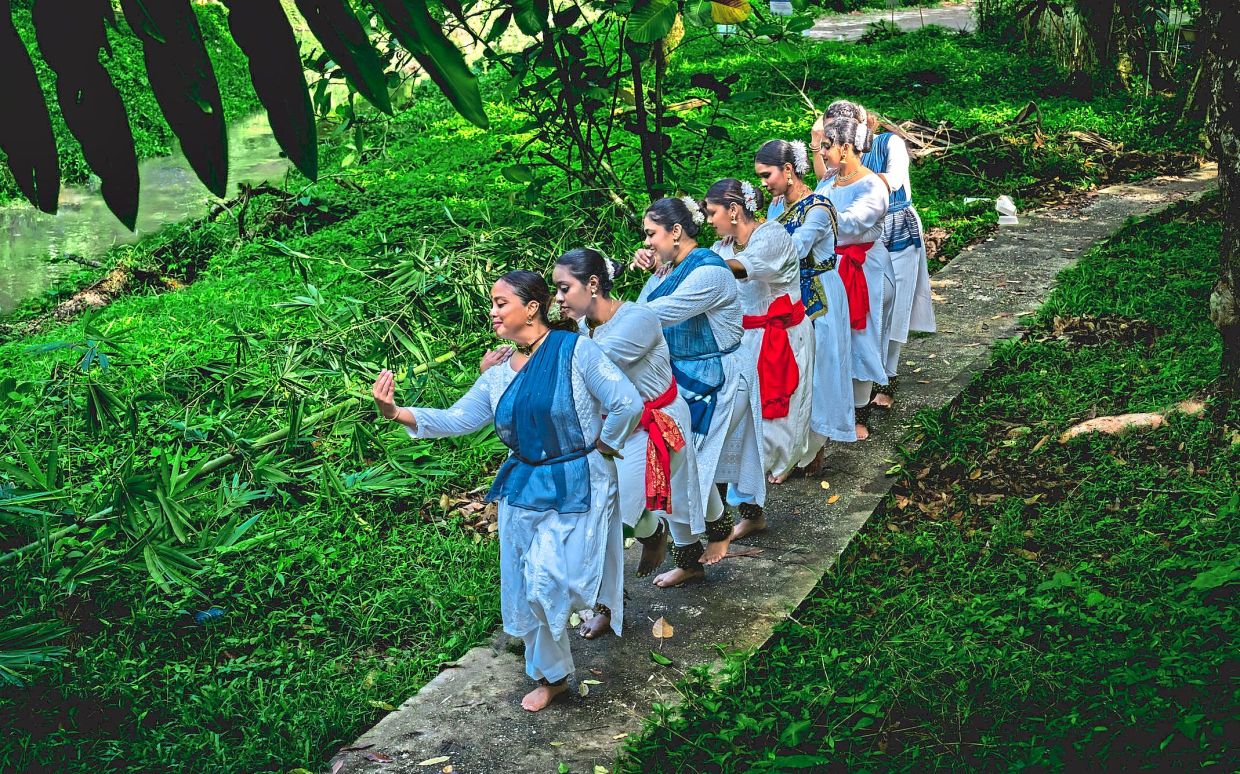
Kalpana Dance Theatre (KDT) in Kuala Lumpur has navigated three decades of artistic survival in Malaysia's unpredictable cultural landscape, arriving at its milestone anniversary through persistent creative reinvention. To commemorate this achievement, founder-director Shangita Namasivayam is producing a bharatanatyam concert scheduled for August 8 at the Shantanand Auditorium, Temple of Fine Arts in Kuala Lumpur. The production represents far more than a standard anniversary celebration; it weaves together classical Indian dance tradition with contemporary environmental messaging, addressing the water crisis facing both South and Southeast Asia through the metaphor of two of India's most sacred waterways.
The performance centres on the Ganga and Kaveri rivers—northern and southern India's most spiritually and economically vital waterways respectively. The Ganga holds unparalleled cultural significance in Hindu tradition and Indian civilisation broadly, while the Kaveri, known as the "Ganga of the South," sustains millions through irrigation systems and agricultural productivity across the Deccan plateau. Both rivers have inspired countless classical and folk dance compositions over centuries, their waters representing not merely geographical features but repositories of myth, spirituality and regional identity. Namasivayam's decision to centre the anniversary production on these rivers reflects her characteristic approach to choreography: using classical bharatanatyam as a vehicle for exploring contemporary social concerns while honouring its ancestral roots.
Namasivayam articulates her thematic vision with philosophical depth. She describes the Ganga as "the shore of compassion" and the Kaveri as "the mother of prosperity," positioning each river as embodying distinct yet complementary values. In Hindu cosmology, the Ganga purifies; the Kaveri sustains. Together, she argues, they express a singular truth: that rivers transcend their physical composition of water, instead representing the spiritual peace humanity must cultivate within itself. This layered interpretation allows the production to operate simultaneously as a spiritual exploration and as urgent environmental commentary. For Namasivayam's young dancers, engaging with these narratives becomes an entry point into understanding their responsibilities toward ecosystems they inhabit.
The theatrical production deliberately embeds environmental consciousness into its creative DNA through partnership with The Alliance of River Three (ART!), a volunteer-driven Malaysian conservation organisation founded in 2018 by Kennedy Michael. ART! focuses specifically on rehabilitating the Klang River through community-built River Three Parks, regular cleanup initiatives and long-term ecosystem restoration work. The organisation's recognition as a winner of The Star Golden Hearts Awards in 2020 validated its innovative model for urban river restoration, positioning it as a credible voice on water security in Malaysia. By collaborating with ART!, KDT translates its artistic vision into tangible environmental action, involving its dancers—many of them teenagers encountering serious ecological challenges for the first time—in practical conservation work.
Since January, the 54 dancers performing in the production have been volunteering at Taman Melawati River Three SDG Park and the Mid Valley River Three SDG Park, both part of ART!'s ambitious restoration timeline targeting completion by 2030. For young Malaysian dancers accustomed to studio environments, exposure to river ecosystems in various states of degradation represents transformative experience. Namasivayam observes that contemporary youth rarely engage directly with environmental realities, rarely soiling their hands with actual restoration work. The volunteer experience grounds abstract environmental concepts in visceral reality: polluted riverbanks, accumulated waste, degraded biodiversity. This experiential learning shapes dancers into conscious cultural ambassadors capable of embedding ecological awareness into their artistic practice.
The 90-minute production itself demonstrates inclusive casting philosophy characteristic of Namasivayam's approach. Featuring 54 performers ranging from six to 62 years old, including differently-abled dancers, the performance eliminates the traditional soloist hierarchy common to bharatanatyam concert format. Instead, every participant receives substantive choreographic material, reflecting democratic artistic principles aligned with environmental ethics emphasising collective responsibility. The script, composed in Tamil with English narration by collaborator Dr Va Ve Subramanian, pursues poetic rather than didactic expression, weaving philosophical depth with lyrical beauty. This approach allows audiences from diverse linguistic and cultural backgrounds—increasingly relevant in Malaysia's multicultural context—to access meaning without requiring prior knowledge of Hindu spirituality or South Indian classical traditions.
Namasivayam's artistic team represents decades of collaborative partnership. Choreographer PT Narendran, musician OS Arun and scriptwriter Dr Va Ve Subramanian, all based in Chennai, have worked with her on more than half of KDT's productions. This sustained creative relationship permits the kind of comfortable familiarity and shared artistic language necessary for producing intellectually and emotionally coherent work. Rather than assembling diverse perspectives superficially, the production benefits from collaborators who understand Namasivayam's artistic philosophy and can contribute from positions of genuine creative investment. The musical ensemble comprises 30 artistes; bringing the entire team to Malaysia proved logistically unfeasible, yet this constraint generated unexpected benefits.
The necessity of working with locally-based musicians created opportunities for young Malaysian dancers to collaborate directly with internationally accomplished artistes visiting from India. These interactions transcend technical instruction in bharatanatyam vocabulary and extend into philosophical mentorship. International master artistes bring distinctive interpretive perspectives, performance techniques and philosophical approaches shaped by different cultural contexts. Malaysian students gaining exposure to such diversity develop more nuanced understanding of bharatanatyam's evolutionary possibilities and contemporary relevance. They experience dance not as fixed heritage but as living tradition capable of addressing contemporary concerns—climate, equity, social responsibility—while maintaining connection to ancestral knowledge systems.
Funding constraints persistently challenge Malaysian performing artists, yet Namasivayam's unwavering commitment to producing public performances remains unshakeable. She articulates why this matters with particular force: contemporary dance education cannot remain confined to studio classes disconnected from public performance. Classical bharatanatyam demands stage experience as integral to dancer development; the transformation of energy, focus and artistic intention required in live performance cannot be replicated through classroom instruction alone. For Namasivayam's students, especially younger dancers from middle-class Malaysian backgrounds with limited exposure to South Indian classical traditions, performing on stage represents essential cultural inheritance and artistic maturation. This conviction sustains her through administrative and financial obstacles that might discourage less committed practitioners.
Namasivayam's insistence on maintaining high production standards while managing precarious funding reflects broader challenges facing Malaysian arts institutions competing for limited government and corporate support. KDT's survival for three decades testifies to her adaptability, entrepreneurial resourcefulness and refusal to compromise artistic vision for financial convenience. The August 8 performance simultaneously celebrates KDT's institutional resilience and demonstrates how Malaysian cultural organisations increasingly embed social responsibility into their artistic missions. By addressing water security—an issue transcending national boundaries and affecting Southeast Asia profoundly—through classical South Indian dance, KDT models how immigrant cultural traditions can become vessels for addressing shared regional environmental crises. The production suggests that authentic cultural dialogue occurs not through superficial multiculturalism but through deep engagement with traditions' philosophical resources applied to contemporary circumstances affecting all communities regardless of ethnic or national identity.

