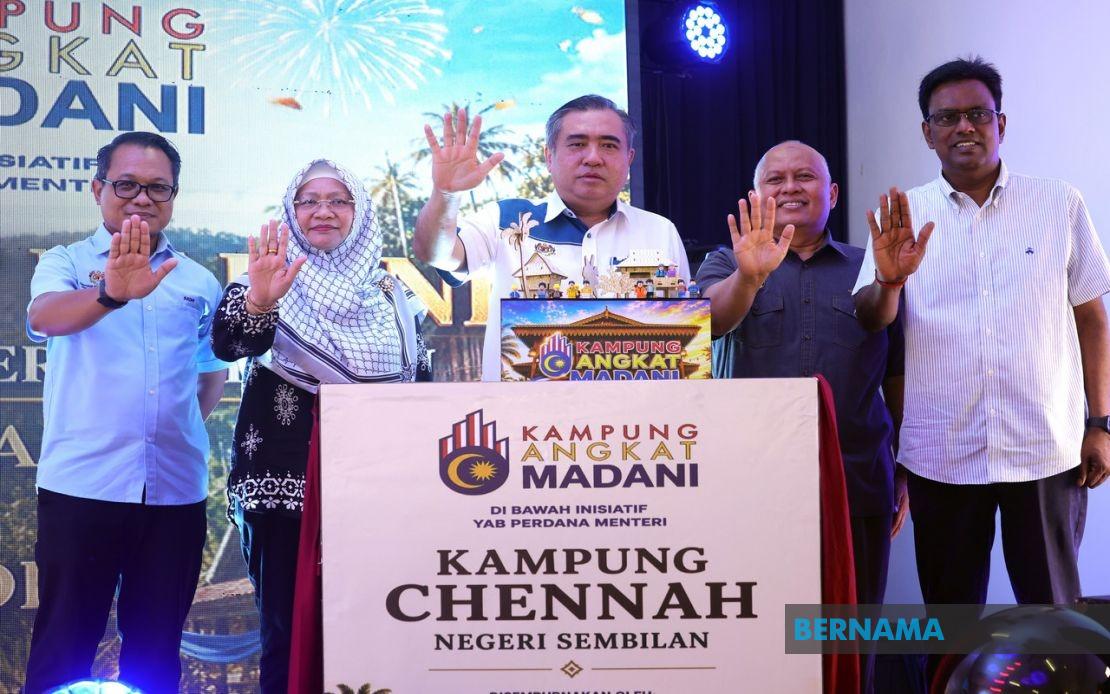
Transport Minister Anthony Loke Siew Fook has firmly rejected claims that the rollout of the Kampung Angkat MADANI programme is timed with state elections, characterising it instead as part of a longstanding nationwide government drive to improve rural living standards. Speaking after inaugurating the Land Public Transport Agency's latest Kampung Angkat MADANI initiative at Kampung Chennah in Jelebu on July 12, Loke underscored that the programme represents a strategic, phased approach to addressing infrastructure and socio-economic gaps in villages situated beyond the reach of urban development priorities.
The minister's clarification comes as electoral scrutiny intensifies over government activities during campaign periods. Malaysia's electoral code restricts the holding of official government programmes and events in constituencies during nomination and campaign phases, a rule intended to prevent the perception of state resources being deployed for electoral advantage. Loke's statement reflects the Transport Ministry's compliance with this governance framework, which was instituted as part of what he described as the Prime Minister's push toward a more transparent administrative culture.
Loke's account reveals that the Kampung Angkat MADANI scheme has been operational for two years, with implementation extending across multiple phases to reach communities with the greatest need. The minister highlighted his own involvement in launching initiatives under this banner in previous cycles, citing an example from Lenggeng where an Orang Asli village received targeted assistance. This history establishes the programme as a systematic, ministry-wide effort rather than a reactive measure introduced to coincide with electoral events. The phased rollout mechanism ensures that villages are assessed against standardised criteria before selection, prioritising those facing the most severe connectivity and amenity deficits.
The strategic design of the programme reflects a governance philosophy that extends ministerial responsibilities beyond traditional portfolio boundaries. Transport Ministry officials argue that infrastructure development in remote villages, while seemingly peripheral to transport regulation and management, forms part of a holistic approach to national development equity. By identifying and addressing foundational gaps in basic services—drainage, recreational facilities, library infrastructure—the government aims to create conditions that support broader socio-economic participation and reduce urban-rural disparities that have characterised Malaysian development patterns for decades.
Kampung Chennah's selection as the 2024 Kampung Angkat MADANI location underscores the targeting methodology employed. The village's geographic remoteness and documented infrastructure shortfalls qualified it for assistance, with government assessors identifying critical needs in basic amenities. The central government has allocated RM500,000 for five distinct projects within the community, a package encompassing library refurbishment, futsal court restoration, and enhanced drainage infrastructure surrounding the village mosque. This investment structure demonstrates a community-centred approach, with projects designed to deliver tangible benefits across social, recreational, and religious dimensions of village life.
Project timelines indicate completion within two to three months, a compressed delivery schedule that reflects administrative commitment to realising improvements within a defined timeframe. Loke committed the Transport Ministry to close monitoring of implementation processes, signalling institutional accountability for punctual, quality execution. This supervisory stance extends beyond perfunctory oversight; it represents a deliberate effort to embed ministry engagement with rural communities as a defining characteristic of departmental operations. The monitoring framework ensures that resource allocations translate into documented community benefit rather than remaining notional or incompletely realised.
The minister's framing of ministerial responsibility extends to a broader philosophical point about government purpose. Loke articulated a vision wherein transport regulation and public system development, the Transport Ministry's core mandate, operates in tandem with community-level development responsibility. This positioning challenges narrower interpretations of bureaucratic role, positioning the ministry as a developmental institution invested in improving residents' lived experience across multiple domains. The argument carries particular resonance in Southeast Asian governance contexts, where rural-urban development gaps persist despite decades of national growth, and where communities beyond metropolitan zones frequently experience investment scarcity.
For Malaysian rural constituencies, the programme's implications extend beyond the specific villages selected for assistance. The existence of a systematic, multi-year initiative dedicated to rural infrastructure improvement signals government intention to address structural development inequalities, whilst the transparent governance framework—explicitly excluding programme activities from electoral campaign periods—establishes procedural safeguards against instrumentalisation. For villages aspiring to Kampung Angkat MADANI status, the selection criteria based on remoteness and documented need create a pathway for making grievances visible within bureaucratic assessment processes.
Loke's emphasis on compliance with election period restrictions carries particular weight given Malaysia's ongoing efforts to strengthen institutional integrity and public confidence in electoral processes. By advancing the programme implementation schedule prior to nomination periods, the ministry demonstrates responsiveness to governance protocols whilst maintaining development momentum. This approach, endorsed by the Prime Minister, establishes a procedural model that other ministries may adopt, potentially creating a governance norm wherein development programmes operate within clearly defined electoral calendars rather than operating continuously across campaign periods.
The programme also reflects evolving patterns of ministerial portfolio definition in contemporary Malaysian administration. As traditional sectoral boundaries blur—with transport authorities engaging in community development, health ministries addressing food security, and water authorities involved in environmental conservation—the Kampung Angkat MADANI initiative exemplifies institutional flexibility in responding to citizen needs. This expansion of departmental scope, whilst potentially addressing capability and coordination challenges, requires transparent communication about programme objectives and rigorous accountability mechanisms to prevent misalignment between stated and actual outcomes.
Looking forward, the success of Kampung Chennah's projects will likely inform programme scaling and replication across other remote villages. Should the five initiatives deliver documented improvements in community amenities and resident satisfaction, the model may establish a template for sustained rural engagement by transport sector institutions. Conversely, implementation delays or quality shortfalls could undermine confidence in phased rollout schedules and prompt calls for accelerated or expanded resource allocation to address rural development deficits more comprehensively.

