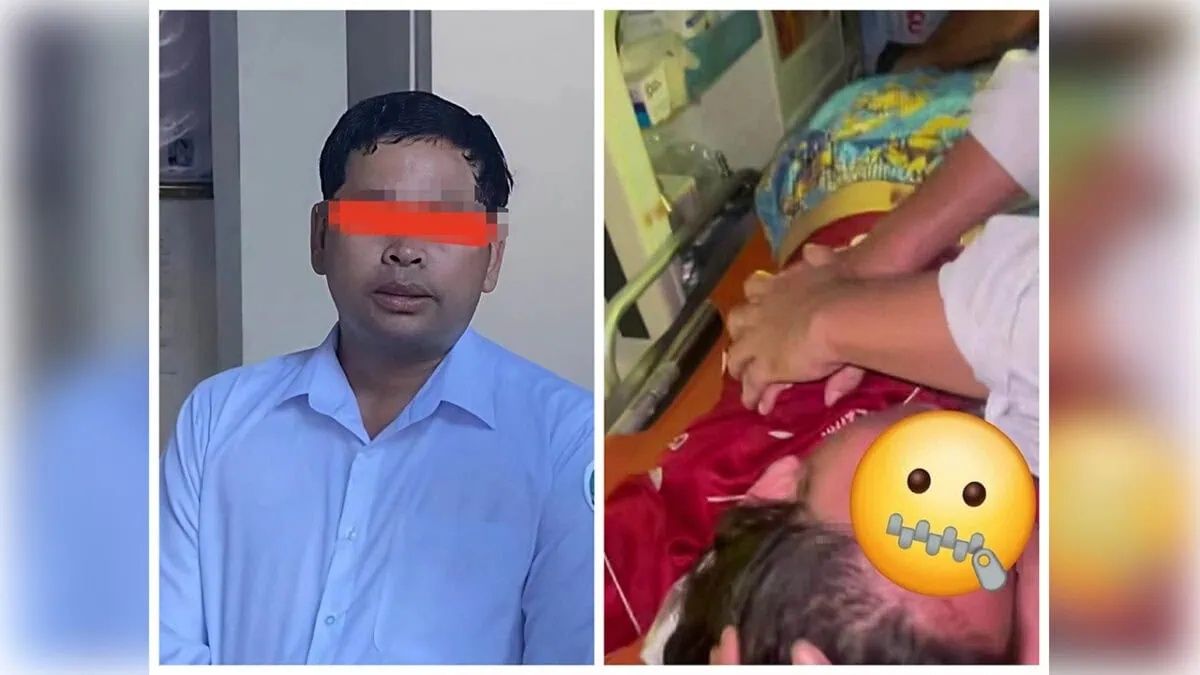
The administrative machinery in Kandal province has moved swiftly to address a controversy that erupted when footage of emergency medical treatment went viral on social media, resulting in the removal of a health facility's longtime leader. On Tuesday, August 4, provincial governor Kuoch Chamroeun issued an order immediately removing Chhun Phally from his position as chief of Setbo Health Centre, reassigning him instead to a general health administrative role under the provincial government's direct control. The decision represents a sharp escalation in response to mounting public criticism that had built over the previous 24 hours, though the formal announcement stopped short of detailing the specific allegations or concerns that prompted the action.
The controversy centres on a video recording that captured Phally administering first-aid treatment to a 17-year-old female patient who had been brought to the facility experiencing seizures and severe respiratory distress. What began as a private family documentation—a relative recorded the treatment to keep other family members informed of the patient's medical condition—transformed into a social media firestorm as the footage circulated widely across platforms popular among Cambodian users. The incident has exposed underlying anxieties about patient safety, dignity, and professional standards within Cambodia's healthcare system, touching on concerns that resonate across Southeast Asia where emergency medical training and protocols remain inconsistent across rural and urban facilities.
Online commentary quickly bifurcated into two principal lines of criticism. One segment of social media users alleged that the manner of handling the patient constituted a violation of her personal dignity and potentially amounted to harassment, raising questions about whether appropriate consent and protective measures had been observed during the emergency intervention. A parallel strand of concern focused on the medical procedures themselves, with observers questioning whether the resuscitation techniques employed adhered to recognised protocols and best practices in emergency medicine. This dual critique—encompassing both ethical treatment of vulnerable patients and technical competence in life-saving procedures—struck at the heart of professional accountability in healthcare delivery.
The provincial health administration responded by launching a formal investigation into the incident, with acting provincial health director Kiem Piseth outlining the scope of the inquiry. Authorities indicated they would examine whether the medical procedures aligned with established professional standards and whether any misconduct had occurred during the patient's treatment. In a statement to the media, Piseth suggested that the investigation's findings could extend beyond administrative consequences, noting explicitly that legal action might follow if the evidence substantiated allegations of sexual harassment or other criminal conduct. This implicit acknowledgment that serious violations could be at stake underscores how severely authorities are treating the matter.
For his part, Phally moved quickly to offer a public apology, seeking to reframe his actions within the framework of emergency medical necessity. In a statement issued after the video's circulation, he expressed regret if his conduct during the life-saving effort had generated misunderstanding among the public or caused distress to the patient's family. He strenuously denied any intention to engage in sexual harassment or inappropriate behaviour, emphasising repeatedly that his singular motivation throughout the emergency intervention had been to preserve the patient's life during a critical medical moment. The defensive posture of his apology—carefully distinguishing between the legitimate demands of emergency care and any suggestion of improper conduct—reflects how polarised the public discourse had become around the incident.
This situation illuminates persistent vulnerabilities within Cambodia's healthcare infrastructure, particularly at the provincial and district level where facilities like Setbo operate with limited resources and sometimes inconsistent oversight. The incident has reignited longstanding concerns about whether rural health workers receive adequate training in both the technical and ethical dimensions of emergency medicine. Many healthcare systems across Southeast Asia struggle with similar challenges: the tension between delivering urgent life-saving interventions and maintaining the professional standards and patient protections that modern medicine demands. In Cambodia specifically, where capacity-building in healthcare remains an ongoing priority, the episode serves as a catalyst for broader reflection on training standards, supervision mechanisms, and the establishment of clear protocols for emergency response that protect both patient welfare and healthcare worker accountability.
The removal of Phally from his leadership position, while administratively decisive, represents only the initial phase of institutional response. The outcome of the ongoing investigation will likely determine whether his reassignment constitutes the endpoint of disciplinary action or merely the opening move in a more consequential process. The mention of potential legal proceedings suggests that authorities are keeping open the possibility of formal charges, though the evidence and findings from the investigation have not yet been disclosed to the public. This uncertainty has sustained media attention and continued online discussion about the case.
The incident also raises practical questions about how healthcare facilities in Cambodia document, store, and manage video recordings of patient treatment—an area where explicit policies may be absent or poorly communicated to staff and families. The fact that a family member felt comfortable filming the emergency treatment suggests either an absence of clear protocols against such recording or a failure to enforce existing restrictions. Modern healthcare ethics increasingly emphasises patient privacy and the protection of medical records, yet these standards must be communicated clearly and enforced consistently, particularly in settings where medical literacy among patients and families may be limited.
For regional observers, the case demonstrates how quickly institutional reputation can be damaged in the social media age, and how pressure from online mobilisation can compel rapid governmental action. The speed with which Kandal's governor responded—within a day of the video's circulation—suggests acute sensitivity to public opinion and reputational risk. This dynamic cuts both ways: it can drive accountability and reform, but it also creates incentives for rapid decision-making that may not always reflect full investigation or nuance. The challenge for Cambodian health authorities will be ensuring that their investigation is thorough, evidence-based, and ultimately serves to strengthen rather than weaken the healthcare system's capacity to respond to genuine medical emergencies.
As the investigation proceeds, healthcare workers across Cambodia will be watching closely to see how their professional judgments during emergency situations will be evaluated and whether the balance between compassion and procedure remains achievable. The case underscores the importance of establishing clear, communicated standards for emergency medical practice that are understood and accepted by healthcare providers, patients, families, and the public alike.

