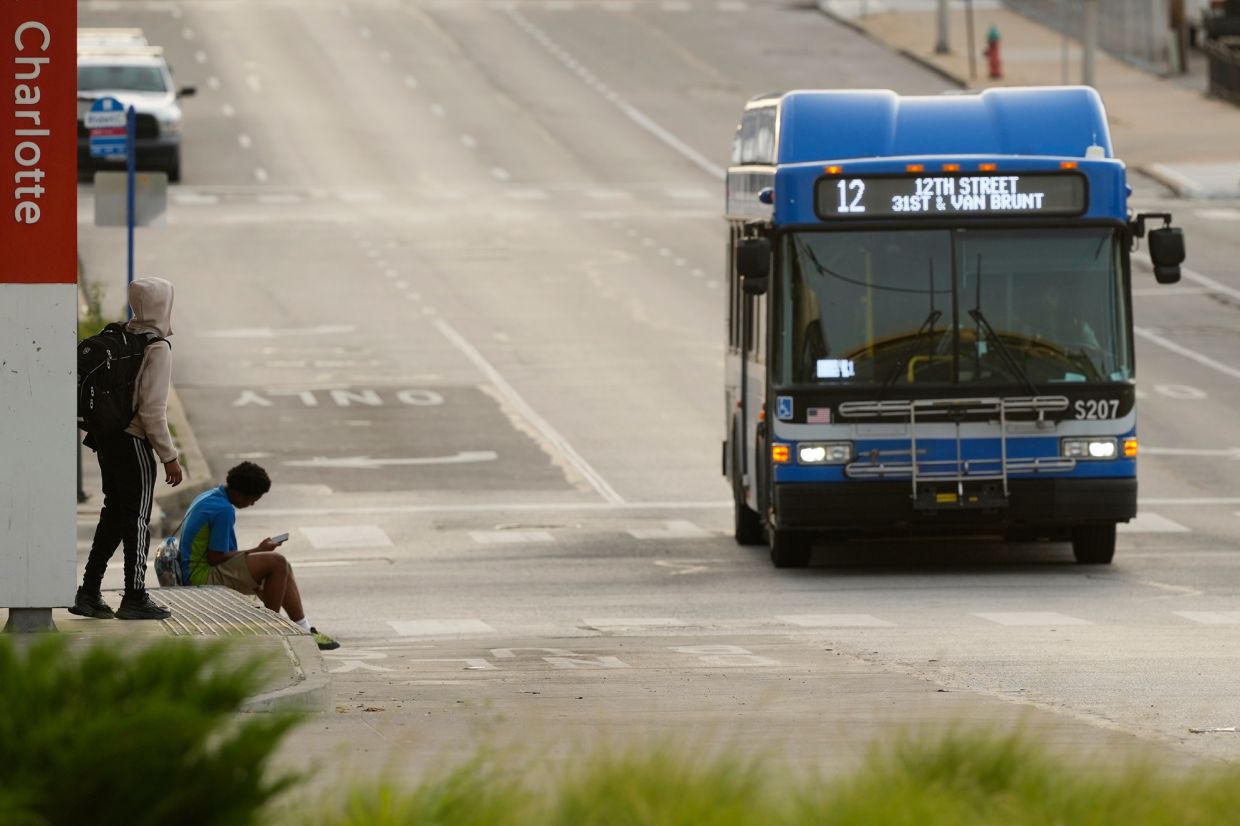
Officials in Kansas City, Missouri, are advancing plans to install facial recognition technology on some of the city's public buses, a move that represents a significant milestone in the deployment of artificial intelligence surveillance on American public transportation. The system would automatically scan boarding passengers against databases of banned riders, missing individuals, and persons of law enforcement interest, marking what supporters and critics alike view as a watershed moment in how cities balance technological innovation against fundamental privacy concerns.
The initiative has crystallised a fundamental tension that is spreading across the developed world: whether the security capabilities offered by facial recognition and related artificial intelligence tools justify their potential for mass surveillance and individual monitoring. For Southeast Asian observers accustomed to rapid technological adoption and varying approaches to public security, Kansas City's struggle illuminates how even wealthy American cities grapple with embedding powerful surveillance systems into everyday civic infrastructure. The outcome may well influence how governments and transit authorities across the region weigh similar deployment decisions.
Proponents of the Kansas City programme argue that the technology differs only marginally from existing surveillance infrastructure. Tyler Means, chief mobility officer at the Kansas City Transportation Authority, contends that cameras on buses are hardly novel, and facial recognition merely represents an evolutionary upgrade of proven security methods. According to this view, passengers should experience no meaningful difference in their daily commute, since automated face-matching occurs instantly and facial data is discarded if no match is detected. SafeSpace Global, the Tennessee-based technology partner, emphasises that images are processed in real-time and deleted unless a specific alert is triggered, leaving no permanent surveillance trace for ordinary commuters.
However, civil liberties advocates counter that this framing fundamentally misunderstands the implications of algorithmic surveillance at scale. Jay Stanley, senior policy analyst for the American Civil Liberties Union's Project on Speech, Privacy and Technology, characterises the Kansas City proposal as crossing a threshold that American cities have largely avoided for a quarter-century: the real-time, automated facial scanning of people in public spaces without their explicit consent. The distinction, Stanley argues, lies not in the presence of cameras but in the automation of identification itself—a capability that transforms static recording into active targeting.
The project's uncertain timeline has already demonstrated the practical obstacles cities encounter when deploying such systems. Kansas City initially hoped to activate the cameras before the FIFA World Cup matches scheduled for the spring, but technical constraints and funding complications intervened. The state of Missouri withdrew expected financial support precisely because of facial recognition concerns, forcing the city to rely on local and federal resources. Infrastructure challenges—primarily the need to upgrade bus Wi-Fi systems to support both the cameras and new fare-collection hardware simultaneously—further extended timelines.
These delays have paradoxically created space for more deliberative governance. City Council member Ryana Parks-Shaw, serving as mayor pro tem, explicitly welcomed the postponement, framing it as an opportunity to implement safeguards and transparency mechanisms before deployment. This measured stance reflects growing recognition among local officials that public acceptance of such systems depends critically on perceived legitimacy and accountability. Rather than rushing the programme to meet World Cup deadlines, Kansas City authorities instead deployed additional human officers to transit hubs—a more labour-intensive but politically safer approach to temporary security enhancement.
The historical record offers cautionary lessons about surveillance scope creep. Tampa, Florida's experiment with facial recognition cameras in the Ybor City neighbourhood following the 9/11 attacks faced immediate public backlash and was soon terminated. More recently, New Orleans police operated facial recognition systems contrary to municipal ordinance, highlighting how agencies may exceed their legal authority once surveillance infrastructure exists. Detroit's experience with high-definition cameras providing live feeds to police initially proceeded without explicit policies, only later establishing usage guidelines after sustained criticism.
Former Detroit police chief James Craig, however, maintains that abandoning surveillance technology entirely represents an overreaction. Craig argues that properly governed facial recognition constitutes a valuable crime-fighting tool, provided authorities establish transparent policies and robust oversight mechanisms. This perspective reflects a genuine dilemma facing police departments globally: how to leverage available technology without surrendering democratic accountability. The question becomes not whether to use such tools, but under what conditions and with what restraints.
Safety advocates for the Kansas City programme emphasise that facial recognition has already proven effective in identifying suspects from video footage of crimes. Yet critics raise substantive concerns about algorithmic accuracy, particularly regarding racial identification disparities well-documented in academic research. The risk that innocent individuals from communities of colour might face disproportionate misidentification creates a distinct harm beyond general privacy concerns—the specific danger of wrongful investigation or detention based on flawed algorithmic matching.
Looking forward, Kansas City Transportation Authority leaders indicate confidence in eventual programme launch, potentially expanded to encompass 30 buses rather than the original nine-bus pilot. CEO Scott Boruff of SafeSpace Global estimates three to four months would be required to configure systems once funding is secured. This scaling ambition suggests municipal leaders view the project as establishing a template that could expand substantially once initial implementation succeeds.
For Malaysian and Southeast Asian policymakers observing this unfolding situation, several insights emerge clearly. First, surveillance technology deployment does not proceed in a vacuum; it generates genuine democratic contestation even in established democracies with strong civil liberties traditions. Second, promises that surveillance systems will remain limited in scope require scepticism; the historical pattern shows consistent expansion once infrastructure exists. Third, public legitimacy depends on transparent governance and credible oversight, not merely technical assurances from providers.
The Kansas City case ultimately demonstrates that integrating artificial intelligence into public infrastructure raises governance questions that technology companies cannot resolve alone. Cities worldwide face pressure to adopt innovation, yet doing so requires deliberating not merely whether a system works technically, but whether its deployment aligns with community values regarding privacy, equality, and democratic accountability. Kansas City's continuing journey with facial recognition surveillance will likely illuminate these tensions for transit authorities and civic leaders across continents contemplating similar technological transitions.

