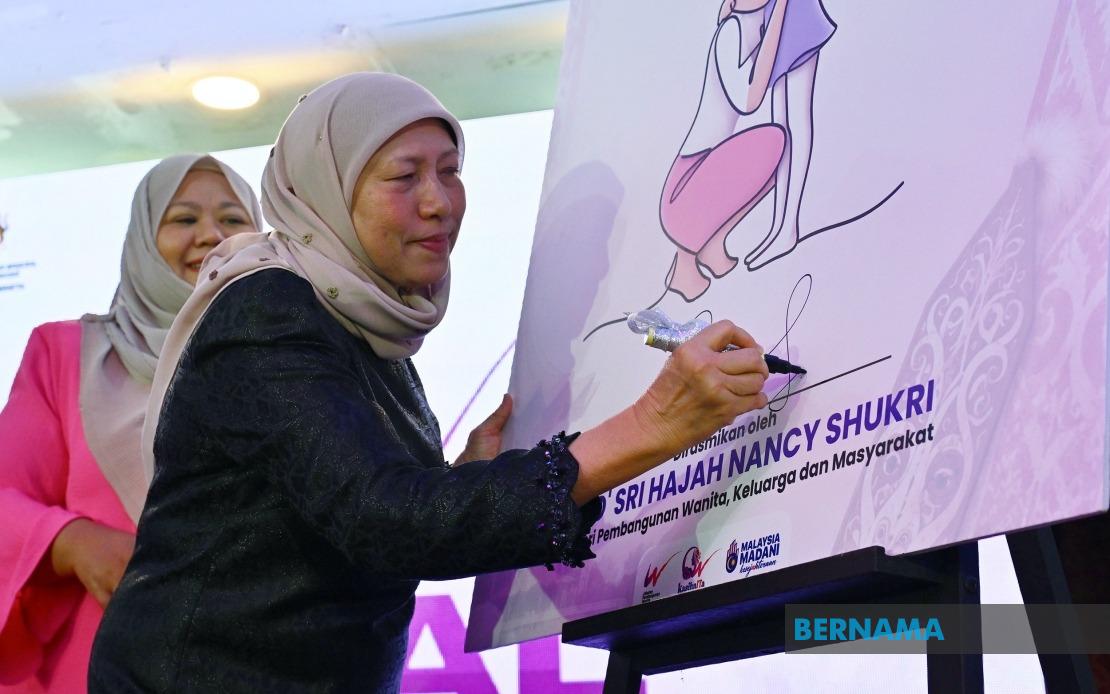
Malaysia's single mothers support initiative has reached a significant milestone with the expansion of the KasihnITa programme to Sarawak, marking the latest phase of a nationwide rollout designed to address the multifaceted challenges facing women heading households alone. The programme, administered by the Ministry of Women, Family and Community Development (KPWKM), represents a coordinated effort to consolidate government resources and expertise into a single platform where vulnerable mothers can access comprehensive assistance without navigating fragmented bureaucratic channels.
Minister Datuk Seri Nancy Shukri inaugurated the state-level initiative in Kuching on July 19, underscoring the government's commitment to ensuring no single mother remains unsupported as Malaysia pursues inclusive development. The Sarawak launch follows earlier implementation in Selangor, with the staggered rollout approach allowing planners to refine delivery mechanisms and gather feedback before wider distribution. The three-day programme attracted approximately 130 participants, providing an initial cohort through which the ministry can evaluate programme effectiveness and identify areas requiring adjustment.
The architecture of KasihnITa reflects a deliberate integration of multiple specialized agencies, each contributing expertise in distinct but interconnected domains affecting single mothers' wellbeing. The Credit Counselling and Debt Management Agency (AKPK) provides guidance on personal financial rehabilitation, while Bank Negara Malaysia contributes monetary policy perspectives and financial literacy instruction. The Legal Aid Department and Syariah Judiciary Department ensure participants understand their rights and available remedies, particularly regarding maintenance obligations and family law proceedings. This consolidated approach addresses a historical gap where single mothers often struggled to identify which agency handled specific problems or had difficulty accessing services scattered across different government departments with separate intake procedures.
Financial literacy emerged as a central pillar of the KasihnITa framework, reflecting recognition that single mothers frequently lack formal training in household budgeting, debt management, and long-term financial planning. The programme equips participants with practical knowledge to allocate limited household resources more strategically, a critical consideration given that single-income households typically operate with tighter margins than dual-income families. By building confidence in money management, the initiative aims to reduce vulnerability to predatory lending and informal credit arrangements that disproportionately affect economically marginalized women.
Child maintenance compliance represents another substantive focus of the programme, addressing a widespread grievance among single mothers regarding ex-partners' failure to fulfill court-ordered support payments. The Legal Aid Department and Syariah Judiciary Department personnel provide accessible explanation of enforcement mechanisms, helping mothers understand their options when former spouses evade obligations. This legal dimension extends beyond financial recovery to encompass documentation requirements, procedural timelines, and recourse available when initial enforcement attempts prove ineffective. By demystifying legal processes that many mothers find intimidating, the programme reduces barriers to pursuing legitimate claims against non-compliant maintenance obligors.
The ministry's emphasis on gathering direct feedback from programme participants reflects an explicit commitment to evidence-based policy development rather than top-down programme design disconnected from beneficiary experiences. Minister Nancy Shukri articulated this approach by acknowledging that future policy refinements and welfare provisions must genuinely reflect the needs and circumstances of single mothers rather than presumed requirements. This consultative stance recognizes that women heading households navigate complex, intersecting challenges—ranging from childcare coordination to employment discrimination to social stigmatization—that require nuanced understanding developed through sustained dialogue with affected communities.
KasihnITa operates within Malaysia's broader social protection architecture, complementing existing assistance schemes while addressing specific vulnerabilities unique to single-mother households. The integration of psychological and emotional support elements, reflected in the programme's emphasis on collective experience-sharing and mutual encouragement, acknowledges that material support alone proves insufficient without corresponding attention to social isolation and emotional resilience. The creation of peer networks through the three-day intensive format facilitates knowledge exchange among participants and cultivates solidarity that extends beyond the formal programme duration.
The expansion to Sarawak carries particular significance given the state's demographic characteristics and economic structure. Rural communities represent a substantial proportion of Sarawak's population, and single mothers in these areas face additional barriers including geographic distance from urban service centers, limited employment opportunities, and reduced access to childcare facilities. The programme's arrival in Sarawak signals commitment to reaching mothers beyond Peninsula Malaysia's urban corridors, though subsequent implementation phases will require careful attention to adapting services to local contexts and addressing state-specific welfare priorities.
The programme's scope encompasses both preventive and remedial dimensions. Preventive elements include financial literacy and debt management training designed to strengthen economic resilience before crises develop. Remedial components address situations where single mothers face immediate hardship or legal complications requiring urgent intervention. This dual approach recognizes that effective social protection requires both building capacity to manage foreseeable challenges and providing emergency support when circumstances exceed individual coping capacity.
For single mothers across Malaysia, KasihnITa represents tangible acknowledgment that their contributions to family and society merit institutional support rather than residual assistance. The programme's design reflects understanding that single mothers' challenges extend beyond personal circumstances to encompass structural barriers including wage discrimination, occupational segregation, and unequal domestic labor distribution. By providing integrated support addressing multiple dimensions of disadvantage simultaneously, the initiative moves beyond treating single motherhood as primarily an individual problem requiring personal adjustment toward recognizing systemic factors requiring policy-level intervention.
The minister's articulation of ensuring no woman is left behind in Malaysia's development agenda places single mothers' advancement within the broader national economic strategy. This framing positions support for vulnerable mothers as essential to realizing Malaysia's human capital potential and achieving inclusive growth targets. As the KasihnITa programme continues expanding across states, its success in delivering meaningful improvement to participants' lives will substantially influence future welfare policy direction and demonstrate whether coordinated inter-agency approaches can effectively address complex social challenges that individual departments struggle to address independently.

