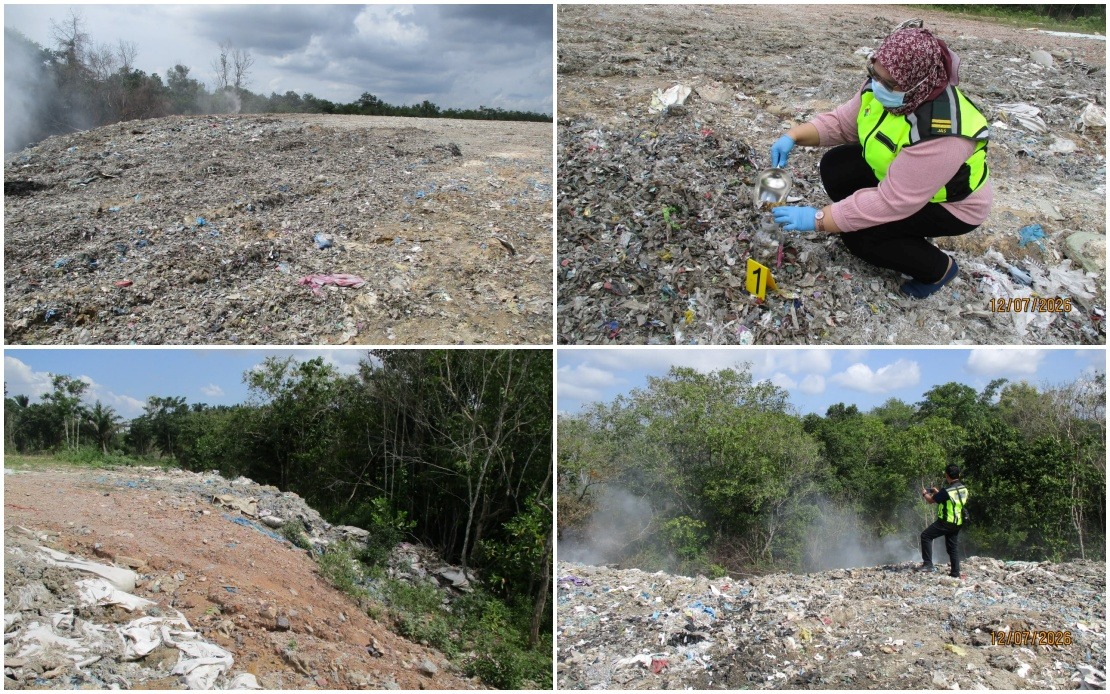
Environmental authorities in Kedah have uncovered an unauthorised waste disposal operation in Bukit Banyan following complaints from residents about unusual burning smells in the area. The Kedah Department of Environment conducted an investigation that revealed a substantial illegal dumping ground where domestic and industrial waste had accumulated on cleared land, with evidence suggesting organised open burning activities had been taking place to extract valuable materials from the discarded refuse.
According to Sharifah Zakiah Syed Sahab, the state's DOE director, the exposed site covers approximately 250 square metres and contains significant quantities of waste materials that had been deposited without proper authorisation or environmental safeguards. The department's fieldwork identified visible smoke at the location, indicating active burning operations intended to recover metals and other valuable components from the accumulated solid waste. These extraction methods represent one of the more common but environmentally destructive practices employed by informal waste management operators across Southeast Asia.
Investigations revealed that the operation lacked the mandatory written approval from the Environment director-general required under Malaysian environmental law. The preliminary findings suggest that a contractor engaged in collecting domestic waste from industrial facilities within the district has been utilising this site as an unauthorised disposal and processing facility. This arrangement reflects how waste management responsibilities can become fragmented and potentially exploited through informal arrangements between industrial generators and collection services, a recurring challenge for regulators in Malaysia's industrial corridors.
The regulatory scrutiny now extends beyond the immediate environmental contamination concerns. The open burning practice poses significant health risks to nearby communities, as the smoke emissions likely contain hazardous substances including heavy metals and toxic compounds that are released when mixed waste materials are combusted without pollution controls. Residents in the surrounding area have already demonstrated their awareness by lodging complaints with authorities, indicating that environmental quality impacts from such operations are becoming an increasingly visible public health issue in rural and peri-urban settings across the country.
The state DOE has initiated a comprehensive investigative approach by collecting solid waste samples from the site for detailed analysis by the Department of Chemistry. Laboratory testing will establish the composition and potential contaminants present in the dumped materials, information that will be crucial for determining the full extent of environmental liability and the appropriate remediation measures. Such scientific documentation also strengthens the legal case that authorities intend to pursue against those responsible for the operation.
The violations identified carry serious legal implications under Malaysia's environmental framework. Charges are being prepared under Section 29A(1) of the Environmental Quality Act 1974, which addresses unauthorised open burning on land parcels, and Section 34A(6) of the same statute, which covers the operation of solid waste landfill facilities without proper approval and licensing. These dual charges indicate that authorities view the operation as both an immediate pollution incident and a structural breach of waste management regulations, suggesting enforcement will proceed on multiple fronts.
Coordination between different government agencies will play a pivotal role in the enforcement and monitoring phase. The state DOE has committed to referring the case to the Solid Waste and Public Cleansing Management Corporation (SWCorp), the national agency vested with statutory authority over solid waste management operations. This jurisdictional handover ensures that enforcement mechanisms appropriate to the scale and nature of the violation can be applied, and that the site will be subject to ongoing regulatory monitoring to prevent resumption of illegal activities.
The discovery in Bukit Banyan illustrates a persistent gap in Malaysia's waste management infrastructure, particularly regarding domestic waste originating from industrial areas. Formal waste collection and disposal pathways may be insufficient or economically uncompetitive in certain regions, creating opportunities for informal or illegal dumping. The involvement of contractors suggests that cost-cutting pressures in the waste collection business may be driving operators toward shortcuts that bypass proper disposal channels, with environmental and health costs externalised to communities.
For Malaysian stakeholders monitoring industrial waste management, this incident underscores the importance of traceability and accountability in waste handling contracts. Industrial facilities that generate domestic waste bear responsibility for ensuring that their contracted collectors deliver materials to licensed facilities, yet enforcement of this principle remains inconsistent. Strengthening chain-of-custody requirements and conducting regular audits of waste management contractors could reduce the prevalence of such unauthorised dumping.
The open burning component of this operation reflects a broader challenge across the region, where informal waste processing methods persist despite documented air quality and public health risks. Malaysia's air quality monitoring and public health agencies have highlighted concerns about uncontrolled burning in industrial and rural areas, yet the enforcement mechanisms often lag behind the scale of the problem. Educational campaigns targeting industrial waste generators and enforcement officers may gradually improve compliance and awareness.
Looking forward, the regulatory response to the Bukit Banyan case will set important precedent for how authorities address coordinated illegal waste operations involving multiple regulatory violations. The involvement of SWCorp in the enforcement phase suggests that post-investigation measures will include not only prosecution but also mandatory site remediation, potentially including removal of accumulated waste and soil rehabilitation efforts. Such holistic enforcement approaches have proven more effective than criminal penalties alone in deterring similar operations in other jurisdictions.
The case also carries implications for how Kedah's state government approaches waste management planning and industrial area oversight. Ensuring adequate disposal capacity, competitive formal waste management services, and visible enforcement presence in industrial zones could reduce the attractiveness of illegal alternatives. Coordination between DOE, SWCorp, local municipal authorities, and industrial park operators remains essential for preventing future incidents and protecting environmental quality across the state.

