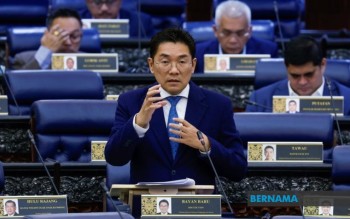
Kedah has attracted RM1.4 billion in approved investments spanning 50 projects during the opening quarter of 2026, reflecting the federal government's broader strategy to establish northern Malaysia as a competitive manufacturing and technology hub. Deputy Investment, Trade and Industry Minister Sim Tze Tzin disclosed these figures during parliamentary proceedings on June 29, highlighting the state's growing appeal to both domestic and international investors seeking to establish operations in Southeast Asia's regional industrial corridors.
The investment flow demonstrates the strategic value the government places on Kedah's three major industrial zones. Kulim Hi-Tech Park, the Kedah Rubber City, and the Kerian Integrated Green Industrial Park serve as anchors for broader economic development across the northern corridor. These facilities have been positioned not merely as isolated manufacturing complexes but as catalysts intended to generate ripple effects throughout surrounding regions and create opportunities for communities beyond their immediate perimeters.
The parliamentary question, posed by Ahmad Tarmizi Sulaiman representing the opposition Perikatan Nasional coalition, directly addressed concerns that high-technology industrial gains concentrate in established urban centres while rural districts remain marginalised. Sik, Baling, and Padang Terap—all neighbouring areas with predominantly agricultural economies—have historically relied on traditional farming and small-scale processing activities. The deputy minister's response acknowledged this disparity and outlined concrete mechanisms intended to distribute economic benefits more equitably across the broader region.
Infrastructure development emerges as the government's primary tool for extending industrial spillover into peripheral districts. The widening of Federal Route FT004, connecting the Kulim Hi-Tech Park interchange to Bukit Karangan, represents a significant investment in transport connectivity. Scheduled for completion by April 2028, this project aims to reduce logistics costs and travel times, making inland locations more attractive for industrial investment and enabling workers from rural areas to access employment in major industrial facilities more conveniently.
Beyond transport infrastructure, the government recognises that districts such as Baling, Sik, and Padang Terap possess distinct comparative advantages centred on agricultural production and processing. Rather than attempting to transform these areas into generic technology parks, policy now emphasises leveraging their existing strengths in food processing and agro-industries. This sector-specific approach aligns with Malaysia's broader agricultural modernisation agenda and complements rather than competes with high-technology manufacturing concentrated in established industrial parks.
Crucially, the New Incentive Framework implemented in March 2026 introduces economic mechanisms designed to pull local participation into the supply chains of foreign investors. By offering higher government incentives to companies that increase localisation—whether through employing local vendors, sourcing locally manufactured inputs, or establishing supporting services domestically—the policy framework creates financial rewards for corporate decisions that distribute economic activity beyond the primary investor. This represents a shift from passive incentive structures toward active policy intervention aimed at reshaping investment patterns.
The framework recognises that merely establishing a manufacturing facility generates limited local benefit if that facility sources all inputs from external suppliers and employs only specialised technical personnel from abroad. By making localisation economically advantageous, the government seeks to ensure that foreign manufacturing facilities become nuclei for broader supplier ecosystems, creating employment opportunities for mid-skilled workers, fostering the development of local service providers, and catalysing technology transfer as foreign companies work alongside domestic suppliers to meet international quality standards.
For Malaysian policymakers and regional observers, the Kedah investment data and accompanying policy framework offer a model for addressing a persistent development challenge across Southeast Asia: how to ensure that industrialisation and foreign investment generate distributed, inclusive economic growth rather than concentrating gains in specific urban enclaves. The approach combines infrastructure investment, sector-specific development strategies aligned with regional comparative advantages, and incentive frameworks that reward corporate decisions promoting local supply chain integration.
The implications extend beyond Kedah itself. Other Malaysian states pursuing industrial development face similar pressures to distribute economic gains beyond primary investment sites. The framework developed through Kedah's experience—emphasising connectivity improvements, leveraging sectoral strengths, and structuring incentives to encourage local participation—provides a transferable template. Similarly, other Southeast Asian economies attempting to guide foreign manufacturing investment toward regional economic integration may draw lessons from Malaysia's experimentation with localisation-linked incentives.
However, the framework's success remains contingent on consistent implementation and complementary policy measures. Infrastructure projects like the FT004 widening must remain on schedule despite potential budgetary constraints. Investors must perceive the incentive framework as credible and administratively straightforward, otherwise they will continue concentrating local operations in established parks despite financial incentives encouraging broader geographic dispersion. Additionally, local suppliers in rural districts require access to skills training, quality management systems, and financial services to credibly serve as part of international supply chains.
The timing of these initiatives also reflects broader regional shifts. Southeast Asia's manufacturing landscape is evolving as companies diversify supply chains away from concentration in specific countries or regions. Thailand's flood vulnerabilities, Vietnam's rising labour costs, and China's industrial maturation have all increased interest in Malaysian manufacturing locations. Kedah's competitive positioning depends on offering not merely low-cost labour or available industrial space, but rather integrated ecosystems where foreign manufacturers can source locally, access skilled workforces, and build long-term supplier relationships within predictable regulatory environments.
The government's commitment to ensuring that economic benefits from high-technology industries reach rural residents through employment opportunities and local vendor development reflects both pragmatic economics and political necessity. Pragmatically, underutilised rural labour represents a competitive advantage in a regional manufacturing market where skills and wage costs increasingly differentiate investment locations. Politically, concentrating industrial gains in specific districts while neighbouring areas stagnate generates tensions and limits the national legitimacy of growth narratives. The coordinated policy approach linking infrastructure investment, sectoral development, and incentive structures aims to address both considerations simultaneously.

