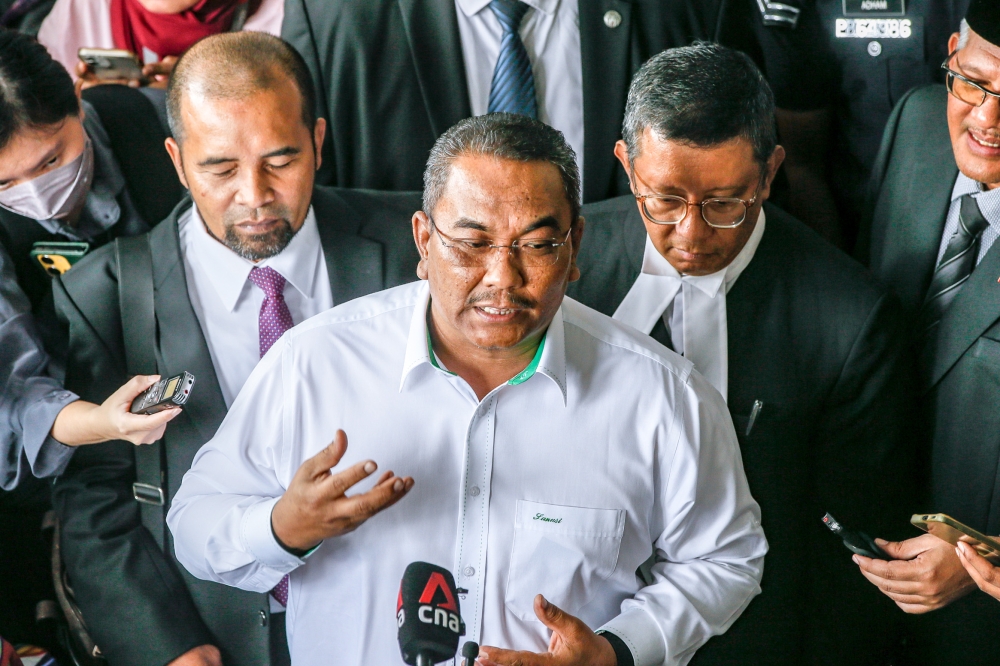
Kedah Menteri Besar Datuk Seri Muhammad Sanusi Md Nor has escalated a political dispute with the Democratic Action Party by issuing formal letters of demand against three individuals, including prominent DAP figure Nga Kor Ming. The legal action centres on allegations that the recipients misrepresented statements made by Sanusi, creating a false narrative of his views on matters of public concern. This move represents a significant hardening of rhetoric between the state government and the opposition party, with implications extending beyond Kedah into the broader framework of federal-state political relations.
The letters of demand, issued from Alor Star, constitute a formal legal instrument signalling that Sanusi views the alleged distortions as sufficiently serious to warrant written notice before potential further legal proceedings. In Malaysian political practice, such demands typically precede defamation or libel suits, and their issuance marks a deliberate shift from verbal retaliation to documented legal channels. The specificity of naming individual recipients suggests that Sanusi's legal team has identified particular statements or publications they consider actionable, establishing a paper trail of the allegations at stake.
Nga Kor Ming, who holds significant influence within DAP as a senior party figure and Federal Territory MP, represents the highest-profile target of the legal action. His inclusion suggests the dispute involves statements made at the federal political level or through national media platforms, rather than purely local Kedah affairs. The involvement of two additional recipients broadens the scope of the allegation, implying a coordinated narrative or sustained campaign rather than isolated remarks. This pattern indicates that Sanusi's legal team likely views the misrepresentation as part of a deliberate strategy to damage his political standing.
The content of Sanusi's allegedly distorted remarks remains significant for understanding the political stakes. In Malaysian politics, controversies often hinge on interpretative differences regarding federalism, religious affairs, or economic policy—areas where state leaders frequently clash with federal opposition figures. Without confirmation of the specific remarks in question, observers must consider what statements would prompt such serious legal action. Given Sanusi's prominence as a PAS leader and Kedah's status as a key state in the current political landscape, the dispute likely involves matters touching on governance, policy direction, or party political positioning.
The decision to pursue legal demands reflects broader trends in Malaysian political discourse, where formal mechanisms increasingly supplement or replace purely rhetorical engagement between rivals. This reflects both increased sophistication in political communication strategies and heightened sensitivity to media narratives, particularly among state leaders seeking to protect their public image and political viability. For Sanusi specifically, the move demonstrates a willingness to deploy legal instruments to address what his team perceives as unfair political attacks, setting a precedent for how his administration may respond to future criticism.
For DAP, the letters present a tactical challenge requiring careful management. The party must balance its interest in robust political critique with exposure to legal liability, particularly where individual politicians face personal legal demands. How Nga Kor Ming and his colleagues respond—whether through formal legal replies, public statements, or internal party strategy adjustments—will influence the trajectory of this dispute. The party's response may also affect its broader relationship with state governments where it holds political leverage, including those in states where PAS-led administrations govern.
The incident underscores the fragmented nature of Malaysian politics following the 2022 general election and subsequent political realignments. Kedah, under PAS leadership since 2020, occupies a significant position in the political architecture, particularly given PAS's role in both state government and federal coalition dynamics. Political tensions between Kedah's administration and federal opposition figures reveal fault lines that extend beyond party affiliation to encompass questions of governance philosophy, federalism, and the proper scope of state versus federal authority.
For Malaysian readers and businesses monitoring the political environment, such legal disputes carry practical implications. Political tension can affect state-level policy implementation, investment priorities, and the regulatory environment. When state and federal opposition figures engage in escalating conflict, it can create uncertainty about policy continuity and the stability of the political framework within which states operate. Investors and business stakeholders in Kedah may view such disputes as indicators of broader political volatility or, conversely, as sign of stable institutional responses to political disagreement through legal rather than extrajudicial channels.
The issuance of these letters also reflects the increasingly legalistic approach to political competition in Malaysia, mirroring global trends where political rivals resort to courts to settle disputes rather than relying on electoral or parliamentary mechanisms alone. This shift has both advantages and risks: it potentially reduces physical conflict and establishes clearer boundaries around acceptable rhetoric, but it also risks weaponising legal systems and creating chilling effects on legitimate political speech. How this particular case resolves may influence whether other political figures adopt similar legal strategies.
Looking forward, the trajectory of this dispute will depend on multiple factors including the substantive merits of the allegations, the political calculations of both sides regarding escalation, and the receptiveness of Malaysian courts to such political disputes. Whether these demands lead to formal legal suits, out-of-court settlements, or eventual withdrawal remains uncertain. However, the action itself signals that political competition in Malaysia continues to evolve in form and intensity, with state leaders increasingly willing to pursue formal legal redress against federal opposition actors. This development deserves attention from those tracking the evolution of political norms and institutions in the country.

