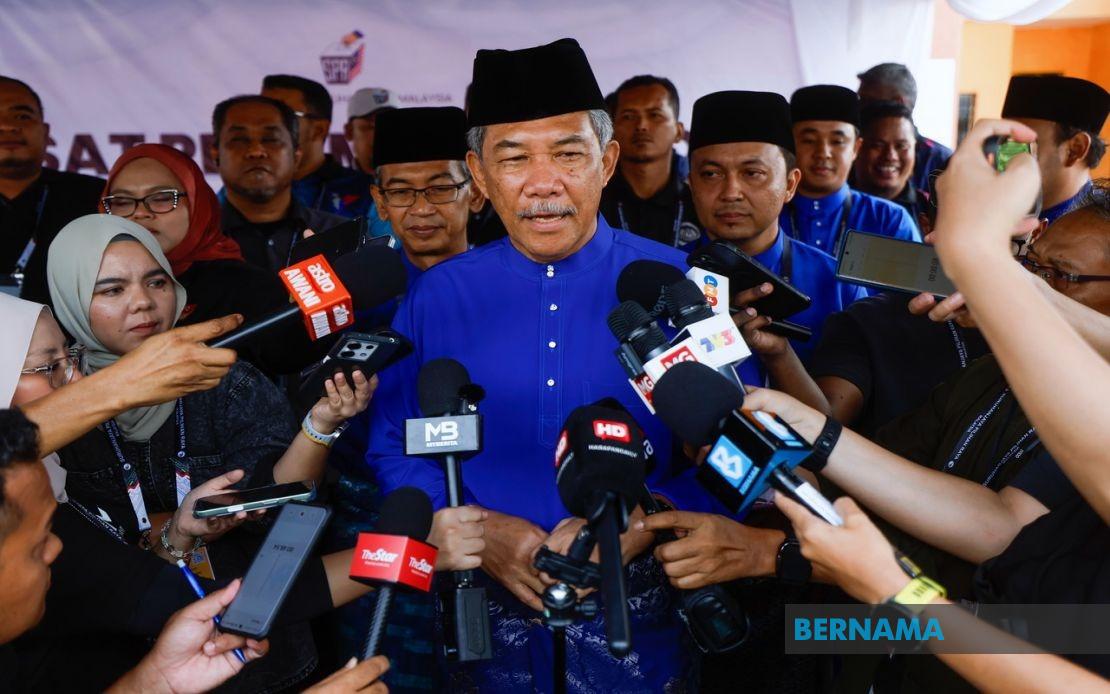
Barisan Nasional deputy chairman Datuk Seri Mohamad Hasan has issued a firm directive to the coalition's election machinery in Negeri Sembilan, instructing them to refrain from incorporating traditional customs and adat issues into campaign messaging ahead of the 16th state election. Speaking after nomination proceedings at Dewan Seri Rembau on July 18, Mohamad stressed that respecting the sanctity of the state's adat institutions must take precedence over electoral calculations, arguing that any attempt to politicise such deeply rooted cultural matters would undermine the harmony essential to a healthy democratic process.
As UMNO deputy president alongside his role as BN's number two, Mohamad carries significant weight within the coalition's decision-making apparatus. His comments reflect growing awareness among party leadership that Negeri Sembilan's unique governance structure—which vests considerable authority in traditional rulers and adat councils—demands particular sensitivity during electoral campaigns. The state's adat framework, developed over centuries, continues to regulate land distribution, succession rights, and ceremonial matters in ways that fundamentally distinguish Negeri Sembilan from other Malaysian states. Introducing such issues into partisan political discourse risks creating deep fissures not merely within the electorate but potentially between political institutions and the revered traditional authorities that maintain social cohesion.
The warning appears calibrated to address internal discipline within BN's own ranks rather than external opponents. Mohamad's explicit reminder that party machinery must not "touch on adat issues" suggests previous instances where ambitious candidates or local operatives may have been tempted to exploit customary grievances for electoral advantage. Such temptation is understandable in competitive politics, where identifying wedge issues can shift margins, but Mohamad's intervention signals that BN's senior leadership views adat as a boundary that partisan interest should not cross. This reflects a matured understanding that certain institutional pillars—the monarchy, traditional councils, customary law—require protection from the rough-and-tumble of electoral combat, lest their legitimacy and effectiveness be corroded.
Mohamad elaborated that introducing adat controversies into campaign discourse would only "complicate the situation" in Negeri Sembilan, a characteristically understated acknowledgment that such politicisation could trigger backlash, social division, and loss of public confidence in both political institutions and customary authorities alike. By framing the issue in terms of practical governance rather than morality, he appeals to candidates' rational self-interest: deploying adat as campaign ammunition may provide short-term traction but risks longer-term damage to the state's political stability and the BN's standing among constituencies that deeply value traditional governance.
Simultaneously, Mohamad addressed the question of electoral cooperation between BN and Perikatan Nasional, the rival federal coalition. He clarified that the two groups have negotiated specific arrangements to maximise their combined vote-getting capacity across Negeri Sembilan's 36 seats without formally merging. Importantly, Mohamad distinguished this understanding from the comprehensive coalition arrangement that defined recent elections in Johor, indicating that BN and PN have opted for a more limited, seat-by-seat coordination model. Under such an arrangement, candidates from one coalition would effectively face no opposition from the other in constituencies designated as theirs, concentrating voter energies and reducing the risk of three-way splits that could deliver seats to the opposition.
This strategic positioning reflects the fractious state of Malaysian electoral politics post-2020, where the traditional dominance of single coalitions has fragmented into more fluid, negotiated arrangements. For Negeri Sembilan specifically, the BN-PN understanding acknowledges that neither coalition commands sufficient independent strength to claim confidence across all 36 seats. By dividing the battleground, both coalitions improve their prospects relative to opposition parties—chiefly PKR and Amanah—while maintaining organisational independence and avoiding the perception of a merger that might alienate supporters uncomfortable with closer association.
The practical implications for Malaysian voters and regional analysts deserve attention. Negeri Sembilan's election will test whether institutional conventions—in this case, the separation of adat governance from electoral politics—can survive contemporary pressures. The state's Duli Yang Maha Mulia the Yamtuan Negeri retains substantial ceremonial and legal authority over customary matters, and any campaign that threatens to destabilise that institution could provoke decisive intervention from palace quarters. Mohamad's cautionary message may be read partly as acknowledging that boundary: BN recognises that the Negeri Sembilan royal establishment will not tolerate adat being hauled into the partisan arena.
For Southeast Asian observers, the episode illustrates how mature democracies balance electoral competition with institutional preservation. Malaysia's experience differs markedly from some regional peers where traditional institutions have been hollowed out or subordinated entirely to electoral logic. Mohamad's intervention, though procedural on its surface, represents an implicit defence of institutional autonomy and respect for customary authority as prerequisites for long-term democratic legitimacy. In societies where traditional governance remains salient—whether kingdoms, sultanates, or customary councils—parties that attempt to weaponise such institutions risk triggering backlash from publics who view them as standing above politics.
The Negeri Sembilan election itself, scheduled for August 1 following early voting on July 28, will occur amid Malaysia's broader constitutional and political reckoning. The state legislative assembly's dissolution on June 5 set this contest in motion, and the timing places it within a sequence of state elections that collectively influence federal political trajectories. A decisive BN performance in Negeri Sembilan would bolster Barisan's narrative of recovery and renewed dominance at state level, while a strong PN showing would strengthen that coalition's claim to be a viable federal alternative. The BN-PN understanding, therefore, serves both coalitions' interests in containing the opposition rather than settling their own rivalry conclusively.
Mohamad Hasan's remarks ultimately embody a pragmatic wisdom about the limits of partisan mobilisation. By urging restraint on adat matters, he signals that BN recognises certain boundaries within democratic competition. Whether all party candidates and operatives heed that guidance remains to be seen, but the public statement itself communicates to Negeri Sembilan's electorate that the coalition respects the state's distinctive institutional heritage. In a region where trust in political institutions remains fragile, such signals matter considerably.

