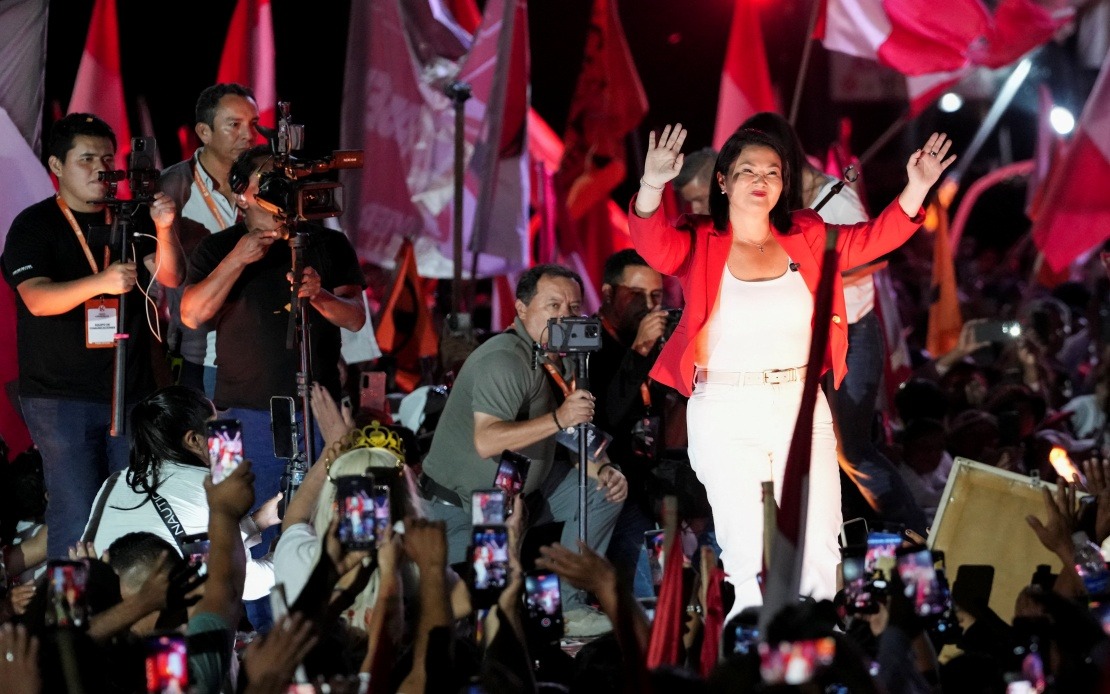
Keiko Fujimori has claimed victory in Peru's presidential election with a wafer-thin margin, official results confirmed on Monday following a complete tally of ballots from the June 7 vote. The Popular Force candidate obtained 50.135 per cent of valid votes according to the National Office of Electoral Processes (ONPE), narrowly surpassing her opponent Roberto Sanchez of Together for Peru, who secured 49.865 per cent. The razor-sharp division—amounting to just under 50,000 votes separating the two candidates—underscores the profound political divisions gripping the South American nation and highlights the deeply polarised landscape facing Fujimori as she prepares to take office.
The final electoral arithmetic reveals Fujimori garnered 9,223,396 votes against Sanchez's 9,173,755, a difference of 49,641 ballots. Having processed all 92,766 tally sheets compiled during voting day, the ONPE's comprehensive count closed out a lengthy tallying process that extended through late June. Roberto Burneo, president of the National Jury of Elections, indicated that official proclamation of results would occur on Friday, formalising what remains one of Peru's most competitive electoral contests in recent years. This narrow victory threshold signals that Fujimori's governing mandate carries minimal popular endorsement, a constraint that will likely complicate her legislative agenda and coalition-building efforts across Peru's fragmented congress.
Fujimori's triumph marks a significant personal milestone, representing her first presidential victory after three unsuccessful attempts to reach the top office. Her previous campaigns in 2011, 2016, and 2021 all fell short, making this fourth bid her breakthrough moment. However, the slender margin of victory—less than half a percentage point—reflects the contested nature of her candidacy and the deep divisions within Peruvian society regarding her political legacy and policy direction. Her family name carries substantial historical weight in Peru; her father Alberto Fujimori governed the nation from 1990 to 2000, a period marked by authoritarian governance, economic restructuring, and ongoing controversy over alleged human rights violations during the fight against insurgent groups. These historical shadows continue to loom over contemporary Peruvian politics, influencing voter calculations and electoral dynamics.
Sanchez, Fujimori's defeated rival, brought different political credentials and represented an alternative vision for Peru's future. Having served as a minister during Pedro Castillo's presidency from 2021 to 2022, Sanchez represented continuity with the centrist-left governance approach that characterised that administration. The Together for Peru coalition positioned itself as a moderate counterweight to Fujimori's right-wing platform, yet the electorate's extremely narrow preference for the latter suggests that Peru remains fundamentally split between competing visions of economic policy, governance style, and national direction. Sanchez's near-success in capturing the presidency, despite the electoral loss, indicates that the political centre maintains substantial support among the general population, even as institutional outcomes favoured his opponent.
For Malaysian and Southeast Asian observers, Peru's election results carry important lessons regarding electoral competition in polarised democracies and the challenges facing leaders elected with minimal popular mandates. Peru's situation parallels dynamics observed across multiple developing democracies in Asia and Latin America, where narrow electoral victories frequently generate questions about governmental legitimacy and the sustainability of political coalitions. Fujimori's path forward will require delicate navigation of competing interests, building legislative consensus in a fragmented parliament, and addressing deep societal divisions without further exacerbating existing tensions. Her ability to govern effectively despite the marginal electoral endorsement will significantly influence how Peruvian citizens view democratic institutions and whether narrow victories undermine faith in electoral processes.
The election's extremely competitive character also reflects Peru's complex social composition and the competing demands of diverse constituencies struggling to find common ground on fundamental governance questions. The nation faces persistent economic challenges, regional inequality, and questions about institutional reform that no single governmental programme can easily resolve. Fujimori's right-wing economic orientation, while evidently preferred by a slim majority of voters, will face pressure from those who favoured Sanchez's alternative approach. The coming months and years will reveal whether Fujimori can expand her political base beyond the narrow coalition that secured her election, or whether she will govern primarily with her core supporters while facing entrenched opposition.
The ONPE's methodical completion of the official count—processing every tally sheet and confirming results through established electoral procedures—demonstrated institutional resilience and adherence to democratic protocols despite Peru's turbulent recent political history. The nation experienced presidential crises and institutional instability in preceding years, making the conduct of a comprehensive and credible electoral process particularly significant. That electoral authorities successfully managed the entire process, verified results transparently, and established clear procedural timelines for official proclamation reflects improvements in institutional capacity and commitment to democratic legitimacy.
International observers and regional analysts will monitor Fujimori's early governmental actions closely, seeking indicators of how she intends to build consensus across Peru's deeply divided political landscape. Her economic priorities, approach to regional concerns, and strategies for addressing institutional challenges will signal whether her administration can govern effectively despite its narrow popular mandate. The experience of other regional leaders elected with minimal electoral margins suggests that early success in delivering tangible improvements on key issues proves essential for building broader political support and establishing governmental credibility. Fujimori's track record prior to this presidential victory—including her legislative experience and prior campaign platforms—provides some indication of her policy direction, yet governance frequently requires different approaches than electoral competition.

