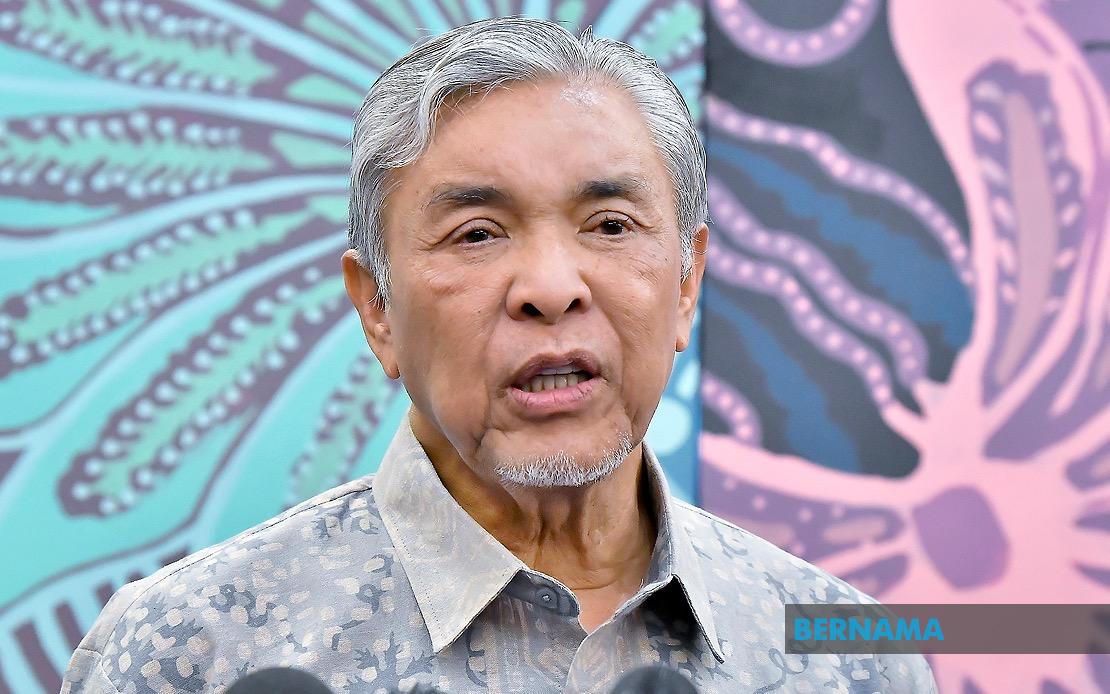
Deputy Prime Minister Datuk Seri Dr Ahmad Zahid Hamidi has moved to dispel concerns about the proposed expansion of the South East Johor Development Authority (KEJORA), emphasizing that the plan centres on orchestrating development across south-eastern Johor rather than pursuing land acquisition in affected districts. Speaking at the KEJORA 2025 Excellent Service Awards and Appreciation Ceremony in Kota Tinggi on July 2, Zahid, who also holds the Rural and Regional Development portfolio, underscored the need for public clarity regarding the initiative's true objectives, as misconceptions have circulated about KEJORA's intentions to assume ownership of properties within the expanded footprint.
The Deputy Prime Minister's remarks come as the authority seeks to broaden its operational reach across the region, particularly to accommodate rapid growth in areas like Pengerang, which has emerged as an economic hotspot driven by large-scale industrial and tourism ventures. KEJORA's track record formed the cornerstone of Zahid's argument for the expansion, with the organisation having achieved a 98.3 per cent success rate in project implementation across its existing portfolio. This demonstrated performance, according to Zahid, provides a compelling rationale for extending the development authority's coordinating capacity into new districts, where similar systematic approaches could unlock growth potential.
The expansion proposal has garnered substantial grassroots backing, according to findings from a public consultation exercise undertaken by KEJORA itself. The authority's survey revealed that 96 per cent of respondents in the affected areas supported the extension, suggesting a degree of community confidence in KEJORA's developmental model and governance approach. This public endorsement, coupled with the agency's proven delivery metrics, positions the expansion as both demand-driven and evidence-based, though Zahid was careful to note that ultimate authorisation remains contingent on constitutional processes. His Majesty Sultan Ibrahim, the King of Malaysia, and Tunku Mahkota Ismail, the Regent of Johor, must grant their consent before implementation can proceed, a requirement that reflects Johor's constitutional framework and the significant powers held by the state's royal institution.
The financial commitment underpinning KEJORA's activities has also been reinforced through recent budgetary allocations. The Rural and Regional Development Ministry has channelled approximately RM138 million to the development authority for projects spanning the region, supporting an already-extensive portfolio of 107 programmes whilst enabling some 350 additional smaller-scale initiatives to move forward. This sustained investment demonstrates governmental confidence in the authority's model and reflects the political priority accorded to south-eastern Johor's development agenda within both federal and state policy frameworks.
The push for KEJORA's territorial expansion aligns closely with complementary infrastructure and administrative proposals for the region. Minister in the Prime Minister's Department (Law and Institutional Reform) Datuk Seri Azalina Othman Said, who represents the Pengerang constituency, has advocated for elevating Pengerang to full district status alongside constructing new healthcare facilities to serve the area's growing population. Zahid expressed support for Azalina's proposals, recognising that administrative restructuring and improved service provision form essential accompaniments to economic development. Pengerang's trajectory as an economic centre, anchored by petroleum and petrochemical complexes and increasingly by tourism infrastructure, has created demand for governance structures and public services calibrated to its expanding demographics and economic complexity.
For Malaysian regional observers, the KEJORA expansion exemplifies contemporary approaches to managing growth in secondary cities and development corridors. Rather than fragmenting authority across multiple bodies, the strategy concentrates planning and implementation capacity within a single development agency operating under clear performance frameworks. This model offers potential relevance across Southeast Asia, where similar mid-tier cities are experiencing comparable growth pressures and administrative capacity constraints. The emphasis on coordinating existing stakeholders rather than creating new land-holding entities also suggests attention to political sensitivities surrounding land rights and ownership, issues with particular salience in Malaysia's federal system where state governments jealously guard property regulation.
The constitutional requirement for Royal consent, whilst potentially extending the approval timeline, embeds an additional layer of legitimacy into the expansion process that reflects Johor's distinctive political culture. The state's monarchy has historically exercised substantial substantive authority over development matters, and securing explicit approval from Sultan Ibrahim and the Regent positions the KEJORA expansion as consistent with established principles of governance and deference to royal prerogative. This contrasts with more streamlined approval processes in other states and may reflect Johor's particular constitutional arrangements and the weight assigned to royal oversight in matters affecting territorial scope and governmental jurisdiction.
The distinction between coordination and land acquisition carries real implications for the affected communities and investors within KEJORA's proposed expanded zone. Existing landholders need assurance that expansion will not trigger compulsory land acquisition schemes, which can create uncertainty and undermine property values. By explicitly framing the exercise as developmental coordination rather than asset appropriation, government messaging aims to encourage stakeholder confidence and encourage private investment alongside public initiatives. This framing also positions KEJORA as a facilitating and orchestrating body rather than a proprietorial agency, potentially reducing political friction that might otherwise accompany territorial expansion proposals.
Pengerang's rapid transformation underscores why expansion has become necessary. The district's emergence as a major economic node, driven by massive refinery and petrochemical investments alongside tourism development anchored by theme parks and hospitality infrastructure, has created development velocity that outpaced KEJORA's existing jurisdictional footprint. The authority's success in delivering projects efficiently and on budget has generated momentum for extending its model into this expanding economic zone. As Pengerang continues attracting both foreign and domestic capital and as its population grows correspondingly, coordination challenges intensify, creating institutional demands that the expansion proposal directly addresses.
The feedback supporting expansion also reflects confidence in KEJORA's institutional capacity relative to alternatives. Rather than dispersing developmental authority across fragmented governance structures or allowing ad hoc project-by-project decision-making, the consolidated approach offers predictability and efficiency. For businesses considering investment in Pengerang and surrounding areas, a single coordinating body with proven delivery performance and explicit performance targets provides clarity about development frameworks and timelines. This institutional coherence potentially advantages KEJORA's expansion zone in the increasingly competitive regional competition for investment and talent in Southeast Asia.

