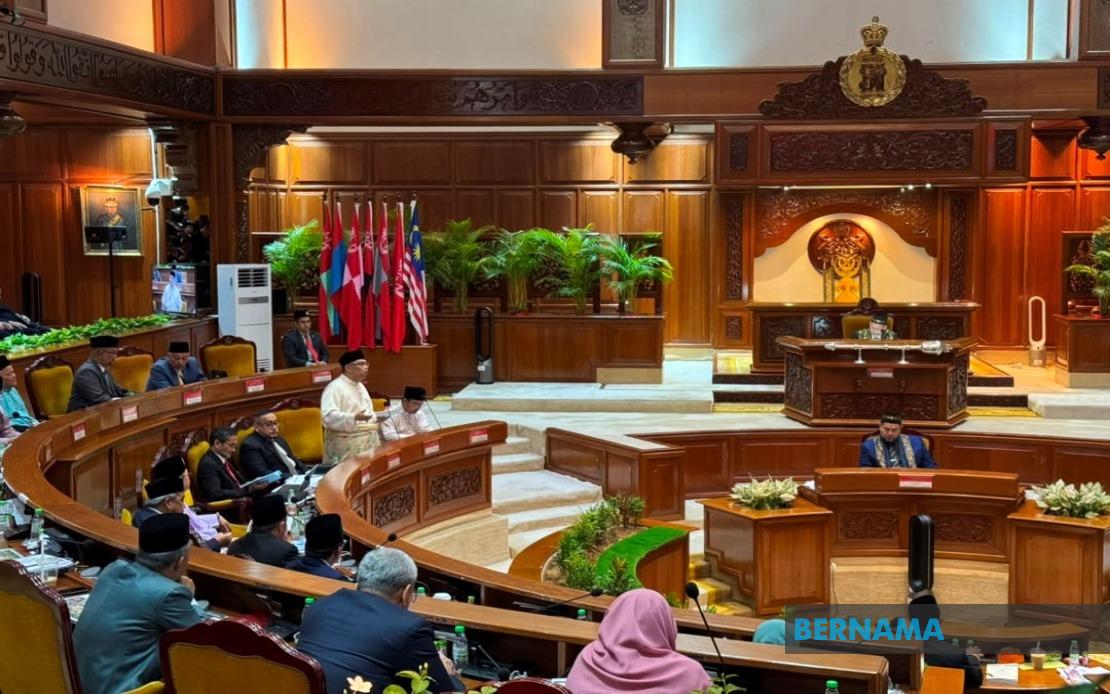
Kelantan's state legislative assembly has taken a decisive step to reshape its Islamic criminal law landscape, unanimously passing the Syariah Criminal Offences (Kelantan) Bill 2026 on August 12 in a bid to establish clearer and more authoritative legal provisions in this sensitive domain. The legislative move represents an attempt to recover from a significant judicial setback two years earlier when Malaysia's highest court struck down the majority of provisions in the state's previous enactment, triggering broader constitutional questions about which level of government retains power to define and punish religious offences.
The Bill, introduced by Deputy Menteri Besar Datuk Dr Mohamed Fadzli Hassan, proceeded through parliamentary debate involving six state assemblymen representing constituencies spanning Pasir Tumboh, Melor, Galas, Jelawat, Kota Lama and Chempaka. Following substantive discussion, Menteri Besar Datuk Mohd Nassuruddin Daud delivered the closing arguments before the legislature advanced the measure through its final reading stages. The unanimous passage underscores a degree of political consensus within Kelantan's predominantly Muslim-majority assembly, though the outcome remains subject to federal constitutional interpretation.
The legislative framework comprises nine distinct sections addressing 62 separate clauses alongside one supporting schedule, reflecting what state leadership characterises as meticulous refinement of Malaysia's Islamic jurisprudential approach. According to Mohd Nassuruddin, the drafting process involved extensive deliberation across multiple review cycles prior to presentation to the assembly, ensuring the final product represented carefully considered governance rather than hastily constructed legislation. He emphasised that this methodical approach reflected continuity with underlying principles already embedded in Kelantan's previous Syariah Criminal Code, suggesting evolutionary rather than revolutionary change in the state's Islamic legal direction.
The Bill introduces several substantive reforms addressing core Islamic jurisprudential concerns. These include new obligations regarding the performance of mandatory prayers, enhanced protections for physical integrity and bodily autonomy, safeguarding of intellectual and mental capacity, incorporation of restorative justice principles, prioritisation of corporal punishment mechanisms within the broader sentencing hierarchy, and introduction of compounding procedures that allow resolution of certain offences outside formal prosecution. Each provision reflects theological and practical considerations within Islamic law traditions while attempting to accommodate modern governance frameworks.
This legislative resurrection becomes comprehensible only when viewed against the dramatic February 2024 Federal Court judgment that fundamentally undermined the previous enactment. In an 8-1 decision that surprised many constitutional observers, Malaysia's apex court determined that 16 of the 18 provisions contained in the Kelantan Syariah Criminal Code (I) Enactment 2019 exceeded the state assembly's constitutional authority. The ruling centred on a crucial jurisdictional distinction: the court found that numerous offences falling under the challenged provisions properly belonged within Federal legislative competence rather than state jurisdiction, effectively creating a constitutional ceiling on state Islamic criminal law-making.
The 2024 judgment emerged from legal proceedings initiated by a Kelantan-based lawyer whose petition deliberately challenged the enactment's constitutional validity. This case exposed fundamental ambiguities within Malaysia's federal-state division of powers regarding Islamic criminal law, a subject area where the constitutional settlement between Kuala Lumpur and the states remains contested and evolving. The decision reignited ongoing constitutional tensions between state governments seeking expanded authority over religious affairs and federal authorities asserting paramountcy over certain categories of Islamic law enforcement.
For Malaysian federalism more broadly, the case illustrated the persistent friction between two competing constitutional visions. States like Kelantan have long interpreted their constitutional role as custodians of Islamic law within their territories, viewing robust Syariah criminal codes as expressions of state religious autonomy and Islamic governance ideals. Conversely, the Federal framework operates from premises that certain categories of criminal law fall within exclusive federal jurisdiction, and that state attempts to legislate in these domains represent ultra vires encroachments. The Federal Court's decision essentially sided with the latter interpretation, constraining what Kelantan and other states can accomplish through independent legislative action.
Kelantan's response through the 2026 Bill can be interpreted as an attempt to work within the newly clarified constitutional boundaries while maintaining substantive Islamic criminal law authority. Rather than accepting minimal state jurisdiction, the state appears to have restructured its provisions to avoid direct collision with federal competencies. This legalistic manoeuvre suggests that Kelantan's legal architects believe the new Bill operates within permissible state authority, though the constitutional question ultimately remains subject to future judicial interpretation should the Bill's provisions again face challenge.
The legislative initiative carries implications extending beyond Kelantan's borders. Other Muslim-majority states observing these constitutional developments may face similar pressures to revise their own Syariah enactments. The precedent established by the Federal Court ruling creates uncertainty regarding the validity of comparable provisions in state laws across Malaysia, potentially affecting how Islamic criminal justice operates in jurisdictions from Terengganu to Johor. State governments must now contemplate whether their existing Islamic criminal codes contain vulnerable provisions that might not withstand Federal Court scrutiny, prompting broader reviews of state Syariah legislation.
The unanimous passage reflects what appears to be cross-party agreement within Kelantan's assembly regarding the desirability of maintaining robust Islamic criminal law authority despite federal constitutional constraints. This consensus suggests that irrespective of political affiliation, Kelantan's representatives view the Bill as representing legitimate state interests in Islamic governance. However, the legislation's ultimate fate remains contingent upon whether it successfully navigates potential constitutional challenge, a scenario that cannot be discounted given the contentious nature of federal-state jurisdictional disputes in Malaysia's Islamic law domain.
For observers tracking Malaysia's evolving federalism and Islamic law jurisprudence, the Kelantan Bill 2026 represents a test case in how states recalibrate their Islamic governance ambitions following judicial correction. Whether the reformed provisions will withstand constitutional scrutiny remains uncertain, but the assembly's action demonstrates persistent state determination to exercise Islamic criminal law authority within whatever constitutional space remains available. The broader trajectory suggests that Malaysia's constitutional settlement regarding Islamic criminal law continues undergoing refinement through litigation and legislative response, with significant implications for religious governance federalism throughout the nation.

