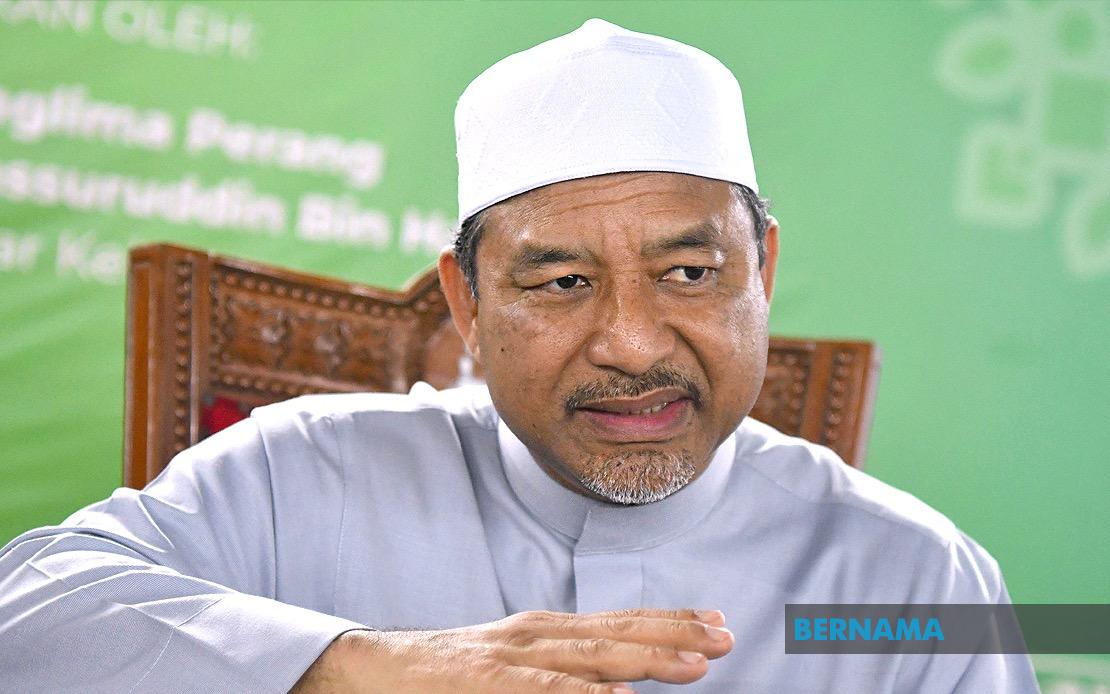
Kelantan's leadership has reaffirmed its commitment to nurturing the state's distinctive arts and cultural traditions, provided they remain compatible with Islamic teachings. Speaking at the closing ceremony of the Kelantan Arts Festival (FKRK) 2026 in Pasir Puteh on July 4, Menteri Besar Datuk Mohd Nassuruddin Daud outlined a philosophical approach that neither dismisses heritage practices nor applies Islamic principles inflexibly. Instead, the state pursues refinement—adapting traditional forms to comply with Islamic values while maintaining their cultural essence.
The Menteri Besar's remarks reflect a nuanced position on cultural governance that has become increasingly significant for Malaysian states seeking to balance modernisation with religious and traditional identity. Rather than outright banning artistic practices, the Kelantan administration evaluates each tradition, removing or modifying elements deemed incompatible with Islamic norms while preserving the core cultural value. This strategy acknowledges that Islam itself has a long historical relationship with Malay arts, knowledge systems, and cultural expression, suggesting that restriction is not the only lens through which to view heritage.
Examples of this refinement approach already exist in practice. Mohd Nassuruddin noted that some traditional performances were previously prohibited because they contained features contradictory to Islamic principles. However, the state now permits reimagined versions of these same performances once problematic elements are removed and cultural practitioners adopt revised formats. This pragmatic framework demonstrates that cultural preservation and religious adherence need not be mutually exclusive goals, a lesson potentially relevant for other Malaysian states grappling with similar tensions.
Kelantan's cultural inventory is substantial and historically rooted. The state government identifies performing arts, traditional games, handicrafts, culinary traditions, and other tangible heritage as repositories of Malay wisdom and philosophical thinking deserving protection for succeeding generations. These are not marginal pursuits but integral to Kelantan's regional identity and economic potential. By positioning cultural assets as economically valuable—through tourism development and cultural industries—the state creates incentive structures that make preservation sustainable rather than dependent solely on nostalgia or religious obligation.
The FKRK 2026 event itself served multiple functions beyond entertainment. The four-day festival, organised jointly by the Ministry of Tourism, Arts and Culture and the National Culture and Arts Department (JKKN) Kelantan, created a platform where heritage practitioners could exchange knowledge, younger artists could learn traditional skills, and visitors could encounter Kelantan's unique cultural offerings. For Malaysian tourism boards concerned with differentiation in a competitive regional market, such festivals demonstrate how cultural authenticity becomes a competitive advantage when managed strategically and culturally sensitively.
Particular emphasis has been placed on reviving traditional games such as gasing uri, congkak, dam aji, and tating. The Menteri Besar highlighted these games' capacity to provide counterbalance to technological influence on youth behaviour and lifestyle choices. In an era when Malaysian policymakers frequently express concern about digital dependency among young people, traditional games represent a culturally rooted alternative that connects younger generations to their heritage while offering genuine recreational and developmental benefits. This framing positions cultural preservation as a public health and social wellbeing issue, not merely a nostalgia project.
Kelantan's approach also reflects broader intellectual currents within Malaysian Islam that emphasise compatibility between religious teaching and cultural practice. The state's position that Islamic development has historically nurtured knowledge, arts, language, and culture suggests that the binary choice between modernisation and tradition, or between Islamic values and cultural expression, is false. Instead, a framework exists in which refinement and adaptation allow heritage to flourish while maintaining alignment with contemporary Islamic understanding.
For Southeast Asian policymakers and cultural administrators, Kelantan's model offers important lessons. The state demonstrates that cultural governance need not choose between preservation and progress, or between religious principles and artistic freedom. By establishing clear criteria for what constitutes acceptable cultural expression, creating institutional frameworks that support both practitioners and audiences, and framing heritage as economically productive, states can build sustainable cultural ecosystems. The emphasis on knowledge-sharing among practitioners also creates human capital accumulation—younger artisans and performers acquire skills from established masters, ensuring continuity and innovation simultaneously.
The economic dimensions warrant particular attention for Malaysian stakeholders. Cultural tourism increasingly contributes to regional GDP, and states that successfully differentiate themselves through authentic heritage offerings capture tourism revenue disproportionate to their size. Kelantan's investment in FKRK and similar initiatives positions the state to compete more effectively for domestic and regional tourist spending. Moreover, traditional crafts and cultural products create employment opportunities in manufacturing, hospitality, and creative industries—sectors identified as growth priorities in Malaysia's economic transformation agenda.
The festival's emphasis on bringing together practitioners, facilitating knowledge exchange, and stimulating economic activity suggests that cultural preservation is being integrated into broader development strategy rather than treated as a separate heritage conservation exercise. This alignment between culture and economic development is particularly important for states seeking diversified income sources as traditional industries mature or face external pressures.
Looking forward, Kelantan's cultural governance model will likely face ongoing questions about the boundaries of acceptable refinement. Where exactly should lines be drawn between preserving essential cultural character and modifying traditions beyond recognition? Who decides which elements contradict Islamic principles? These questions will require continued dialogue among religious scholars, cultural practitioners, artists, and community members. However, the state's demonstrated willingness to engage these questions seriously, rather than simply imposing blanket prohibitions or pursuing unrestricted preservation, suggests a more sophisticated approach to cultural governance than either strict conservatism or unexamined modernisation would offer.
The Kelantan experience also offers a model for other Malaysian states and Southeast Asian nations negotiating similar terrain. As globalisation, technological change, and religious consciousness reshape cultural practices across the region, the capacity to thoughtfully preserve heritage while adapting it to contemporary contexts becomes increasingly valuable. Kelantan's emphasis on refinement rather than rejection, on integration of heritage into economic development, and on creating institutional platforms for knowledge exchange, provides a framework others might adapt to their own circumstances and priorities.

