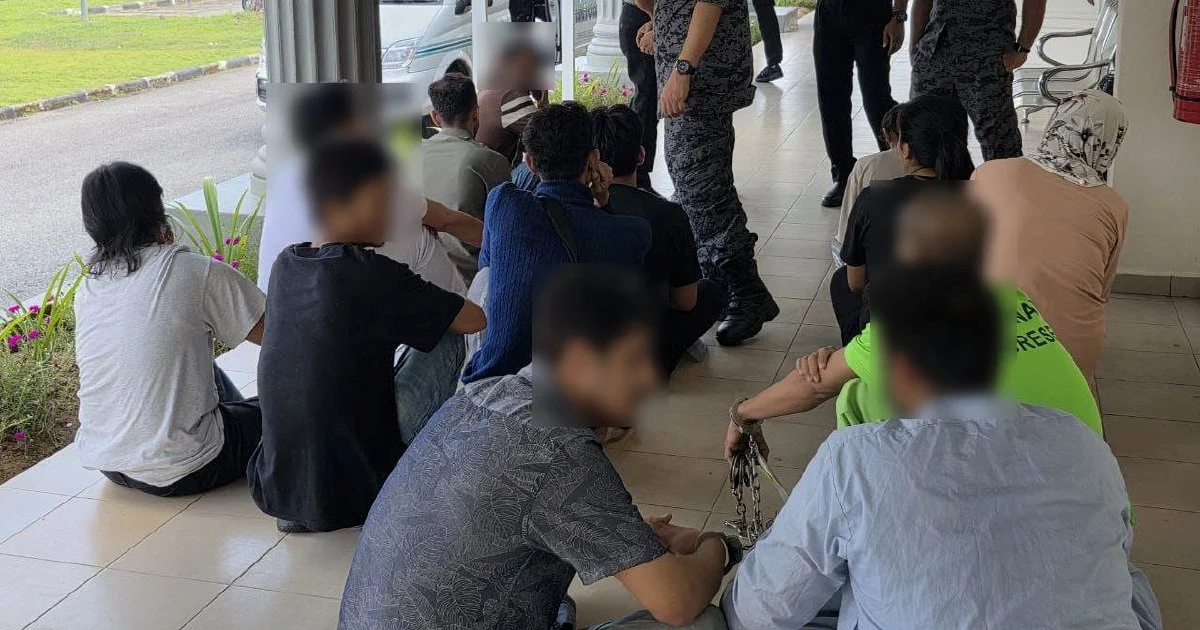
A Kelantan Sessions Court in Pasir Mas has prosecuted 12 undocumented migrants on charges stemming from unauthorized border crossing, extended residence beyond permitted timeframes, and fraudulent use of travel documentation. Three of those charged were women, underscoring how irregular migration affects diverse demographics across Southeast Asia.
Immigration violations remain a persistent challenge throughout Malaysia, where enforcement agencies continuously conduct operations to apprehend those who breach entry protocols or overstay their permitted duration. The charges brought against these individuals reflect the regular court proceedings that form part of Malaysia's border management strategy. Such cases are typically handled swiftly through the Sessions Court system, which processes immigration offences across the country's various states.
Kelantan, positioned along Malaysia's northeastern coast with land borders extending into Thailand, remains strategically important for immigration control. The state experiences significant irregular migration flows due to its geographical proximity to Thailand and the broader region. Regular enforcement sweeps in Pasir Mas and neighbouring areas demonstrate authorities' commitment to maintaining border integrity and documenting violations for prosecution.
The prosecution of those accused of misusing travel documents carries particular significance, as document fraud enables broader irregularities within migration systems. Individuals who falsify or misrepresent their credentials undermine legitimate immigration channels and complicate administrative procedures. Such offences often draw enhanced scrutiny from enforcement teams, who recognize that document manipulation facilitates organized smuggling networks and human trafficking operations.
Female migrants face distinct vulnerabilities within irregular migration networks, often encountering heightened exploitation risks. The inclusion of three women among those charged highlights how enforcement operations capture individuals across gender lines, though women frequently experience differential treatment in detention and prosecution phases. Understanding these patterns provides crucial context for policymakers addressing root causes of irregular migration in Southeast Asia.
The Sessions Court proceedings in Pasir Mas reflect Malaysia's decentralized approach to handling immigration violations, with courts at the state level managing substantial caseloads. This system allows for relatively rapid processing of routine violations, though case outcomes vary based on individual circumstances, prior offences, and aggravating factors. Sentences typically include fines, imprisonment periods, or combinations thereof, alongside deportation orders.
Kelantan's role in regional migration management extends beyond enforcement to encompass humanitarian considerations. The state hosts various migrant populations, including documented workers from neighbouring countries, alongside undocumented arrivals. Balancing security imperatives with protection principles remains an ongoing challenge for authorities managing these complex flows. Court cases represent only the visible enforcement component of broader migration governance frameworks.
The charges laid reflect three distinct categories of immigration breach, each carrying separate legal consequences. Illegal entry violations address unauthorized crossing at undesignated points or without proper documentation. Overstaying represents a secondary violation where individuals initially admitted on valid passes exceed the permitted duration. Document misuse encompasses presenting false credentials, using another's documents, or altering authentic papers. Prosecuting all three categories within single cases demonstrates authorities' comprehensive approach to dismantling irregular migration networks.
These court proceedings occur against a backdrop of Malaysia's complex migration profile, where the country simultaneously hosts the Southeast Asian region's largest documented migrant population while contending with substantial irregular arrivals. Balancing economic reliance on migrant labour with security and social cohesion concerns shapes policy responses. Enforcement operations like those culminating in Pasir Mas court cases must be understood within this broader context of conflicting policy objectives.
Boundary management between Malaysia and Thailand represents a significant resource allocation area for immigration authorities. The porous nature of certain border sections, combined with established smuggling routes and networks, creates ongoing enforcement challenges. Pasir Mas, as a significant entry point, experiences regular enforcement activities that generate steady caseloads for the local Sessions Court. Successful prosecution supports deterrence messaging, though experts debate whether penalties effectively reduce attempted irregular crossing or simply process those apprehended.
Regional implications of Malaysian immigration enforcement extend beyond national borders, affecting migration patterns throughout Southeast Asia. Enforcement success in high-traffic areas like Kelantan influences route selection and operational costs for smuggling networks, potentially redirecting flows toward alternative corridors. Cooperation between Malaysian authorities and neighbouring countries has expanded in recent years, though coordinated approaches remain inconsistently implemented across the region.
The prosecution of document fraud cases carries broader implications for Southeast Asian migration governance. As migration networks become increasingly sophisticated, document falsification technologies improve correspondingly. Malaysian courts' handling of such cases contributes to developing legal precedents and enforcement practices that influence regional approaches. Convictions support arguments for enhanced document security measures and information-sharing protocols among regional partners.

