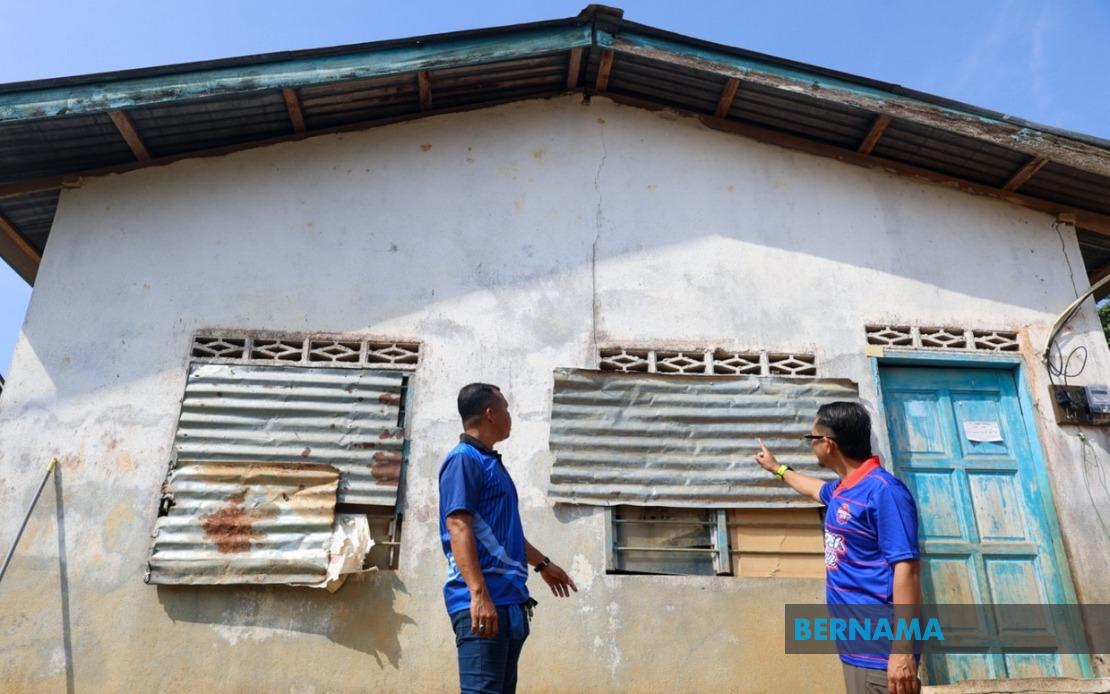
The Kelantan state government has set out a focused development agenda for the Orang Asli communities inhabiting two of the peninsula's most isolated settlements, following recent field assessments that revealed the acute challenges these residents face. Nenggiri Assemblyman Mohd Azmawi Fikri Abdul Ghani outlined five priority intervention areas during a visit to the Pasik Resettlement Scheme (RPS) and Kampung Kuala Wok, home to approximately 1,524 indigenous people whose living conditions have long been constrained by remoteness and limited infrastructure.
The most pressing concern identified centres on housing quality across both settlements. During visits conducted on August 3 and 4, officials documented widespread structural deterioration requiring immediate remediation. Roofing has become compromised in numerous dwellings, with families exposed to the elements during monsoon seasons. Beyond cosmetic issues, the state has flagged critical safety hazards, particularly faulty electrical wiring that poses serious fire risks to residents. The situation extends beyond repair work, with growing demographic pressure creating housing shortages as young couples establish new households, prompting discussions with the Department of Orang Asli Development (JAKOA) regarding construction of additional residential units to accommodate this expanding population.
Wildlife conflict represents another destabilising factor in daily community life. Since 2022, residents have endured escalating encounters with wild elephants migrating through the region, incidents that have fundamentally altered settlement patterns and restricted residents' freedom of movement. These animals frequently damage property and crops whilst threatening personal safety, creating a climate of anxiety that constrains economic and social activities. The ongoing pressure has prompted local authorities to treat elephant mitigation as a governance priority requiring coordinated intervention between environmental and indigenous affairs agencies.
Energy access forms the third critical area identified in the government's assessment. Many homes remain without reliable electricity supply, limiting educational opportunities for children and constraining economic productivity for adults. This infrastructure gap also affects basic services including healthcare, refrigeration, and communication technologies increasingly essential for participation in wider Malaysian society.
The Essential Goods Distribution Programme emerged as a fourth priority, with significant modifications being contemplated. Currently, residents struggle to access affordable fuel for vehicles essential to their survival in these remote locations. The nearest petrol station lies approximately 50 kilometres away, creating substantial transportation costs and logistical friction. State authorities are now evaluating whether to incorporate RON95 petrol as a subsidised commodity under the existing distribution framework, a decision reflecting recognition that fuel access constitutes a fundamental infrastructure requirement rather than a discretionary amenity in such settlements.
The fifth initiative concerns the Jualan Rahmah programme, a nationwide subsidised goods scheme designed to provide affordable essentials. Officials are studying proposals to expand the frequency and scope of these distribution runs to RPS Pasik and Kampung Kuala Wok, acknowledging that current arrangements remain inadequate for populations with minimal market access and limited purchasing power.
Underlying all these identified needs lies a fundamental geographic challenge. The settlements require journeys of approximately 200 kilometres round-trip from Gua Musang, reachable only via four-wheel-drive vehicles navigating poorly maintained access roads. This isolation creates cascading disadvantages extending far beyond simple inconvenience. Children's school attendance suffers from journey times that consume entire days. Medical emergencies become life-threatening when health facilities lie hours away across difficult terrain. Economic participation becomes nearly impossible when marketing agricultural products or accessing wage employment requires such substantial transport investments.
For Malaysian policymakers, these five priorities encapsulate broader challenges facing indigenous populations across Peninsular Malaysia. The Orang Asli represent one of Southeast Asia's most marginalised demographic groups, their development lagging behind both national averages and other indigenous populations in the region. The conditions documented in Pasik and Kampung Kuala Wok reflect patterns observed across numerous remote settlements where indigenous communities remain trapped in poverty cycles partly perpetuated by geographic isolation and inadequate service delivery infrastructure.
The identification of these specific needs represents progress insofar as it acknowledges gaps requiring state intervention. However, implementation remains uncertain. Previous development initiatives targeting Orang Asli communities have occasionally foundered through inadequate resourcing, poor coordination between agencies, or schemes designed without sufficient community consultation. The current Kelantan approach, grounded in recent field visits and community input, offers better prospects for relevance and effectiveness than top-down interventions imposed without local understanding.
Regional observers note that effective indigenous development requires sustained commitment extending beyond initial policy formulation. Southeast Asian governments including Thailand, Indonesia, and the Philippines have grappled with comparable challenges in serving remote indigenous populations, typically discovering that infrastructure development must proceed alongside capacity-building and economic opportunity creation. Housing repairs and electricity access, whilst essential, represent only foundational steps. Lasting improvement requires accompanying investments in education, healthcare, and livelihood diversification to enable communities to participate meaningfully in the broader Malaysian economy whilst maintaining cultural continuity.
The Kelantan government's next steps will prove crucial in determining whether these identified priorities translate into substantive improvements. Coordination with JAKOA, engagement of relevant federal agencies, and securing adequate budgetary allocations will collectively determine whether 1,524 residents finally gain access to the fundamental services and safe living conditions that remain standard for Malaysians elsewhere.

