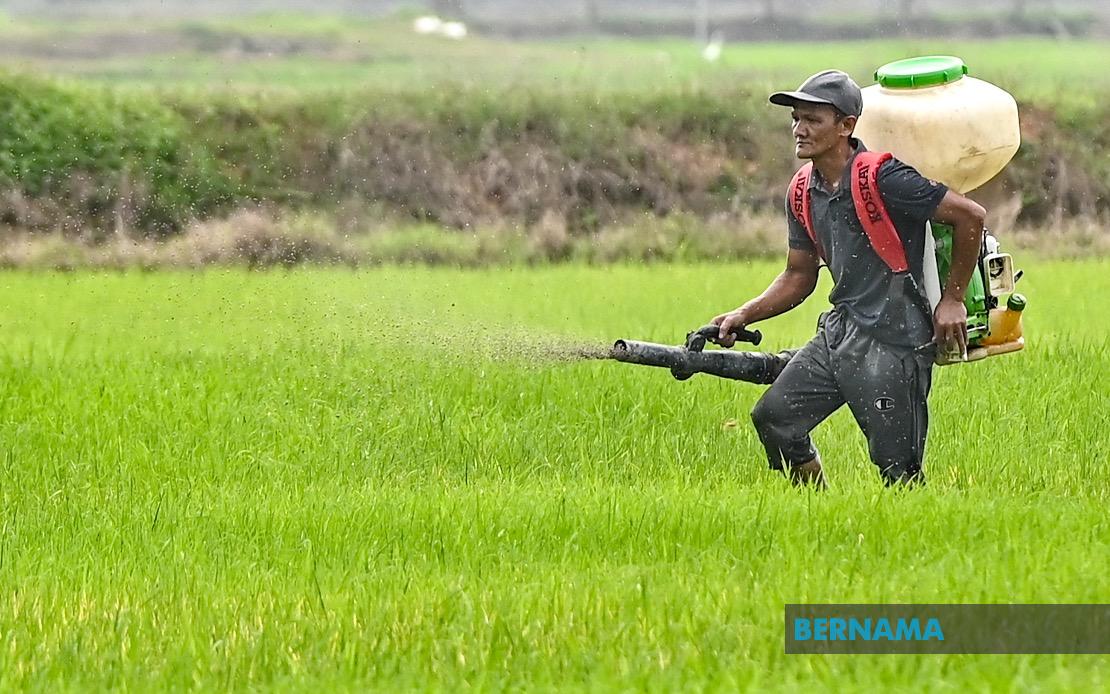
Kelantan is stepping up its agricultural ambitions with a RM3.64 million allocation directed at the state Agriculture Department to execute 10 development initiatives throughout the year, according to a disclosure made at the State Legislative Assembly sitting in Kota Bharu on August 12. The investment signals a deliberate effort by the state government to modernise farming practices, activate underutilised land, and bolster the broader agribusiness ecosystem that remains central to Kelantan's economy and food production capacity.
Datuk Tuan Mohd Saripudin Tuan Ismail, who chairs the State Legislative Assembly's Agriculture, Agro-Food Industry and Commodity Committee, outlined an expansive portfolio of initiatives spanning conventional and contemporary farming methods. The programme encompasses rehabilitation of dormant agricultural land, paddy cultivation intensification, production of various commercial crops, vegetable and fruit farming, and initiatives designed to nurture agricultural entrepreneurs. This multi-pronged approach reflects recognition that a resilient agricultural sector requires simultaneous attention to land productivity, crop diversity, and human capital development.
Commercial agriculture receives particular emphasis through the Kelantan State Agriculture Development Corporation (PKPNK), which operates sophisticated growing facilities at Rong Chenok Agro Valley. The facility focuses on high-value crops employing advanced techniques: chilli fertigation systems for precision irrigation and nutrient delivery, honeydew melon cultivation, and hydroponic vegetable production. These operations represent a significant departure from traditional farming methods and signal Kelantan's willingness to embrace technology-driven agriculture capable of generating higher margins and more reliable yields. Such infrastructure investments position the state to compete in premium agricultural markets beyond its traditional boundaries.
The livestock sector demonstrates substantial government support, with more than 380 breeders participating in state-sponsored programmes. These initiatives encompass diverse animal husbandry activities including cattle, goats, sheep, deer, buffalo, and quail rearing, supplemented by provision of specialised equipment. The breadth of livestock types indicates strategic diversification, ensuring that rural communities have multiple income pathways and that domestic protein production remains diversified across species. This approach reduces dependency on any single commodity and spreads risk among participating farmers.
Fisheries and aquaculture represent growing economic pillars for coastal Kelantan. During 2025, aquaculture production reached 7,901.74 tonnes valued at RM76.2 million, with the state targeting 8,000 tonnes in the current year. The government channelled RM382,094 to support 122 fish and prawn breeders, demonstrating commitment proportionate to the sector's scale. Infrastructure development has accelerated dramatically, with construction of more than 130 artificial hatcheries providing controlled breeding environments. Strategic release of 1.26 million fish and prawn fry into public waters supplements wild stocks and represents deliberate ecosystem management for food security.
The PKPNK facility operates at considerable scale, with annual capacity to produce one million catfish fry and 500,000 tilapia fry, addressing demand across Kelantan and neighbouring states. The corporation's white prawn operation at Pantai Geting in Tumpat yields approximately 400,000 kilogrammes annually, establishing a significant export-oriented production base. These volumes indicate that Kelantan's aquaculture ambitions extend beyond domestic consumption toward regional commerce and international market participation, positioning the state as a meaningful aquaculture producer within Southeast Asia's competitive landscape.
Entrepreneur development forms an essential pillar, recognising that production capacity alone cannot guarantee prosperity without effective marketing and distribution. As of June, 1,560 entrepreneurs had accessed 74 marketing infrastructure facilities and 99 marketing outlets established by the state government. This ecosystem removes critical barriers that smallholding farmers and small processors traditionally face, namely access to reliable retail channels and standardised facilities meeting commercial requirements. By institutionalising these support structures, Kelantan reduces transaction costs and enables farmers to concentrate on production rather than market access.
The Kota Bharu Rural Transformation Centre (RTC) exemplifies this integrated approach, functioning as a comprehensive agro-food marketing and distribution hub. Since its inception through 2025, the facility has housed approximately 800 entrepreneurs and generated RM4.16 billion in cumulative sales across the thirteen-year period. This performance metric demonstrates that properly structured physical infrastructure, combined with entrepreneurial support and market access, generates substantial economic activity. The RTC model offers a template for other states contemplating agricultural diversification and value addition strategies.
For Malaysian policymakers and regional observers, Kelantan's agricultural strategy illustrates how deliberate state investment in infrastructure, technology adoption, and entrepreneurial support can transform rural economies. The state's simultaneous advancement across crops, livestock, and aquaculture prevents over-specialisation while exploiting diverse competitive advantages. The emphasis on organised marketing and distribution infrastructure acknowledges that modern agricultural success depends equally on farm-gate efficiency and post-harvest value chains. These dynamics carry significance for Malaysia's broader food security agenda, particularly as the nation seeks to reduce import dependency and strengthen rural incomes.

