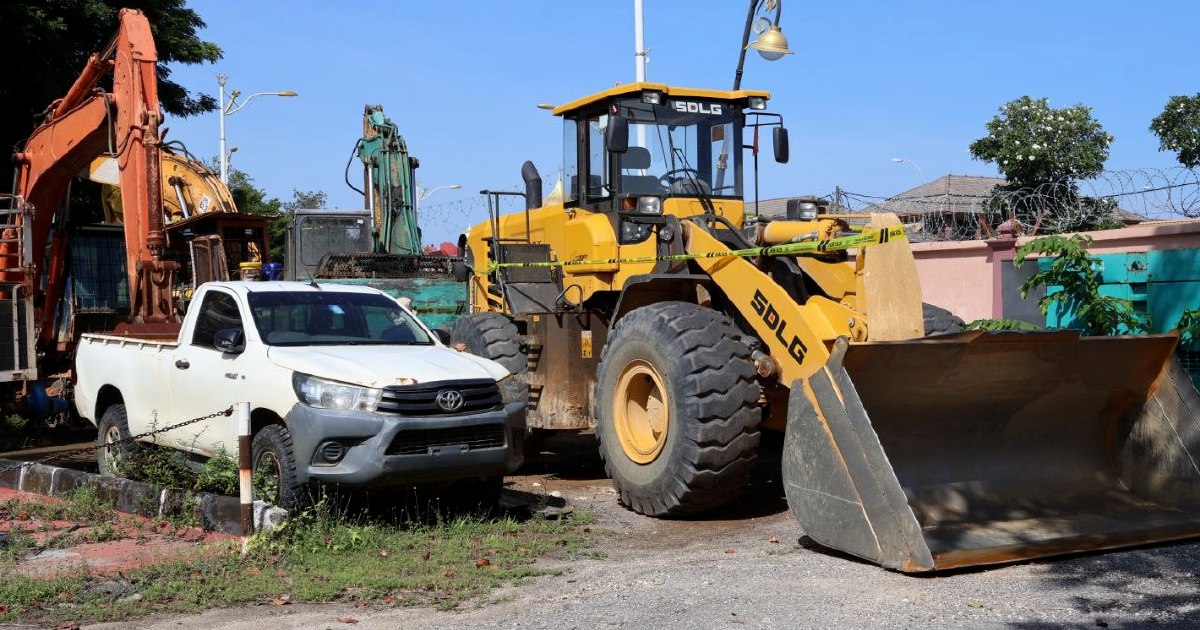
State authorities in Kelantan have initiated a formal probe into an unlicensed gold mining enterprise uncovered in Gua Musang, triggered by the seizure of industrial machinery and equipment worth RM4.2 million. The investigation, launched from Kota Baru, represents an intensified effort by state officials to curb illegal resource extraction activities that have become increasingly prevalent across Malaysia's mineral-rich regions.
The discovery of the large-scale operation underscores the challenge facing enforcement agencies tasked with monitoring remote mining sites, particularly in districts like Gua Musang where dense terrain and limited accessibility complicate surveillance efforts. The sheer value of confiscated equipment—approaching RM4.2 million—indicates a sophisticated operation requiring substantial capital investment and organisational capacity, suggesting this was not a marginal endeavour but rather a deliberate and organised enterprise.
Illegal mining has emerged as a significant concern throughout Malaysia's primary resource-extraction regions. These operations typically bypass all regulatory frameworks, operating without environmental impact assessments, mining permits, or compliance with established safety protocols. The machinery seized in this instance likely included excavators, processing equipment, and other heavy industrial tools essential for extracting and processing gold ore at commercial scale.
Gua Musang, located in the interior of Kelantan, has historically been vulnerable to such unauthorised activities owing to its remote geography and limited government presence in certain localities. The district's mineral deposits, combined with its distance from urban administrative centres, create conditions that unlicensed miners exploit. The formal investigation opening signals renewed determination by state authorities to address this vulnerability through systematic enforcement.
The implications of such operations extend beyond simple regulatory breaches. Illegal mining causes substantial environmental degradation, including soil contamination, water pollution, and ecosystem disruption. Mining sites operated without proper environmental controls frequently generate sediment runoff that contaminates downstream water sources, affecting both communities and agricultural activities dependent on clean water supplies. The absence of safety standards also exposes workers to hazardous conditions without adequate protection or compensation mechanisms.
Economically, unlicensed mining operations represent lost tax revenue and royalty payments that legitimately licensed operators and the state treasury would otherwise collect. When private operators conduct gold extraction illegally, they undercut lawful competitors while depriving government of funds that support public services and infrastructure development. This distortion undermines the competitiveness of licensed mining enterprises that shoulder compliance costs.
The investigation process will likely involve tracing the operational network behind the enterprise—identifying operators, investors, equipment suppliers, and channels through which extracted gold reached buyers. Such networks frequently involve multiple actors across provincial borders, sometimes connected to larger criminal syndicates dealing in multiple contraband commodities. Understanding these connections becomes essential for interrupting the supply chain and preventing rapid reconstitution of the operation elsewhere.
For Malaysian mining authorities, this seizure exemplifies the evolving tactics employed by illegal operators who increasingly employ substantial capital and technological sophistication. This shift from small-scale artisanal operations to mechanised large-scale extraction complicates enforcement strategies designed for less organised activities. Agencies must consequently enhance their monitoring capabilities and intelligence-gathering methodologies to identify and intercept major operations before they become fully established.
Kelantan's initiative also reflects mounting pressure on state governments to demonstrate effective resource management and environmental protection. With public awareness growing regarding illegal mining's environmental consequences, state administrations face expectations to pursue rigorous enforcement. The formal investigation announcement serves as public signalling of government commitment to addressing the issue, though sustained follow-through on investigations remains crucial for credibility.
The Gua Musang discovery occurs within a broader context of mineral trafficking concerns affecting Southeast Asia. Cross-border smuggling of precious metals and minerals constitutes a significant regional problem, with Malaysia serving as both a production point and transit hub. Strengthening enforcement capacity in Kelantan and similar jurisdictions contributes to addressing this wider challenge and reducing the attractiveness of Malaysian territory for organised illegal extraction networks.
Looking ahead, the investigation's outcomes will likely influence policy discussions regarding resource extraction oversight, particularly concerning monitoring methodologies for remote areas and inter-agency coordination mechanisms. Successful prosecution of those responsible would demonstrate meaningful consequences for major operations, potentially deterring future ventures. However, sustained prevention requires complementary investments in alternative livelihood programmes for communities in mining-adjacent regions, addressing the economic drivers that sometimes facilitate illegal operations.

