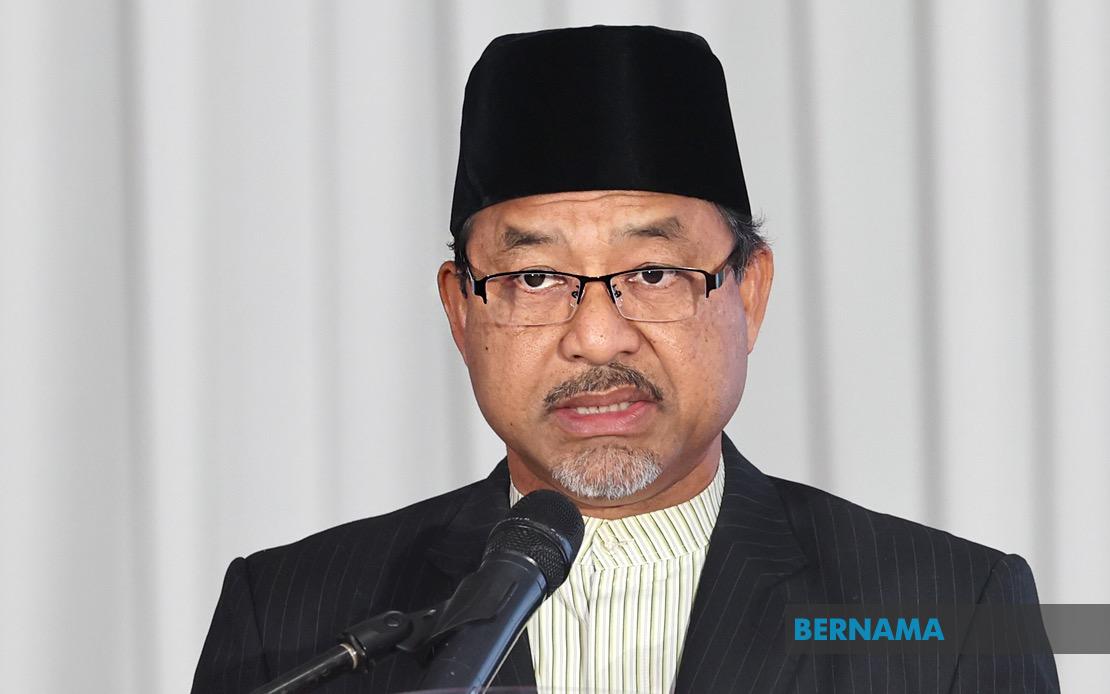
Kelantan has successfully maintained forest coverage at 51.79 per cent of its total land area, representing 778,708.34 hectares of forested terrain. The figure, disclosed in the state legislative assembly, demonstrates the eastern state's commitment to environmental stewardship whilst balancing economic development needs. Menteri Besar Datuk Mohd Nassuruddin Daud presented the data as evidence that Kelantan continues honouring its obligations under the Peninsular Malaysia Forestry Policy, which establishes a minimum threshold of 50 per cent forest and tree cover across the nation's land mass.
The achievement carries significance beyond Kelantan's borders, as it reflects broader regional efforts to combat deforestation and maintain biodiversity across Southeast Asia. Kelantan's performance becomes particularly noteworthy when considering pressures on forest reserves throughout the peninsula from agricultural expansion, urbanisation, and industrial activities. The state's ability to preserve more than half its territory under forest cover whilst supporting its population and economic activities offers insights into sustainable land management that other Malaysian states may examine.
The state government pursues multiple pathways to consolidate its forest preservation record. Through the Kelantan Forestry Department, authorities systematically identify government-owned land suitable for formal designation as Permanent Reserved Forests, or HSK in Malay terminology. This process involves meticulous classification according to forest function categories outlined in the National Forestry Enactment (Adoption) (Amendment) (No. 3) 2025, ensuring protected forests receive appropriate legal safeguards and management protocols commensurate with their ecological significance and intended purposes.
Active restoration underpins Kelantan's conservation framework, moving beyond mere preservation towards regeneration of degraded areas. The state participates in the Greening Malaysia campaign, implementing dedicated tree-planting initiatives and forest restoration programmes. These interventions address the reality that maintaining forest cover requires continuous effort, particularly in regions experiencing population growth and development pressures. The programmes represent investment in natural capital that yields multiple benefits, from carbon sequestration to watershed protection and wildlife habitat preservation.
The state government has consciously adopted a balanced philosophy acknowledging that absolute preservation and economic progress need not remain mutually exclusive. Menteri Besar Mohd Nassuruddin articulated this approach as reconciling conservation of Permanent Reserved Forests with development objectives, pursuing what sustainability principles term meeting present requirements without eroding future generations' capacity to satisfy their own needs. This framework proves essential for gaining public and political support in regions where forest resources have historically underpinned livelihoods and community economies.
Technological innovation now strengthens Kelantan's monitoring apparatus, representing a shift towards data-driven forest management. Advanced systems enable early detection of forest area changes and potential unauthorised encroachment, facilitating rapid response before illegal activities become entrenched. These technologies complement traditional conservation methods, providing officials with real-time intelligence about forest conditions across the state's vast terrestrial holdings. Such integration of modern tools into environmental administration reflects evolving governance standards throughout the region.
Verification procedures ensure that reported changes in forest coverage undergo rigorous scrutiny before authorities initiate enforcement measures. Ground patrols and field inspections validate information gathered through technological systems, preventing false alarms whilst building an evidence base for legal action against violators. This methodical approach balances the efficiency gains from technology with the fundamental requirement that any enforcement must rest upon verified facts rather than automated alerts alone.
Kelantan's forestry achievements occur within a national context where forest preservation competes with multiple development imperatives. Malaysia as a whole has committed to maintaining forest cover at specified levels whilst pursuing economic growth and responding to demographic pressures. Individual states' success or failure in sustaining forest coverage ultimately determines whether the nation meets its international environmental commitments and domestic conservation targets. Kelantan's performance, therefore, contributes meaningfully to national outcome metrics and demonstrates that maintaining forest cover remains technically achievable across Malaysian states.
The practical implications for Malaysian policymakers and neighbouring Southeast Asian nations extend to demonstrating that forest preservation and development need not represent irreconcilable opposites. Kelantan's experience with technological monitoring, systematic land classification, restoration investment, and balanced governance approaches provides a replicable model for other regions seeking to maintain environmental assets whilst supporting human communities. As Southeast Asia grapples with accelerating deforestation driven by agricultural expansion and industrial development, the eastern state's approach offers concrete methodologies worth studying and adapting.
Looking forward, sustaining Kelantan's forest coverage will require continued investment in technological infrastructure, personnel training, and stakeholder engagement. Population growth and economic aspirations will generate ongoing pressure on land use patterns throughout the state. The government's commitment to forest preservation, as reflected in dedicated departmental resources and legislative frameworks, will ultimately determine whether the state can maintain or improve upon its current 51.79 per cent coverage in coming decades.

