Kelantan's state government has significantly escalated its battle against illegal mining and land encroachment, with enforcement authorities opening 63 formal investigation papers over the past eighteen months as part of a coordinated campaign to stamp out these lucrative but destructive activities. The cases have emerged following intensive field operations across four vulnerable districts—Gua Musang, Kuala Krai, Jeli, and Tanah Merah—which have become epicentres of unauthorized extraction and territorial incursions that threaten both the state's natural resources and land governance.
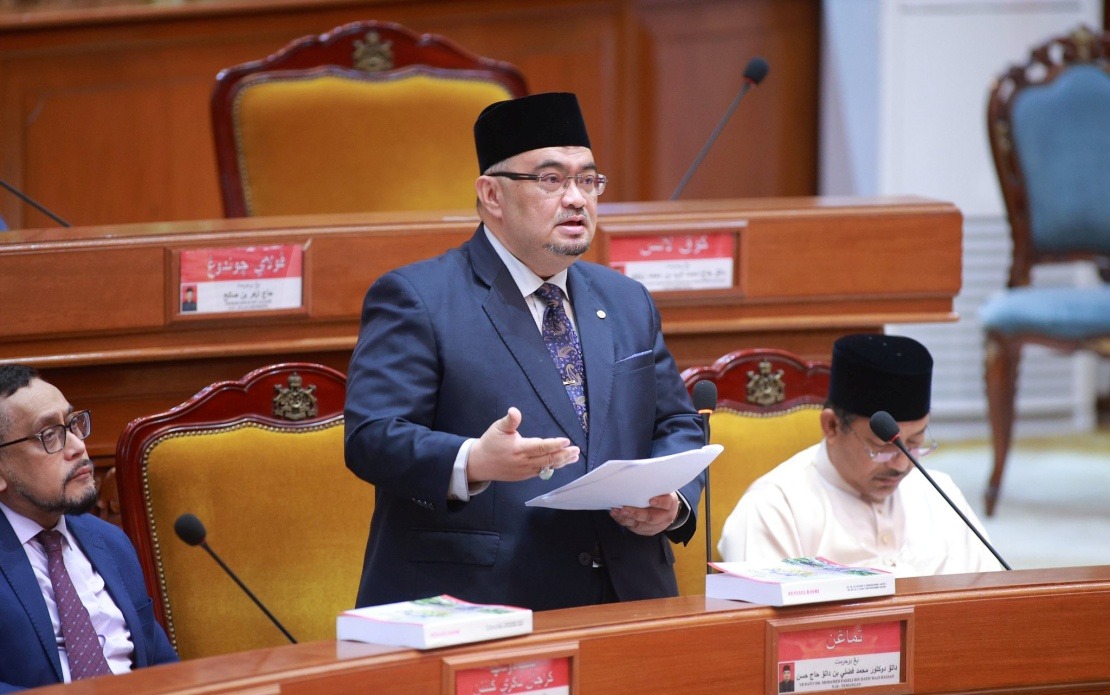
Deputy Menteri Besar Datuk Dr Mohamed Fadzli Hassan outlined the scope of the enforcement initiative during today's state legislative assembly sitting at Kompleks Kota Darulnaim, revealing that authorities conducted a total of 77 separate operations targeting known hotspots where such illegal activities flourish. The breadth of this enforcement effort underscores the scale of the problem facing the northeastern state, where difficult terrain and relatively sparse monitoring capacity have historically enabled illicit operators to function with limited consequences. The geographic concentration of incidents in these four districts suggests a pattern worth closer investigation, as organized networks typically establish operations in areas where detection risks are minimized and local oversight remains weak.
A particularly significant aspect of the crackdown has been the seizure of heavy equipment used in the extraction process. Authorities have confiscated 65 excavators collectively valued at RM15.8 million—a substantial financial blow designed to degrade the operational capacity of illegal mining networks by removing their most critical assets. By targeting machinery rather than pursuing only individual perpetrators, enforcement agencies employ a strategy intended to make resumption of activities more difficult and costly for those behind such enterprises. This equipment-centric approach reflects an understanding that illegal mining cannot function without the heavy machinery required to extract minerals efficiently at scale.
The investigation papers submitted to the Prosecution Unit of the Kelantan Land and Mines Office represent the formal foundation for subsequent legal proceedings, though the passage from investigation to prosecution to conviction remains fraught with procedural and evidentiary challenges. Each paper must build a sufficient case file to support charges that will withstand scrutiny in court, a process often complicated by the clandestine nature of the activities and the difficulty in establishing clear liability chains. The volume of cases now in the prosecution pipeline suggests the state's legal system will face considerable workload strain in the coming months as these matters progress through the formal justice process.
Crucially, the deputy menteri besar acknowledged during questioning that authorities recognize the involvement of intermediaries, backers, and individuals benefiting indirectly from illegal mining operations—the often-invisible network that makes such enterprises possible at their current scale. He confirmed that investigations would specifically target identification of these higher-level actors who coordinate, finance, or protect illegal activities, a necessary expansion of focus beyond the operational workers who physically conduct the mining. In Kelantan's context, such investigations demand careful intelligence work to trace financial flows, equipment ownership, and land relationships that typically obscure the true controllers of illegal mining ventures.
The undertaking to lodge police reports and initiate formal investigations upon confirming illegal activity demonstrates coordination between land and mines authorities with law enforcement, though such inter-agency collaboration can sometimes suffer from bureaucratic friction or competing priorities. The assertion that authorities know who owns affected land provides a procedural foundation for pursuing cases, yet land disputes and contested ownership claims frequently complicate enforcement in Malaysia's complex property environment. The state government's recognition of these complications is implicit in its commitment to investigate circumstances surrounding each site and pursue supplementary action when evidence warrants.
Significantly, state officials have also acknowledged the inadequacy of existing penalty structures for repeat offences, initiating discussions with the Prosecution Unit toward revision of the penalty regime. This recognition suggests that current legal consequences have failed to deter recidivism—a common problem in resource extraction crimes where potential profits far exceed likely penalties. By signalling intent to strengthen the penalty framework, particularly for repeat violators, Kelantan's leadership indicates awareness that enforcement without proportionate legal consequences creates insufficient deterrence.
The concentration of illegal mining in Kelantan's four northeastern districts likely reflects both the mineral wealth present in those areas and the relative accessibility of sites with limited oversight. Gua Musang, in particular, has historically attracted mining activity due to its geological characteristics and comparative remoteness from urban centres where monitoring infrastructure is denser. Kuala Krai, Jeli, and Tanah Merah similarly present environments where organized extraction operations can function with reduced visibility. Understanding this geographic pattern is essential for calibrating enforcement resources toward maximum effectiveness rather than dispersing limited personnel across broader territory.
For Malaysian readers monitoring natural resource management across the federation, the Kelantan initiative signals both the seriousness of the illegal mining challenge and the variable capacity of state governments to address it comprehensively. The scale of equipment seizures and case openings suggests genuine enforcement effort, yet the fact that 63 cases have emerged from just 18 months across four districts implies the underlying activity remains far larger than what enforcement has successfully documented. This enforcement visibility gap—the difference between detected and actual illegal activity—represents a persistent challenge for regulators seeking to maintain resource integrity.
The implications for Southeast Asia extend beyond Kelantan's borders, as illegal mining networks frequently operate across jurisdictional boundaries and involve regional supply chains for extracted materials. Malaysian operations connect to wider regional networks moving minerals through Thailand, Cambodia, and other neighbouring jurisdictions, making isolated state-level crackdowns potentially incomplete without coordinated international enforcement. The case files now accumulating in Kelantan's prosecution pipeline may reveal linkages to cross-border operators and provide intelligence valuable for regional cooperation on illegal extraction networks.
Moving forward, the sustainability of Kelantan's enforcement effort depends on maintaining political commitment and resourcing beyond the current campaign phase, as organized illegal mining typically adapts to intensified enforcement by shifting location, method, or concealment strategy rather than ceasing operations entirely. The state government's signalled willingness to strengthen penalties and pursue upstream actors suggests recognition that this represents a long-term effort rather than a definable enforcement project with a completion date. For residents of Kelantan's affected districts, whose communities and ecosystems bear the direct costs of uncontrolled mineral extraction, sustained commitment to enforcement and prosecution through the complete justice process remains essential.

