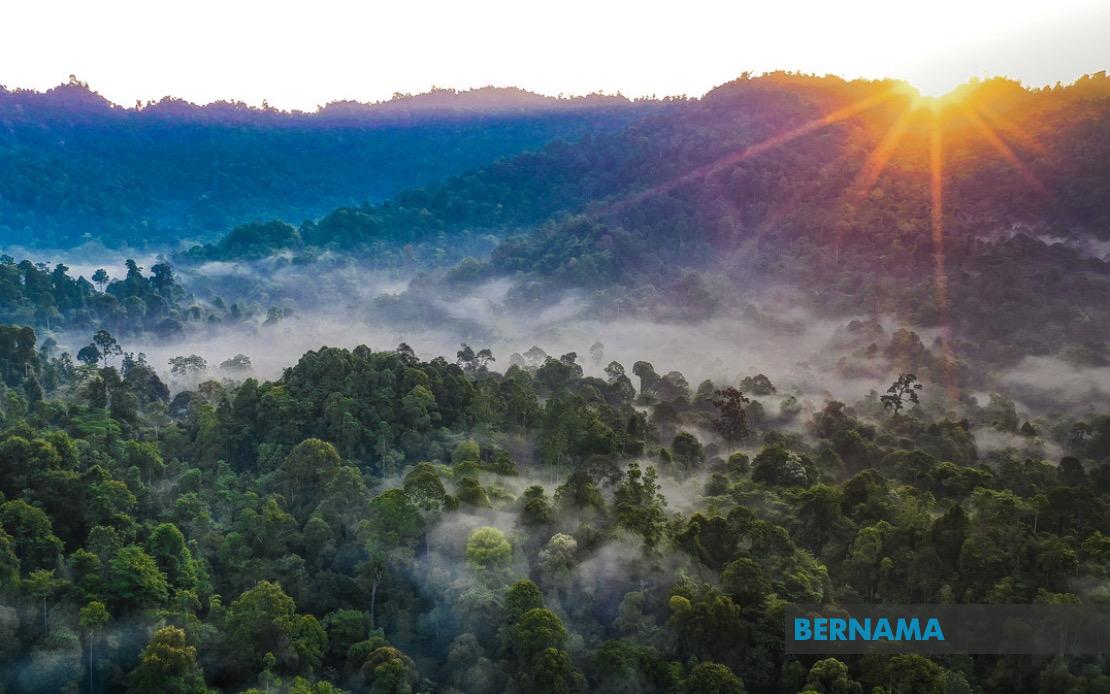
The Kelantan state government has committed to replacing every forest reserve area that loses its protected status due to development or mining activities, according to a statement made by Deputy Menteri Besar Datuk Dr Mohamed Fadzli Hassan following an executive council meeting in Kota Bharu. This pledge directly addresses growing concerns about environmental conservation as the state balances economic development with ecological preservation, a tension that has become increasingly prominent across Southeast Asia as nations pursue resource extraction alongside climate commitments.
The assurance encompasses the controversial Temangan Forest Reserve in Machang, which was recently degazetted to facilitate granite mining operations. The issue surrounding this particular reserve has drawn attention from environmental advocates and civil society observers who question whether the state is adequately protecting its natural resources. The reserve had been designated under protective status for many years, making its removal from the forest gazette a significant policy shift that required clarification from state leadership.
The granite mining approval linked to Temangan dates back to 2009, when a company received permission to extract granite from the area. However, the formal degazetting of the reserve only occurred recently, more than a decade after the initial approval was granted. This timeline reveals a complex administrative process where approvals may precede actual gazette modifications, creating ambiguity about the status of land use rights and environmental protections during the interim period. For Malaysian readers familiar with state-level governance, this situation exemplifies how developmental approvals and environmental designations can operate on different institutional schedules.
Deputy Menteri Besar Mohamed Fadzli explained that the timing of the degazetting reflected the state government's intent to honour the 2009 approval by formally enabling the mining company to commence operations. From the state administration's perspective, this represents fulfilling long-standing commercial commitments while simultaneously attempting to mitigate environmental impact through replacement mechanisms. The Deputy Menteri Besar's emphasis on this historical context suggests the government views the decision as consistent with prior undertakings rather than as a new policy reversal.
To verify implementation of the replacement commitment, Mohamed Fadzli indicated that he had sought clarification from the Kelantan State Forestry Department regarding the status of alternative forest areas. The forestry department has reportedly assured him that any cancelled reserve must be replaced with an equivalent or suitable alternative area. This assurance carries weight in the Malaysian context, where state forestry departments typically exercise significant authority over land classification and protected area designation, making their commitments substantive rather than merely aspirational.
The replacement framework represents an attempt to square an environmental circle—permitting resource extraction while maintaining overall forest coverage within the state. This approach aligns with sustainable use principles that allow for strategic economic activity within a broader conservation framework, similar to models adopted in other ASEAN nations where extractive industries coexist with forest protection targets. However, the practical viability of this approach depends substantially on whether replacement areas possess equivalent ecological value, biodiversity, or watershed protection functions as the original reserves.
For Kelantan residents and regional observers, the commitment raises several implementation questions. The state must identify suitable alternative areas that can be gazetted as forest reserves, a process requiring land availability, environmental assessment, and potentially negotiations with existing land owners or users. The timeline for identifying and formally designating replacement reserves remains unclear, creating uncertainty about whether there will be a transitional period where the state's total protected forest area temporarily contracts before replacement areas are formally established.
The Temangan case reflects broader regional trends where states reassess protected area designations to unlock economic potential from natural resources. Granite and other mineral extraction contribute significantly to Kelantan's revenue base and provide employment in rural areas, creating legitimate economic development pressures that frequently conflict with conservation objectives. Malaysia's experience with balancing these competing interests offers lessons for other Southeast Asian nations navigating similar policy tensions between resource-based development and environmental stewardship.
The Deputy Menteri Besar's public commitment appears designed to provide assurance to both environmental stakeholders concerned about deforestation and to investors and miners seeking regulatory certainty. By articulating a replacement principle, the state positions itself as taking environmental concerns seriously while demonstrating willingness to facilitate resource extraction. This messaging strategy reflects recognition that both constituencies matter for long-term state governance and development outcomes.
Moving forward, the crucial test of this commitment will involve transparent tracking of replacement forest designations. Malaysian civil society organisations and environmental groups have increasingly demanded accountability mechanisms and public reporting on forest cover changes, state by state. Whether Kelantan's forestry department will provide accessible data on replacement areas—their location, size, ecological characteristics, and gazetting timeline—will determine whether this policy represents genuine environmental mitigation or primarily administrative repositioning of protected status.
The broader implications extend to how Malaysian states manage the intersection of environmental protection and economic development during a period of increasing climate awareness and international scrutiny of forest preservation. Kelantan's approach of replacing rather than simply eliminating protected forests offers a potential model, provided implementation matches commitment. For regional policymakers and investors alike, monitoring how this specific pledge translates into action will provide instructive evidence about the feasibility of balancing conservation and extraction in Southeast Asian contexts.

