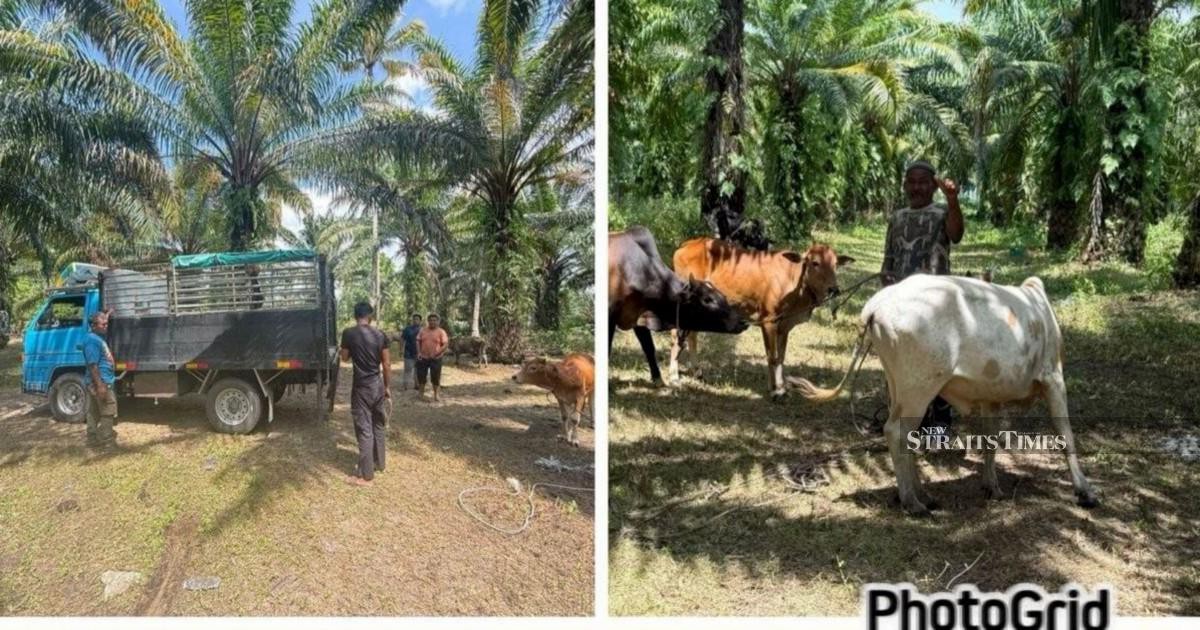
Police in Kelantan have successfully dismantled an organised cattle theft network following a series of coordinated raids that resulted in the arrest of 10 individuals, two of whom are women, and the recovery of 32 livestock animals valued at approximately RM96,000. The operation, which spanned across Kelantan and its neighbouring state of Terengganu, represents a significant breakthrough in combating agricultural crime in the region.
Cattle rustling has long posed a persistent challenge to farming communities across Malaysia, particularly in rural areas where livestock represents substantial financial investment and livelihood security. The east coast states have experienced recurring incidents of organised livestock theft, with criminal networks exploiting porous borders between states and limited surveillance in isolated farming districts. The dismantling of this particular syndicate signals intensified law enforcement efforts to protect agricultural interests in the region.
The arrested individuals are suspected of orchestrating a coordinated operation targeting cattle farms across multiple locations. The involvement of female members within the gang structure indicates the increasingly sophisticated nature of such criminal enterprises, which often require diverse roles spanning planning, logistics, and disposal of stolen animals. The recovery of such a substantial number of animals from a single operation underscores the significant scale upon which this syndicate was operating.
The RM96,000 valuation of the recovered cattle reflects current market prices for livestock in Malaysia, where cattle farming remains economically important despite facing challenges from modern supply chains and changing consumer preferences. For smallholder farmers in Kelantan and Terengganu, each head of cattle often represents months or years of investment in animal husbandry, feed, veterinary care, and breeding programmes. The theft of animals in bulk quantities can devastate individual farming operations and threaten food security for rural families dependent on livestock income.
The recovery operation demonstrates enhanced inter-state policing cooperation, a crucial element in combating cross-border criminal activities. Criminal networks frequently exploit jurisdictional boundaries to evade detection, moving stolen livestock rapidly across state lines to market them in distant locations where traceability becomes problematic. By conducting simultaneous raids in both Kelantan and Terengganu, police have limited opportunities for suspects to relocate animals or evidence.
The investigation likely exposed sophisticated methodologies employed by the syndicate to obscure the origins of stolen cattle. Criminal networks typically maintain networks of intermediaries, dealers, and transport operators who facilitate the sale of rustled livestock to unsuspecting buyers or into formal market channels. Some operations involve false documentation, alteration of identifying marks, or deliberate mixing of stolen animals with legitimate herds to confound tracing efforts.
The arrest and recovery will provide Malaysian authorities with valuable intelligence regarding the operational patterns, financial flows, and distribution networks of livestock theft syndicates. Such information becomes critical for preventing future incidents and disrupting related criminal organisations that may be operating across the peninsula. The success of this operation may encourage farmers to report suspicious activities and engage more actively with community policing initiatives.
For the agricultural sector in the east coast states, this breakthrough offers reassurance that law enforcement is taking livestock crime seriously. However, experts suggest that long-term solutions require complementary strategies including improved farm security infrastructure, mandatory animal registration and microchipping systems, and greater coordination between farming communities and police authorities. Some farmers have begun investing in CCTV surveillance and secure fencing, though costs remain prohibitive for marginal operations.
The recovery of the 32 animals raises questions about their condition and the logistics of returning them to rightful owners. Police will need to verify ownership claims, conduct health assessments to ensure animals are fit for reintroduction to productive herds, and coordinate with relevant agricultural departments. The process underscores the practical challenges that extend beyond criminal prosecution in livestock theft cases.
This operation also reflects broader agricultural crime trends in Southeast Asia, where organised cattle rustling extends beyond Malaysia into Thailand, Indonesia, and other regional neighbours. Cross-border livestock trafficking represents a significant criminal enterprise worth hundreds of millions annually, often involving connections to other illicit activities. Enhanced regional cooperation on agricultural crime would strengthen enforcement capabilities across the association.
The case demonstrates that despite Malaysia's development as an upper-middle income economy, traditional rural crimes persist and evolve with criminal sophistication. Agricultural communities remain vulnerable not only to direct theft but to the disruption of trust and security that enable farming as a viable livelihood. Sustained policing focus on this domain, combined with preventive investments by farmers themselves and supportive policy frameworks, remains essential for protecting the rural economy.
Authorities have indicated that investigations continue into the syndicate's operations and potential links to other criminal networks. The interrogation of the 10 arrested individuals will likely reveal further details about the distribution channels, customers, and extent of losses over the period during which the gang operated. Subsequent legal proceedings will test the strength of the evidence gathered during the raids and determine appropriate penalties under relevant theft and organised crime legislation.

