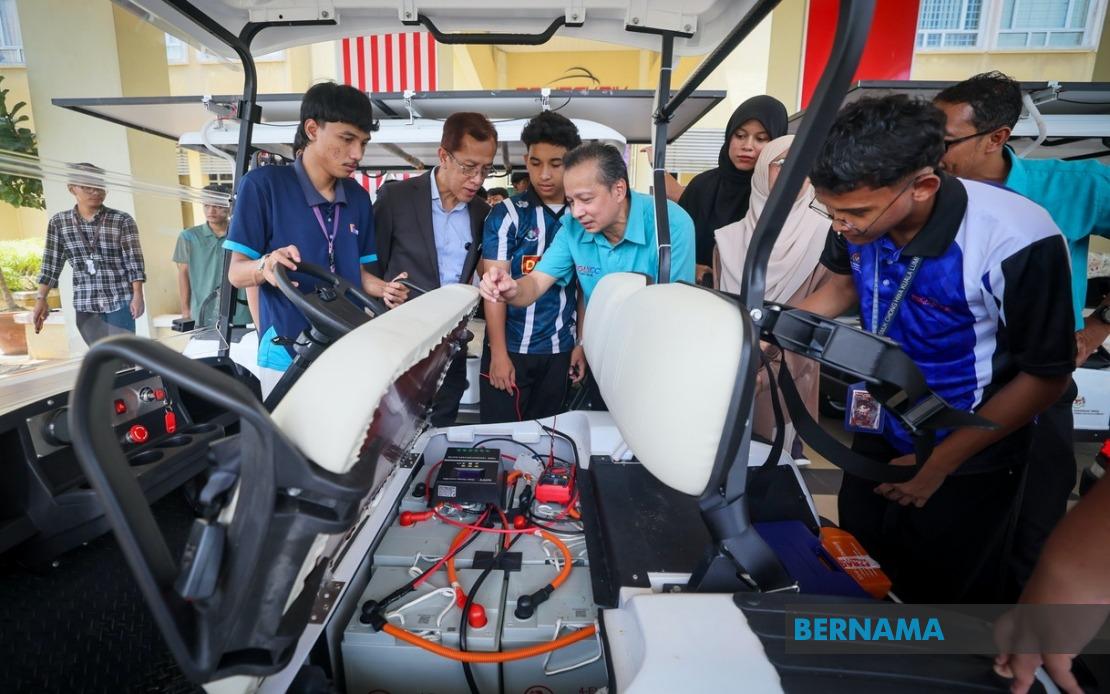
Jeli Kelantan Polytechnic has achieved a notable technological milestone by completing development of solar panel systems for buggy cars—a first for Kelantan—through an initiative designed to immerse students in practical renewable energy applications while advancing the institution's sustainability goals. The project represents an intersection of academic excellence and environmental commitment, demonstrating how vocational institutions in Malaysia can drive innovation in green technology adoption across regional economies.
Director Mohd Zamre Ab Rahman explained that the Solar Buggy Car Technology Innovation Project consumed nearly RM300,000 and emerged from the collaborative efforts of 20 third-semester students enrolled in the Diploma in Electrical Engineering (Green Energy) programme. What distinguishes this undertaking is its remarkably compressed timeline—students conceived, designed, and implemented the solar charging systems within approximately one month—drawing on foundational knowledge accumulated since their first semester under the guidance of lecturer Chung Boon Chuan. This condensed schedule speaks to both rigorous curriculum design and student capability in practical problem-solving.
The solar panel installation transforms the buggy cars' operational model by enabling battery charging through renewable solar energy rather than reliance on conventional grid electricity. This capability directly addresses a persistent challenge in Malaysia's transition toward sustainable transportation: reducing the carbon footprint and operational costs of vehicle fleets. The polytechnic has equipped six units with these systems—four four-seater vehicles and two two-seater variants—with each unit commanding an investment of approximately RM40,000, underscoring the affordability considerations essential for widespread adoption across Southeast Asia's emerging markets.
Rahman framed the innovation squarely within Jeli Polytechnic's institutional vision of operating as a certified green campus committed to expanding renewable energy utilisation. By positioning solar-powered vehicles as both educational demonstrators and operational assets, the polytechnic creates a tangible bridge between classroom theory and real-world environmental stewardship. This approach mirrors global best practices where educational institutions serve as testbeds for emerging technologies, generating proof-of-concept evidence that influences broader policy and commercial adoption patterns.
The Diploma in Electrical Engineering (Green Energy) programme, introduced only in July of the preceding year, has already demonstrated substantial appeal among prospective students. Intake numbers have doubled from 40 to 80 students in the current academic session, reflecting both institutional reputation-building and genuine market demand for green energy expertise. This enrollment trajectory suggests that Malaysian youth increasingly recognise career pathways in renewable energy sectors, a demographic shift with significant implications for workforce development across the region.
Kelantan's emerging position as a renewable energy hub directly underpins the programme's expansion and the buggy car project's relevance. The development of solar farms in Tok Uban and Pasir Mas represents tangible evidence of large-scale renewable energy investment within the state, creating employment opportunities and stimulating demand for technically trained professionals. Jeli Polytechnic's curriculum and innovation activities thus respond strategically to measurable economic transitions occurring within Kelantan's energy landscape, positioning graduates to capitalise on these employment pathways.
Further institutional support has materialised through a RM2 million allocation received from the Ministry of Higher Education during the preceding fiscal year, channelled specifically toward upgrading laboratory infrastructure and acquiring advanced equipment to support green energy instruction. This investment reflects national-level recognition that vocational education institutions require contemporary facilities to train students effectively in emerging technological domains. The funding enables hands-on experimentation that transforms abstract principles into tangible competencies—precisely the experiential learning model demonstrated by the buggy car project.
Beyond its educational dimension, the polytechnic has strategically positioned the solar buggy technology as a commercial offering available to public agencies and private entities seeking solar panel installation on vehicle fleets. This commercial viability transforms student projects from academic exercises into revenue-generating ventures while simultaneously creating employment opportunities for graduates qualified to perform installations and maintenance. The model exemplifies how vocational institutions can contribute to regional economic activity through technology commercialisation.
Rahman articulated a clear institutional perspective: the buggy car initiative exposes students to authentic applications of renewable energy technology while simultaneously developing a skilled graduate cohort aligned with industry requirements across Malaysia's expanding green sector. This philosophy addresses a persistent skills gap in renewable energy fields, where theoretical knowledge divorced from practical implementation frequently constrains industry expansion. By embedding real projects within curriculum structures, Jeli Polytechnic cultivates graduates possessing both conceptual understanding and deployable technical capabilities.
The broader significance of this development extends beyond Kelantan's boundaries. As Malaysia pursues ambitious renewable energy targets and regional economies increasingly prioritise sustainability objectives, the availability of skilled technicians becomes progressively critical. Vocational institutions that successfully integrate green technology innovation into educational programming generate competitive advantage for their graduates while contributing measurably to their nations' energy transition objectives. Jeli Polytechnic's solar buggy initiative exemplifies this strategic alignment between institutional capability, educational mission, and national sustainability imperatives.
Looking forward, the precedent established by this project may encourage other Malaysian polytechnics and vocational centres to develop comparable green technology initiatives tailored to their regional contexts and economic profiles. The demonstrated success at Jeli—combining modest financial investment, focused student effort, and practical relevance—provides a replicable template for institutions seeking to enhance curriculum responsiveness to emerging energy sectors. As Malaysia's green economy matures, educational institutions positioned at its forefront will increasingly shape workforce capacity and technological innovation trajectories across Southeast Asia.

